Last updated November 18, 2026
Free written scope consultation - allowances, timeline, and change-order rules on paper before a single trade is scheduled
The Complete Driveway & Pavers Guide for Anaheim Homeowners
The number one reason Anaheim driveways fail within five years has nothing to do with the pavers themselves. It’s what’s underneath them. We’ve pulled up interlocking pavers that still looked new on top and found six inches of base where Anaheim’s expansive clay demanded ten. No paver brand survives a bad base, and no national guide prepared for Oregon or Georgia soil will tell you that. Anaheim sits on some of the most reactive clay in Southern California, sits under hard water that stains pavers white, and sits inside a patchwork of HOA and city runoff rules nobody explains. This guide closes that gap: base depth, efflorescence, permeable versus standard pavers, permits, and how to read a contractor bid so nothing is hidden.
Quick Answer
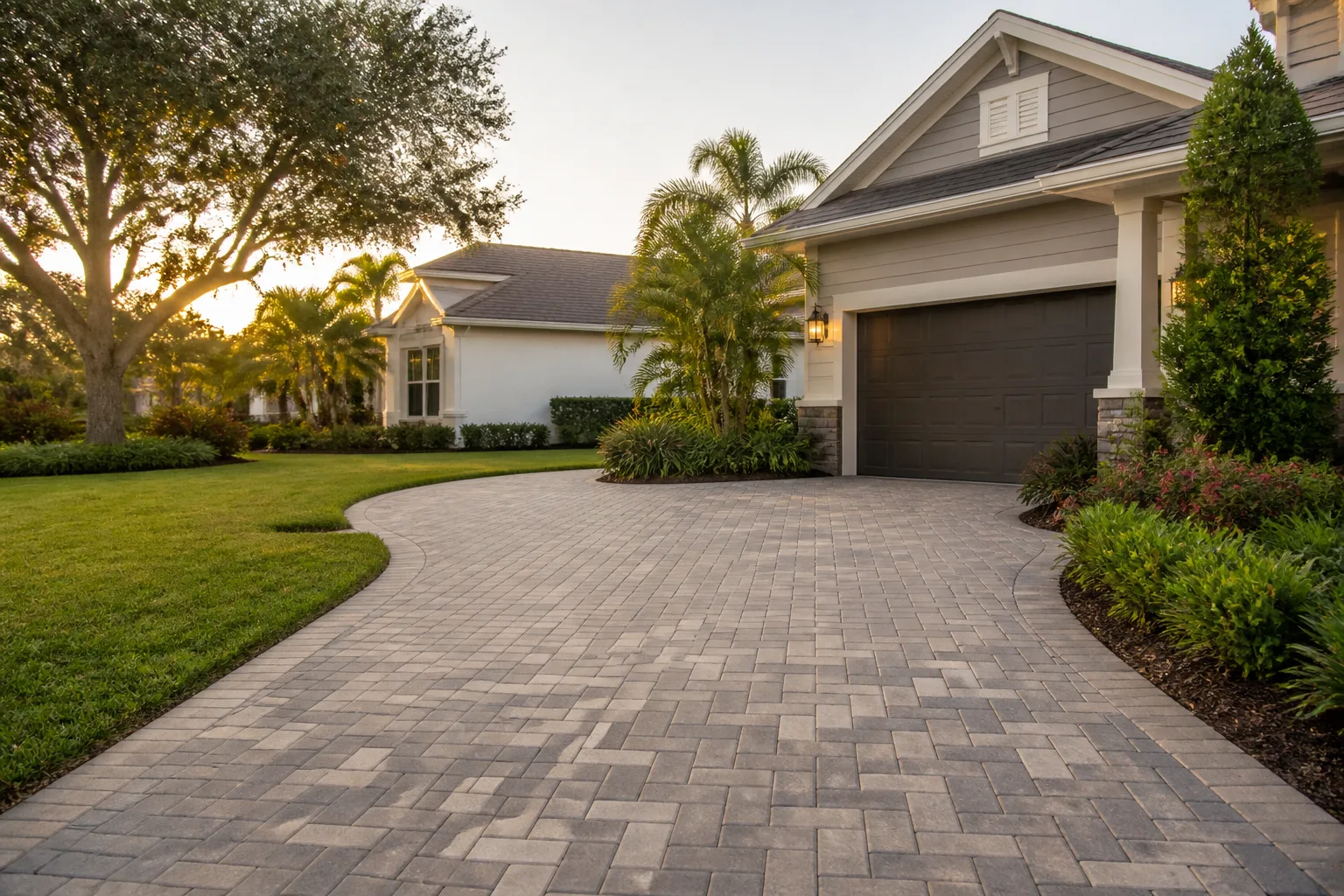
A driveway done right in Anaheim rests on a compacted base of at least 8 to 10 inches of class II aggregate over geotextile fabric, because the local clay expands and contracts with every wet and dry season. Budget roughly $14 to $26 per square foot installed for concrete pavers, with permeable systems running higher. The paver itself is rarely the failure point. The base, drainage, and edge restraint are.
Styles & brands we work with
- Kitchen remodeling
- Bathroom remodeling
- Home additions & ADU
- Roofing
- Windows & doors
- Driveway & pavers
- Fence
Table of Contents
- Why Anaheim Driveways Fail: The Clay Soil Problem
- Base Depth: What Anaheim Clay Actually Requires
- Efflorescence: Why Hard Water Stains Anaheim Pavers White
- Permeable vs. Standard Pavers in Anaheim
- Permits and HOA Rules for Anaheim Driveway Replacement
- How to Read a Contractor Bid Line by Line
- Choosing Paver Materials for Anaheim’s Climate
- What Driveway Pavers Cost in Anaheim
Why Anaheim Driveways Fail: The Clay Soil Problem
Anaheim’s soil is heavy clay with a high shrink-swell potential, which means it swells when it absorbs water and shrinks as it dries. That cycle happens twice a year here, and sometimes more, because we get rain in winter and long dry stretches the rest of the year. A driveway is a rigid surface sitting on a soil that changes volume underneath it. If the base doesn’t isolate the pavers from that movement, the surface telegraphs every shift.
What that looks like in practice: pavers tilt at the edges of the driveway, joints open up, and you start seeing a washboard pattern after a couple of rainy seasons. In neighborhoods like The Colony and parts of West Anaheim, where lots sit on older fill and clay, we see this faster than on newer graded lots near the Anaheim Hills foothills. The foothill lots drain better downhill but bring their own grading challenges.
The fix isn’t a thicker paver. It’s the layered system under it. A driveway built for Anaheim soil needs, from the bottom up:
- Proper excavation to remove organic soil and any soft clay at the surface
- Geotextile separation fabric to stop clay fines from pumping up into the aggregate
- 8 to 10 inches of compacted class II base, placed in lifts and compacted each lift
- A graded slope of roughly 1 to 2 percent away from the garage so water leaves the surface
- 1 inch of bedding sand, screeded level
- Edge restraint anchored into the base, not the sand
Skip any layer and the whole assembly is compromised. This is the single most important thing to understand about a driveway in Anaheim, and it’s the first question we ask about any failed driveway we’re called to look at.
Base Depth: What Anaheim Clay Actually Requires
National paver guidance often gives a minimum compacted base of 4 to 6 inches for residential driveways on stable soil. Local engineered specs for Anaheim and the surrounding Orange County clay push that to 8 to 10 inches, and sometimes more where a driveway sees heavy vehicles or sits over a known expansive zone. That gap is why a generic contractor working from a national chart will underbuild a driveway here and never know it.
We’ve seen the results. A driveway finished two years ago with 6 inches of base and no separation fabric, on clay, developed edge settlement within the first wet season. The pavers were top-tier Belgard product. The base was the problem, and rebuilding the base means pulling every paver back up. The savings on the original build cost three times as much to undo.
Here’s what a properly built base for Anaheim soil includes, and what to confirm in the bid:
- Excavation depth: The contractor should dig deep enough to fit the paver thickness plus 1 inch of bedding sand plus the full compacted base. That’s a total excavation of 12 to 14 inches for a standard residential driveway, sometimes more.
- Geotextile fabric: Laid over the excavated clay before any aggregate goes in. It stops clay particles from migrating up into the base and destabilizing it. It is not optional on Anaheim clay.
- Aggregate spec: Class II base, not recycled concrete rubble or whatever’s on sale. The gradation matters for compaction.
- Compaction in lifts: Base placed 3 to 4 inches at a time and compacted with a plate or roller each lift, not dumped in one pile and compacted once. Single-pass compaction on a deep base is a common shortcut.
- Drainage slope: Confirm the finished surface pitches away from the garage and house. Standing water on clay is what starts the movement cycle.
If a bid lists “base prep” as a single line with no depth, no aggregate spec, and no mention of fabric, that’s the hidden line item. It’s also usually where the cheaper quotes are cheaper.
Efflorescence: Why Hard Water Stains Anaheim Pavers White
Efflorescence is that chalky white haze that shows up on concrete pavers, sometimes weeks after installation and sometimes years later. It’s a salt deposit. Water moves through the paver, dissolves minerals, and leaves them on the surface as it evaporates. Harder water carries more minerals, which is why it shows up more in Southern California than in much of the country.
Anaheim water is mineral-rich. Irrigation runoff and street splash carry those minerals into the paver joints, and in a dry spell the evaporation pulls salt to the face. On a driveway shaded part of the day, or one that holds a wet patch near the garage, the effect is stronger. We see it most on driveways that get regular sprinkler overspray from the landscaping or sit in a low spot with poor drainage.
Three things reduce the likelihood:
- Correctly installed density and low absorption. Dense, well-compacted paver systems in Anaheim move far less water through the surface, so there’s less mineral transport.
- Efflorescence-resistant sealers applied after the paver has fully cured. Not before, and not on a damp surface.
- Drainage that keeps water off the surface. A properly pitched driveway sheds water instead of pooling it.
If you’re already seeing white haze, the answer is not aggressive acid washing every season, which can damage the paver face and the joint sand. The answer is a proper cleaner, a re-sand of the joints, and a look at why water is sitting where it is. We approach efflorescence as a drainage and water-management question before we treat it as a surface-cleaning one.
Permeable vs. Standard Pavers in Anaheim
Permeable pavers let rainwater pass through the joints and a specially graded open base into the soil below. Standard pavers shed water off the surface into a drainage path or the street. Which one makes more sense for you depends on your lot, your drainage situation, and what your city or HOA requires.
Anaheim’s stormwater and runoff rules matter here. New or replaced hardscape is often subject to local drainage requirements, and HOAs in planned communities frequently restrict the amount of new impervious surface or require retention. For a driveway, the two systems behave in different ways and cost different amounts:
- Standard concrete pavers: Lower upfront cost, simpler base, sheds water off the edge. Works well where the driveway can drain to a landscaped swale or the street storm system.
- Permeable pavers: Higher material and base cost, larger excavation and open-graded aggregate, but water infiltrates on-site rather than running off. Useful on lots that pool, on properties with tight setbacks, or where runoff rules or an HOA push you that direction.
One practical point: permeable systems only work if the subsoil drains. Anaheim’s clay limits how fast water can move through it, so a permeable driveway over clay usually needs an underdrain or a designed storage layer, or the whole system saturates. Permeable isn’t automatically the greener or better choice. It’s a site-specific one. That’s why we look at the lot before recommending a system.
The right answer for a flat lot near the Santa Ana River corridor may differ from one on a slope in the hills. We tell homeowners which system makes sense for their actual ground, not which one sounds better in a brochure.
Permits and HOA Rules for Anaheim Driveway Replacement
Replacing hardscape on a residential lot in Anaheim can require a permit depending on the scope, the property’s zoning, and whether you’re expanding the existing footprint or changing drainage. Don’t rely on a generic “you need a permit to pour concrete” answer from a national site. The requirements here are specific, and they’ve been tightened around stormwater and grading.
While the planning department and your specific HOA documents control the exact steps, the major issues to check are consistent across the city:
- City permit and grading review: Confirm with the City of Anaheim whether your driveway replacement needs a permit, and whether drainage or grading changes trigger review. A qualified contractor handles this for you and pulls the permit in your name, which is a sign the work will be inspected.
- HOA architectural approval: If you live in a planned community, HOA architectural review almost always has to happen before work starts. Materials, color, width, and drainage can all be restricted. Getting your approval in writing first saves you from tearing out pavers a neighbor reports.
- Drainage direction: City and HOA rules both care where your runoff goes. A redesign that pushes water onto a neighbor’s lot or overwhelms a shared drain is a common denial.
- Right-of-way and sidewalk: If you’re reworking the apron where the driveway meets the street, the sidewalk and right-of-way come into play, and that scope is often governed by city standards.
Ask any contractor bidding your job how they handle permits and inspections. A written, itemized bid that lists “pull permit and pass inspection” as a line item is a bid you can trust. One that says “permits not required” without confirming it for your address is a concern.
How to Read a Contractor Bid Line by Line
Most driveway regret starts with a bid that left something out and a homeowner who didn’t know what to look for. Driveway bids vary wildly in what they include, and the lowest number is often the one missing the base prep, fabric, edge restraint, or disposal. Here’s how to read one.
Every line item that should appear in a real driveway bid:
- Demo and haul-away: Removal of the old surface and disposal, with haul-off cost listed separately or included. Not assumed.
- Excavation depth: Stated numerically, including the depth needed for base and bedding.
- Geotextile fabric: Listed explicitly. On Anaheim clay it’s not a maybe.
- Base aggregate spec and compaction: Class II, with the depth and the compaction method noted.
- Bedding sand: Depth and type.
- Edge restraint: Anchored into the base, not just wedged into sand. Critical for holding a driveway in place over clay movement.
- Paver brand and color: Named, with a sample or showroom selection process. Belgard is a common quality choice; we also work with other premium brands.
- Joint sand and compaction of the finished surface: Polymeric or stabilized sand, stated.
- Sealing: Listed as a line item with time frame, not a vague promise.
- Permits and inspection: Who pulls it, who’s responsible for the inspection passing.
- Drainage plan: Where water goes, especially if there’s a low spot or a slope.
- Warranty: Named in writing, with the term and what it covers.
The hidden costs show up where the bid gets vague. “Base prep and install pavers” as a single line hides the fact that the base depth was cut to save money. “Haul-away extra” hides the disposal charge. “Permits by owner” puts the responsibility on you after the work is done. A reputable contractor quotes the whole scope with line items and no change orders.
We’ve made this the standard for how we price Groundwork Construction Co. of Anaheim home work, driveway included: a written bid with the line items above, upfront pricing, and the number you see at the estimate being the number you pay. Ask for that in writing from anyone you hire, not just us.
Choosing Paver Materials for Anaheim’s Climate
Anaheim’s climate is hard on pavers in two ways. Sun and heat here cause color fade and surface wear on cheaper products, and the dry-then-wet cycle stresses every material choice. The pavers that last out here aren’t the cheapest per square foot. They’re the dense, low-absorption ones rated for freeze-thaw cycles even though we rarely freeze, because that rating is a proxy for durability.
What to look for and avoid:
- High-density concrete pavers: The default choice for a Anaheim driveway. Dense pavers resist moisture absorption, which reduces efflorescence and holds up to heat and sun.
- Color-through pigments: Color that goes through the paver holds better under UV than a surface-applied color that fades first.
- Belgard and comparable brands: A known regional brand with a warranty and a real sample you can see in person. Our technicians have up to 12 years of experience installing the full range of premium paver systems.
- Matching compatible retaining or garden wall products: If your driveway has an edge transition, matching the paver and block line keeps it cohesive and prevents edge failure.
Avoid buying on price-per-square-foot alone. A slightly cheaper paver that absorbs more water is the one that chalks up white and moves in the base. The paver and the base are a system, and both have to be right.
What Driveway Pavers Cost in Anaheim
Prices vary by system, paver line, and site conditions, but Orange County driveway paver work falls in a range. Here’s the line-item structure to expect, so you can compare quotes with a clear head.
- Standard concrete pavers, installed: roughly $14 to $26 per square foot
- Permeable paver systems: higher, often $20 to $35 per square foot due to deeper excavation and open-graded base
- Demo and haul-away of existing surface: typically $2 to $5 per square foot
- Base excavation and compaction beyond standard: $3 to $7 per square foot depending on depth and access
- Permit and inspection fees: variable; confirm who files
- Sealing: $1.50 to $3.50 per square foot if desired
The first thing that affects your number is the base. On Anaheim clay, a proper base is a sizeable percentage of the total, and the quotes that come in well below the range are almost always cutting it. The paver brand matters less than you’d think on total cost and more than you’d think on longevity.
Also factor in the standing promotions: on projects over $10,000, $1,000 off is the starting point, and 0% financing for 18 months spreads a larger driveway out without turning the job into a smaller, cheaper one. The point of financing here is to build the driveway Anaheim clay requires instead of the one you settled for.
Common Mistakes to Avoid
- Choosing by price alone. A driveway bid that comes in thousands under the others is missing something, and it’s almost always base depth or drainage. Check the line items before you sign, not after the joints open up.
- Skipping geotextile fabric on clay. Anaheim’s expansive clay needs a separation layer, and contractors working from national charts skip it. It’s cheap compared to the repair.
- Ignoring HOA approval before installation. In Anaheim’s planned communities, an unapproved driveway color or width can mean tearing it out. Get the approval in writing first.
- Treating efflorescence as a cleaning problem only. White haze that keeps coming back is a drainage and moisture issue. Cleaning it without fixing the water management means it returns every season.
- Choosing permeable pavers on a lot that can’t drain. Permeable systems need subsoil that infiltrates, or a designed underdrain. On solid clay, they can be the wrong call.
- Accepting “base prep” as a single line item. Insist on a stated excavation depth, aggregate spec, compaction method, and edge restraint. Those four things decide whether your driveway lasts.
- Skipping the written warranty. If the guarantee isn’t in writing with a term and coverage, it isn’t a guarantee. We put our warranty on every driveway: the 730-Day Done Right Promise, one of the longest workmanship guarantees in residential construction.
See the difference
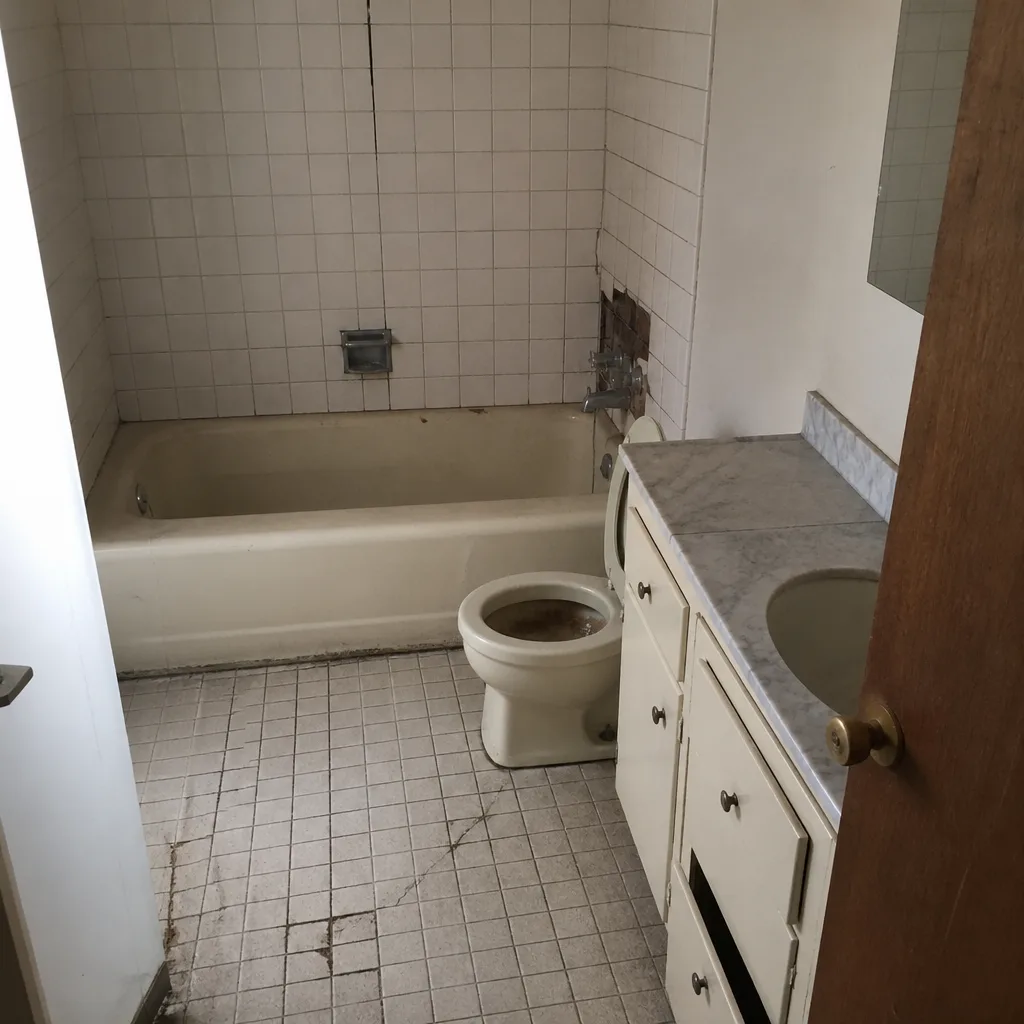 Before
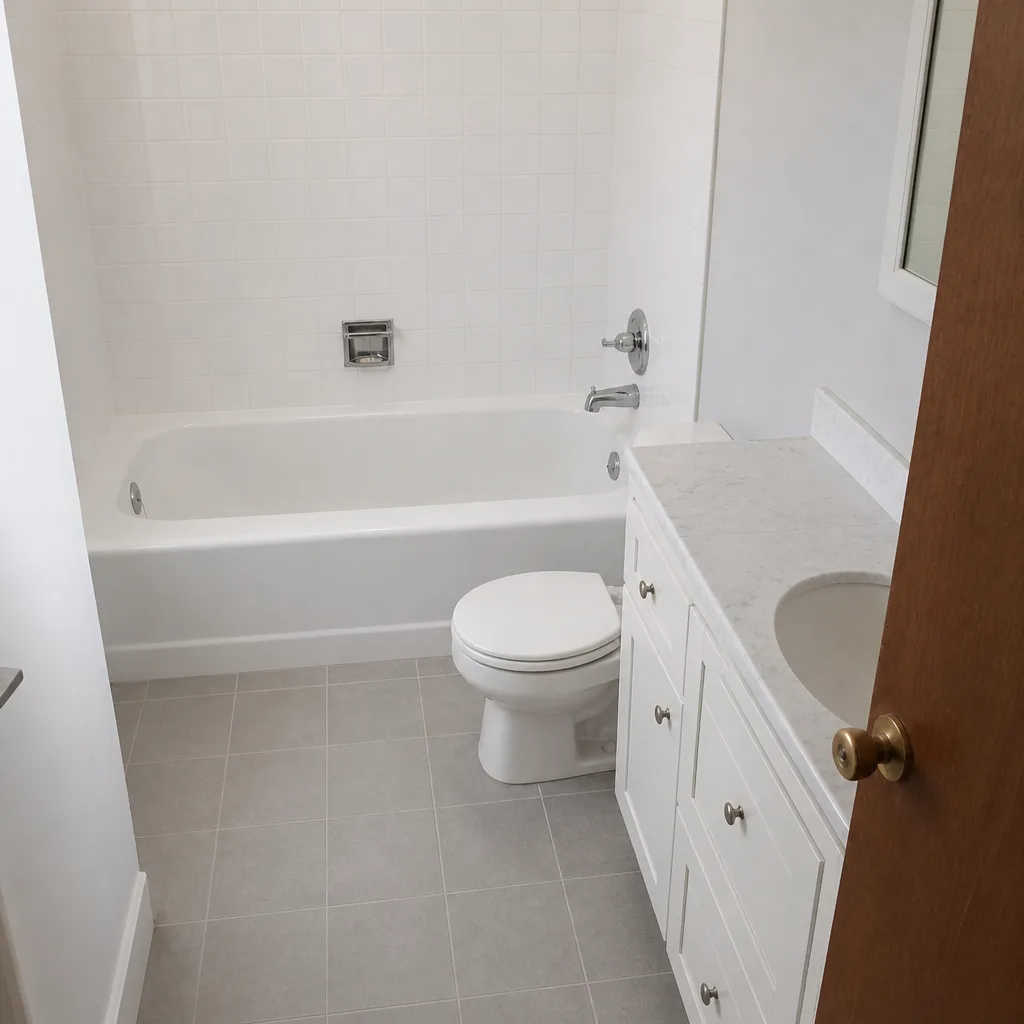 After
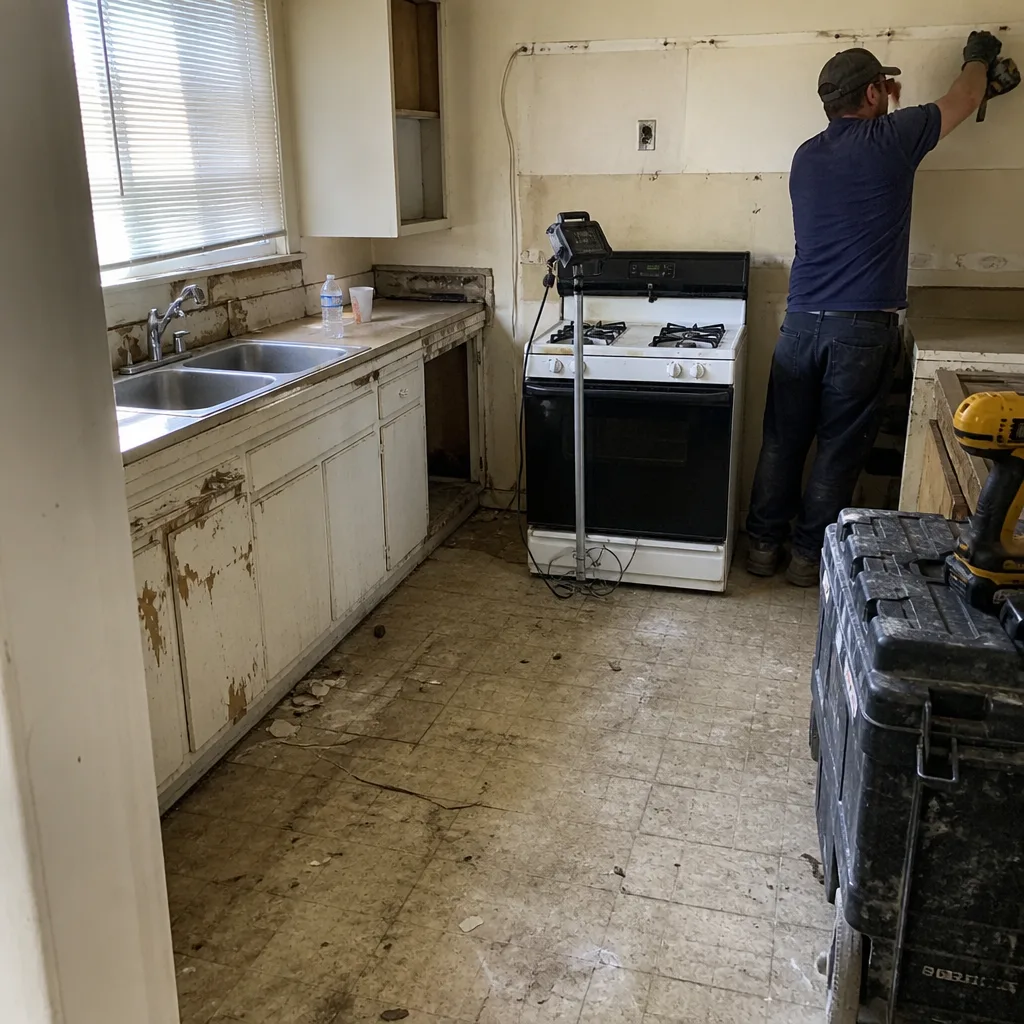 Before
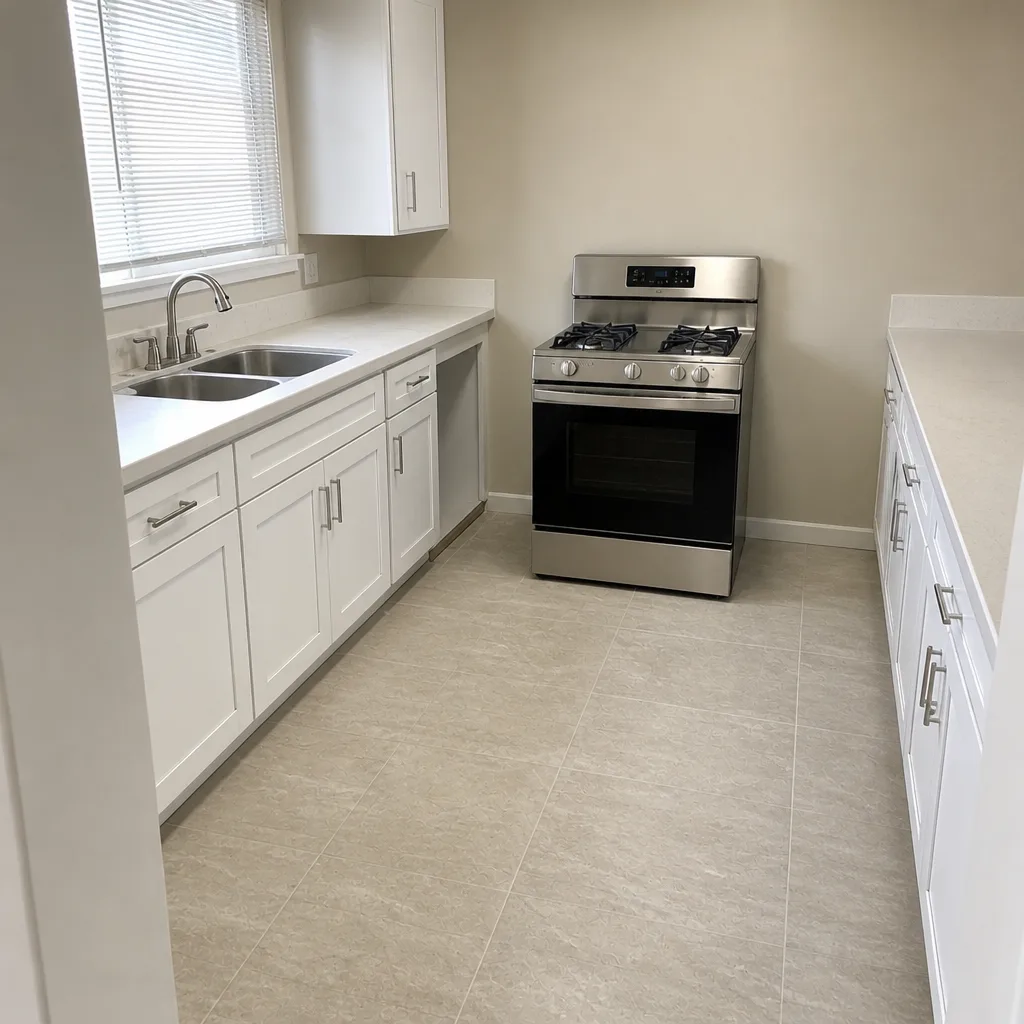 After
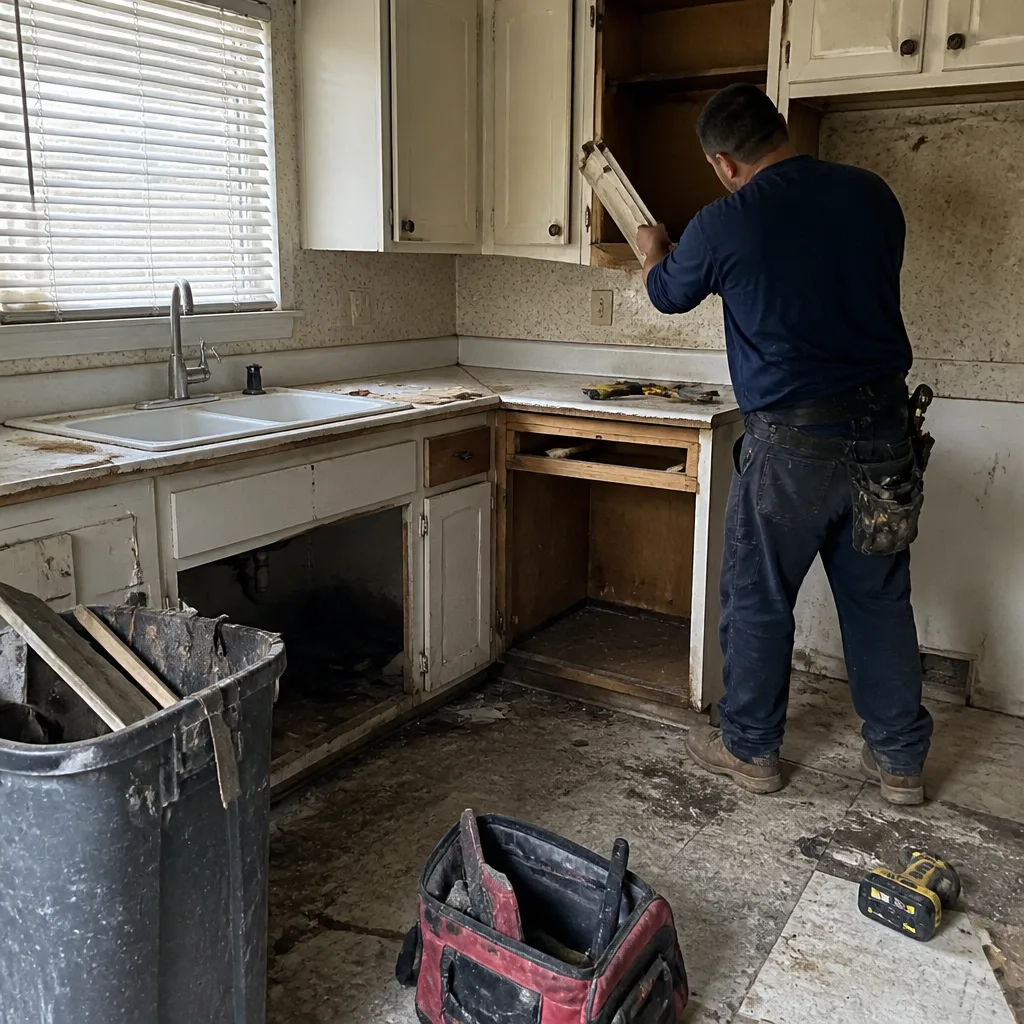 Before
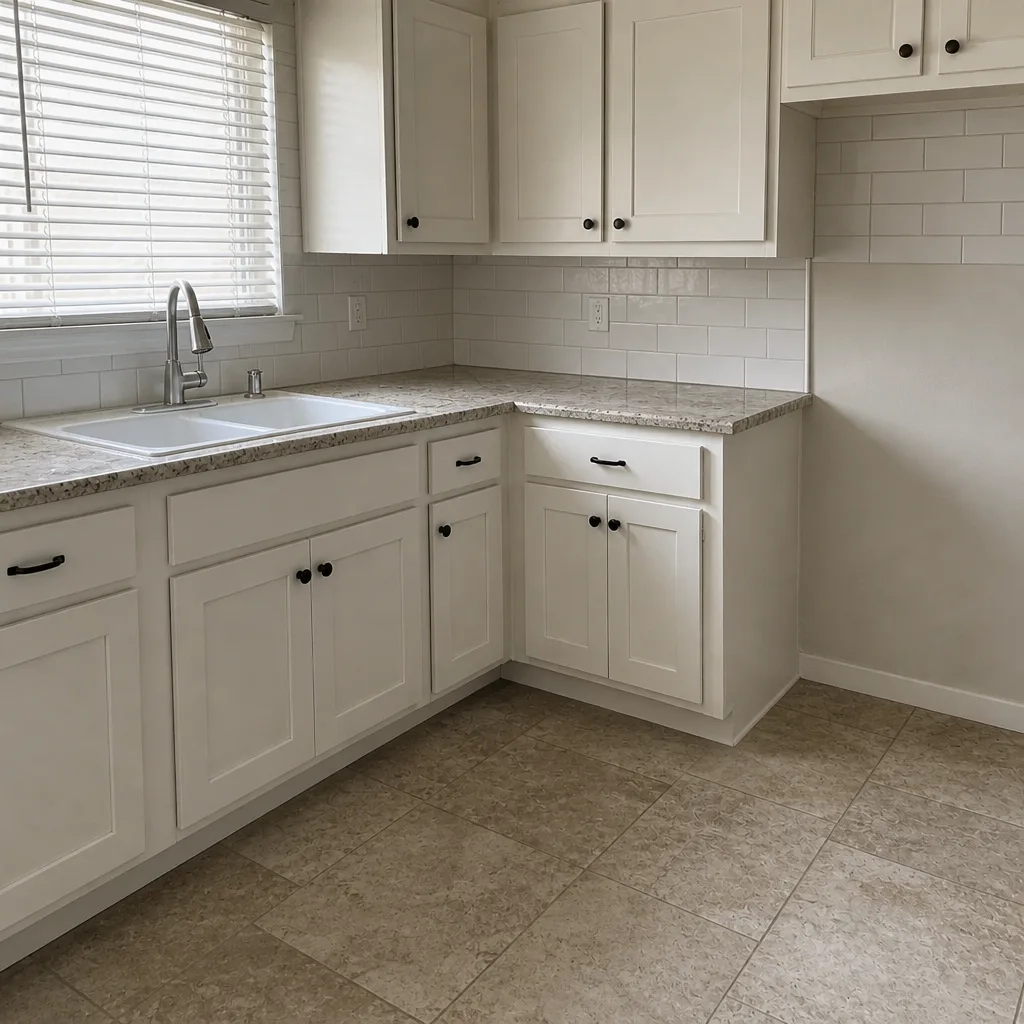 After
When to Call a Professional
Some driveway issues are cosmetic and can wait. Others are structural and get worse every wet season. Call a professional when you see the joints opening unevenly, when pavers tilt at the edges or show a washboard pattern, when water pools near the garage or on the driveway after rain, or when white efflorescence keeps coming back after you clean it. Those four symptoms almost always mean the base or drainage is failing, and patching the surface doesn’t fix what’s underneath. A driveway that’s failing also becomes a trip hazard and a moisture problem for the garage slab. When you’re ready to know what a rebuild actually costs, or you’re planning a new driveway and want the base done right the first time, Groundwork Construction Co. of Anaheim offers free estimates in Anaheim – call (888) 300-3178. Your call is answered by a live person, 24/7, with no voicemail.
Frequently Asked Questions
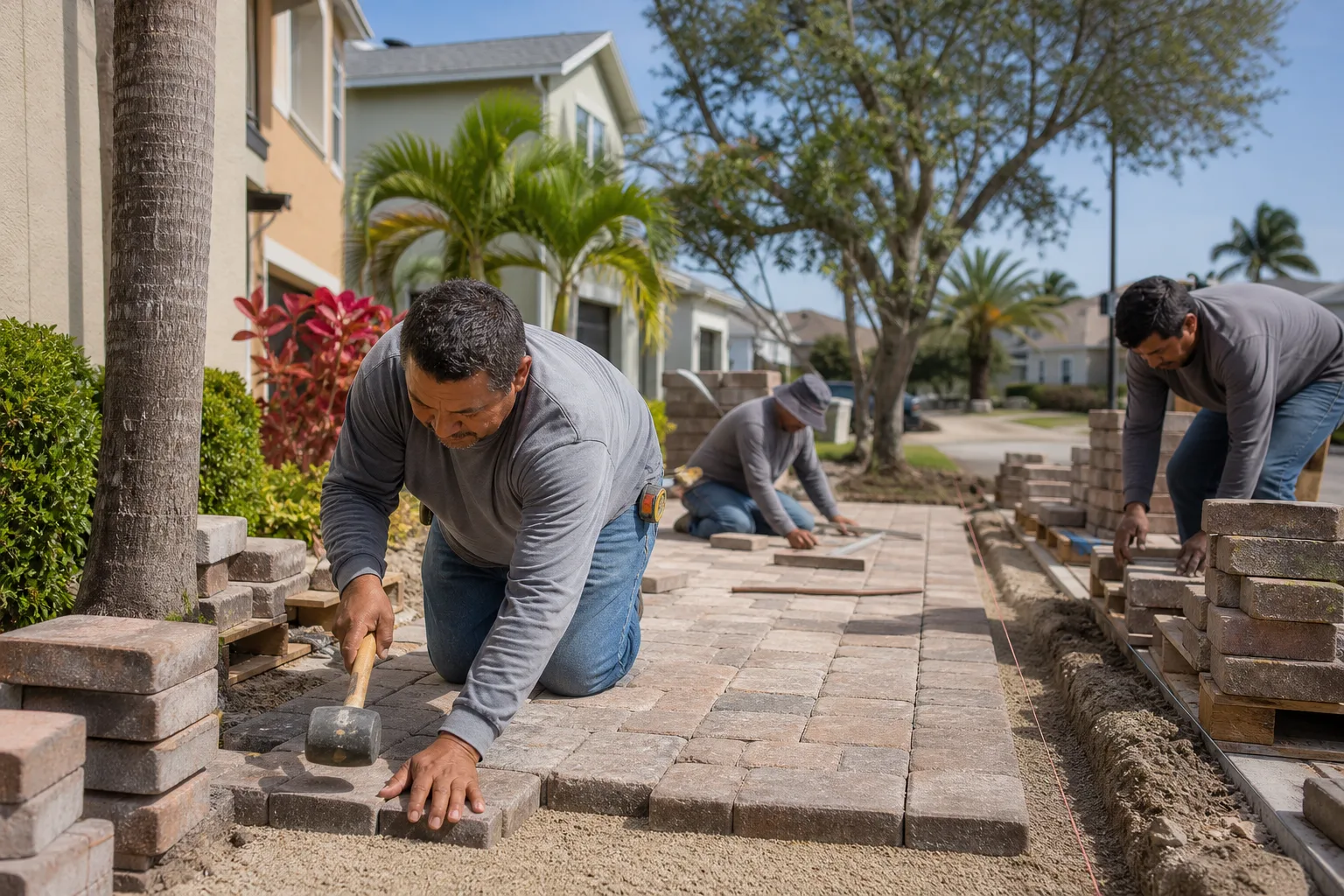
Aim for at least 8 to 10 inches of compacted class II base over geotextile fabric, because Anaheim’s expansive clay shifts more than the soil national guides assume. That means total excavation of 12 to 14 inches including bedding sand and paver thickness. Confirm the depth in writing before you sign a bid. Call (888) 300-3178 if you want us to check your site and quote it – estimates are free.
That white haze is efflorescence, a salt deposit left when mineral-rich water moves through the paver and evaporates, and it’s common in Southern California because of hard water and dry spells. Fixing it is part base, part sealer, and part drainage. If it keeps coming back, the water is coming from somewhere it shouldn’t. Call (888) 300-3178 for a free look – we’ll tell you what’s causing it.
It depends on scope and your property’s zoning, and many replacements do need a permit, so confirm with the City of Anaheim before work starts rather than relying on a national rule of thumb. A qualified contractor pulls the permit and handles inspection for you. Ask who’s filing on your bid. Call (888) 300-3178 and we’ll walk you through it.
Standard concrete pavers run roughly $14 to $26 per square foot installed, with permeable systems higher. On Anaheim clay, budget for proper base prep and fabric, because that’s where cheap bids cut. On eligible projects over $10,000, $1,000 off and 0% financing for 18 months help make the correct build the affordable one. Call (888) 300-3178 for an exact quote – estimates are free.
They can be, but only if your lot’s subsoil actually drains; on solid clay, a permeable system needs a designed underdrain or it saturates. That makes it a site-specific choice, not a universal upgrade. Have the lot evaluated before committing. Call (888) 300-3178 to have us look at your site.
It shouldn’t. A written, line-item bid with the excavation depth, base spec, edge restraint, and disposal spelled out protects you from change orders. We price upfront, so the number you see is the number you pay, and the 730-Day Done Right Promise stands behind the work in writing. Call (888) 300-3178 to schedule your free estimate.
The Bottom Line
Anaheim’s clay and hard water make a driveway a different build than the national guides describe. The base matters more than the paver, the base depth here runs deeper, geotextile fabric isn’t optional, and efflorescence is a drainage question before it’s a cleaning one. Get the permits and HOA approval in writing, choose a paver on durability rather than price per square foot, and read every bid for the line items that are usually hidden. Do those things and your driveway holds up through wet seasons and dry ones. If you’re planning a driveway in Anaheim or your current one needs a rebuild, our team is here to help. We’re also the same team for fence installation in Anaheim and home additions and ADU projects in Anaheim, and we pull every project from foundation to finish line under the same 730-Day Done Right Promise. Call (888) 300-3178 for your free estimate and design consult.
Written by the team at Groundwork Construction Co. of Anaheim.