Last updated November 18, 2026





Free written scope consultation - allowances, timeline, and change-order rules on paper before a single trade is scheduled
Home Additions & ADU Maintenance Schedule: What to Do and When
Most ADU owners spend move-in day admiring the new kitchenette and never think about the one seam that will cost them real money later: the connection point between the new structure and the existing house. That tie-in – where new roof meets old roof, where new slab meets old footing, where new wall meets old stucco – moves differently, drains differently, and fails differently than anything on your main home. Here’s the counterintuitive part: an ADU is not extra square footage of your house. It’s a second building with its own envelope, its own systems, its own maintenance clock. We’ve walked Anaheim properties where a $400 flashing repair became a $30,000 framing replacement because nobody looked up for three years. This guide gives you a standalone, month-by-month maintenance calendar built around ADU-specific failure points.
Quick Answer
An ADU needs four maintenance touchpoints every year: a roofline and tie-in flashing inspection each fall before the rainy season, mini-split filter cleaning every 30 to 60 days, tankless water heater descaling every 12 to 18 months depending on Anaheim water hardness, and a subpanel breaker test twice a year. Everything else – siding, foundation drainage, pest checks, irrigation – runs on a quarterly or annual cycle. If a tenant occupies the unit, add a documented quarterly walkthrough so you catch wear patterns before they turn into turnover costs.
Styles & brands we work with
- Kitchen remodeling
- Bathroom remodeling
- Home additions & ADU
- Roofing
- Windows & doors
- Driveway & pavers
- Fence
Table of Contents
- Why an ADU Has Its Own Maintenance Clock
- The Tie-In: Three Connection Points That Need Annual Eyes
- The Month-by-Month ADU Maintenance Calendar
- System-by-System Care: Mini-Splits, Tankless Heaters, and Subpanels
- Southern California Exterior Maintenance: UV, Irrigation, and Pests
- Rental-Unit Maintenance: Quarterly vs. Annual Inspections
- Five-Year Maintenance Cost Estimate
- Common Mistakes to Avoid
- When to Call a Professional
- Frequently Asked Questions
Why an ADU Has Its Own Maintenance Clock
The main house has had decades to settle, seal, and reveal its weak spots. A newly built accessory dwelling unit hasn’t. The first two to three years are when new construction moves the most – lumber dries and shrinks, stucco cures, caulk joints flex, and the slab or pier system shifts a fraction of an inch as the soil compacts. Those small movements stress exactly the places where the ADU attaches to your existing home.
Beyond the tie-in, the ADU is smaller. That sounds trivial until you think about what “small” does. A 600-square-foot unit has a higher exterior surface area relative to its volume than your 2,000-square-foot house, so the same UV load hits siding, trim, and roofing at a faster rate per square foot. A single mini-split shoulder-mounts the entire HVAC load – one clogged filter strains the whole system in a way that one of four filters on a central system never would. And a tankless water heater serving one bathroom means every gallon of Anaheim’s moderately hard water passes through that heat exchanger a larger number of times per resident than in a whole-house setup.
Treat the ADU as a distinct building asset with its own logbook. We recommend a simple maintenance binder – paper or digital – with a dated page per system. When you sell or rent the property, that binder becomes a measurable value signal. Buyers who see a documented ADU maintenance record trust the structure. Buyers who see a blank page assume deferred maintenance and discount accordingly. For context on how the ADU was built and engineered in the first place, see our Home Additions & ADU in Anaheim page.
The Tie-In: Three Connection Points That Need Annual Eyes
This is the section most ADU owners never get. New construction and existing construction respond to weather and soil movement at different rates. Where they meet, you need a visual inspection once a year – better twice, in early fall and late spring – and a few minutes with a camera to catch changes over time. Here’s what to look for at each point.
1. Roof-to-Roof Tie-In
Where the ADU roofline meets the main house, whether through a ridge, a valley, or a flashed wall, that’s the highest-risk water intrusion point on the property. Look for:
- Lifted, cracked, or missing sealant along flashing terminations and counter-flashing
- Granule loss or staining on the existing roof below the tie-in (a sign water is running where it shouldn’t)
- Daylight visible in any attic or crawl space at the junction – if you can see it, water can get in
- Wavy or soft decking near the connection, felt carefully from a safe interior position
- Debris buildup in the valley where leaves and seed pods collect and hold moisture
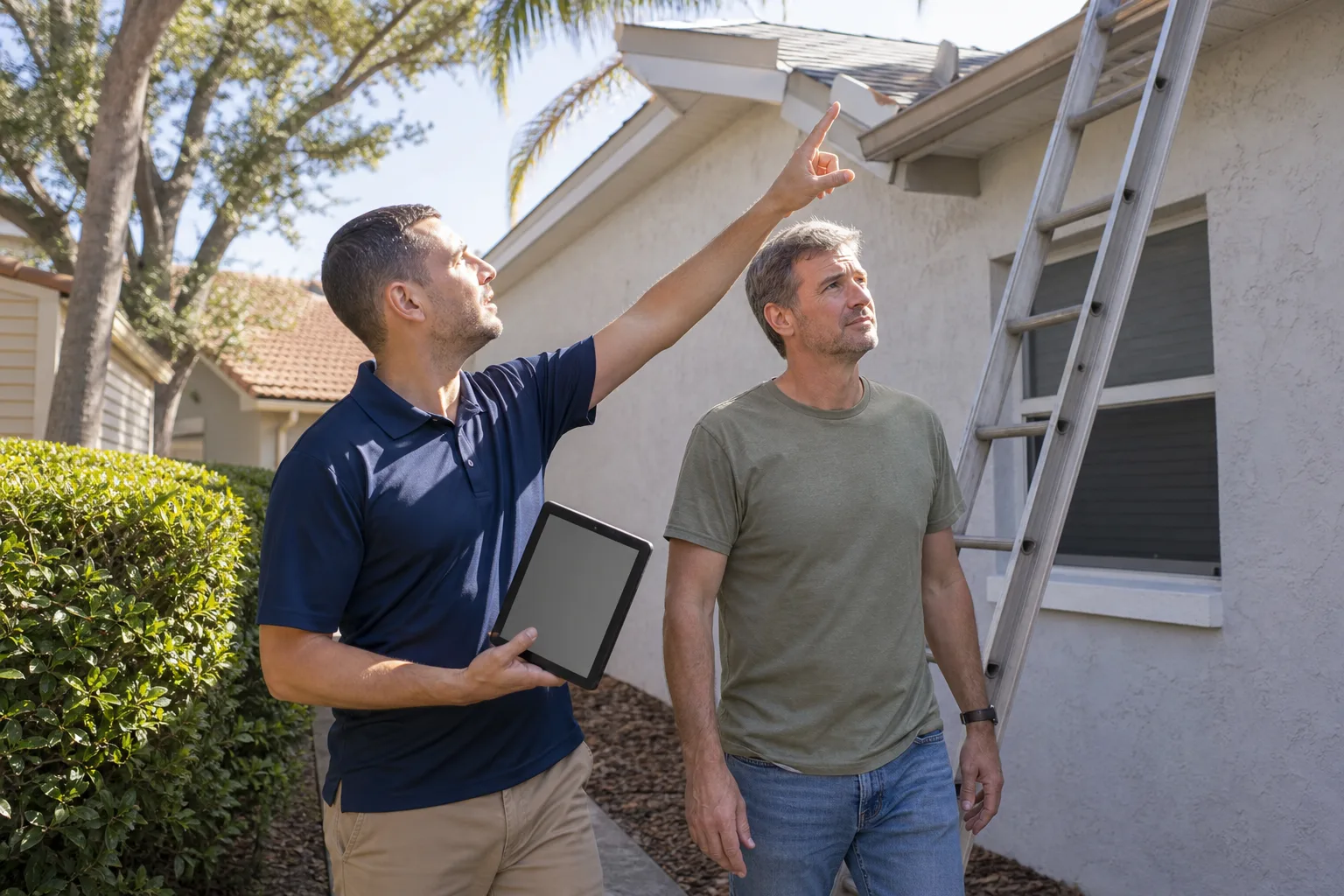
Roof work at height is a genuine fall hazard, especially on a two-story tie-in where you’re working over a gutter line. We recommend a professional inspection for any tie-in above the first story. This isn’t a task worth learning on a ladder.
2. Foundation and Slab Transition
The ADU slab or pier system ties to the main house’s footing, and that joint is where differential settlement shows up first. Walk the perimeter after a heavy rain – Anaheim gets most of its annual moisture in a handful of winter storms – and look for:
- New diagonal cracks radiating from the corner where the two foundations meet (vertical or hairline cracks are normal; diagonal stair-step cracks are not)
- Dirt lines or staining on the stem wall showing past water levels
- Pooling within three feet of the transition after a storm, which points to a grading problem draining toward the joint
- Doors and windows in the ADU that suddenly stick – a signal the structure is moving more than it should
3. Wall-to-Wall Connection
If the ADU shares a wall or attaches through an enclosed breezeway, the joint between new and existing stucco or siding is a thermal-expansion seam. It wants to move, and it will. Check annually for:
- Caulk pulling away along the vertical seam between old and new facade
- Stucco cracking along the joint line, wider than a hairline
- Rust streaks on the existing wall that suggest water or a fastener is working loose
- Paint blistering near the transition, which can indicate trapped moisture behind the new assembly
We’ve seen Anaheim tie-in failures develop fastest in the first two winters after the ADU is signed off. That’s when the new assembly has cycled through enough expansion and contraction to reveal any weakness in the flashing detail or the sealant schedule.
The Month-by-Month ADU Maintenance Calendar
Here’s the calendar we hand to ADU owners in Anaheim and around Orange County. It’s built for the local climate – hot, dry summers, short sharp winters, and a fire-season window from roughly May through October when everything on the exterior dries and cracks.
- January – Storm season check. After the first significant rain, walk the tie-in points and perimeter. Look for water intrusion, roof leaks, and pooling near the foundation transition. Clear any debris from the roof valley.
- February – Water heater and plumbing. Flush the tankless water heater. Test the pressure-relief valve on the water heater. Check the supply lines and shutoff under the ADU sink and toilet for corrosion.
- March – HVAC deep clean. Pull and wash the mini-split filters. Rinse the outdoor condenser coil. Check the condensate drain line for clogs before the cooling season starts.
- April – Exterior envelope. Walk the siding or stucco and look for UV-driven cracking and caulk failure. Touch up any peeling paint. This is the last comfortable month before the summer heat.
- May – Irrigation and grading. Check drip lines and sprinkler heads for overspray against the stem wall. Re-grade any low spots that hold water within three feet of the foundation.
- June – Subpanel test. Flip each breaker off and on to check it engages cleanly. Trip the GFCI outlets. Look for scorch marks at the panel – and if you see any, call an electrician immediately.
- July – Landscaping and pest walk. Trim vegetation back from the ADU walls and roof. Look for termite tubes, rodent entry points, and wasp nests under eaves.
- August – Tenant walkthrough (if occupied). Document the unit’s condition with dated photos. Check for water staining, appliance wear, and any tenant-reported issues.
- September – Pre-fall tie-in inspection. This is the big one. Full visual inspection of all three tie-in points before the rain window opens. Schedule a professional roof inspection if you’re above the first story.
- October – Gutters and drainage. Clear gutters and downspouts. Confirm the ADU downspouts discharge at least four feet from the foundation.
- November – Winterization. Weather-strip doors and windows. Confirm the mini-split is running in heat mode cleanly. Test smoke and carbon monoxide detectors.
- December – Logbook review. Sit down with the maintenance binder and note anything you caught or deferred. The best maintenance plans get reviewed once a year and updated.
If you’re also maintaining a driveway or paved patio on the same property, those have a parallel schedule – see our Driveway & Pavers in Anaheim guide for that. It’s a different asset with different failure points, and easy to forget when you’re focused on the ADU itself.
System-by-System Care: Mini-Splits, Tankless Heaters, and Subpanels
Mini-Split Systems
Most Anaheim ADUs run on ductless mini-splits, and the number one cause of a failed mini-split is a clogged filter. When the filter clogs, airflow drops, the coil freezes, and the system runs longer and harder – which shortens the compressor’s life and drives up the electric bill.
- Filter cleaning: Every 30 days during heavy use, every 60 days otherwise. Rinse with warm water, dry it fully, and put it back.
- Coil cleaning: Once a year, professionally. Coils that look clean can carry a film of dust and pollen that kills efficiency.
- Condensate drain: Monthly check that the drain line isn’t clogged. A backflow here can put water into the wall cavity.
- Refrigerant lines: Annual visual check for torn insulation and oil residue at the fittings – oil residue signals a leak.
Note that refrigerant handling is a licensed trade. Don’t open the system yourself. If a mini-split is short on refrigerant, it’s a professional job, full stop.
Tankless Water Heaters
Anaheim’s water runs moderately hard, and tankless heaters are where hardness becomes expensive. Scale builds on the heat exchanger, cuts your flow rate, and eventually forces a replacement that costs several times what a routine descale would have.
- Descale every 12 to 18 months using a pump, a bucket, and a manufacturer-approved descaling solution. Twenty to forty minutes per cycle. Harder water or higher use – a tenant family of four – pushes you toward the 12-month end.
- Clean the inlet filter twice a year. It’s a small screened part on the cold inlet that most owners never look at.
- Check the condensate trap on condensing units and confirm it drains freely.
- Listen to the unit after each cleaning. A hammering or banging sound during operation signals scale or a failing part.
If your ADU water heater wasn’t set up with a descaling valve kit at installation, add one. It turns a two-hour job into a forty-minute one and pays for itself fast.
Subpanel Breaker Testing
An ADU typically gets its own subpanel feeding the unit’s lights, outlets, mini-split, water heater, and any kitchen appliances. That subpanel has a simple annual test no one ever does:
- Flip each breaker off and on to confirm it engages cleanly without sticking or a soft feel
- Trip every GFCI outlet in the unit once a year to confirm the mechanism works – push the test button, reset, done
- Look for discoloration, scorch marks, or a burning smell at the panel face – any of these means call an electrician today
- Note anything that trips repeatedly – a breaker that trips twice in a month is trying to tell you something
Electrical panel work is a safety line. If you’re opening the cover, checking torque on lugs, or chasing a fault, that’s licensed electrician work. We don’t recommend homeowners go past the panel face, and no guide should tell you to.
Southern California Exterior Maintenance: UV, Irrigation, and Pests
The Anaheim climate has a specific pattern for ADU exteriors: long dry heat cycles that crack everything that wasn’t prepped for direct sun, followed by short, intense rain events that find every gap. Three maintenance items matter more here than in most of the country.
UV Degradation on Siding and Trim
Seven or eight months of direct sun will bake a west- or south-facing ADU wall harder than a full year anywhere with a real winter. What that looks like:
- Caulk failure along trim and penetrations – the most common UV victim, and the easiest to stay ahead of with a spring touch-up
- Fading and chalking on paint – an early signal that the finish is breaking down and about to fail
- Warping or cupping on engineered siding – check for soft spots where moisture has already gotten behind a crack
- Plastic and vinyl components – vent hoods, pipe boots, and trim pieces that become brittle and crack
James Hardie fiber cement and similar modern siding products hold up well in this climate, but they’re not maintenance-free. An annual wash with a garden hose and a soft brush, plus a paint cycle every 8 to 12 years, is the expected schedule in Anaheim.
Irrigation Overspray on the Foundation
This one is quiet and it’s expensive. Landscape irrigation aimed at the ADU wall or foundation puts a constant, slow water load against the stem wall, promoting efflorescence, moisture intrusion, and foundation soil movement on the downhill side. Walk the irrigation zone every few months and:
- Adjust or replace any sprinkler head that throws water within three feet of the ADU wall
- Check drip lines for splits or disconnected emitters that spill against the structure
- Re-grade the soil to slope away from the foundation at two percent or better
- Inspect after each seasonal change – heads drift with age, and a winter adjustment can easily shift coverage
Pest Pressure from Adjacent Landscaping
When you build an ADU, you often remove landscaping that used to sit against the old fence line, and the new structure ends up surrounded by whatever vegetation survived. That vegetation is a highway for termites, ants, and rodents into the ADU envelope. The maintenance schedule should include:
- Keep vegetation trimmed back to at least 12 inches from the ADU walls and roofline
- Watch for termite tubes on the foundation and stem wall – a mud tube is an active colony
- Walk the exterior after rain for new cracks or entry gaps at the base
- Annual professional pest inspection if the property has any wood-to-ground contact
Fence lines near the ADU are their own maintenance item, especially if the fence washed out or was replaced during the ADU build. Our Fence Installation in Anaheim guide covers fence lifespan and upkeep in this climate.
Rental-Unit Maintenance: Quarterly vs. Annual Inspections
A tenant-occupied ADU is a rental asset, and it wears faster than an owner-occupied one. Tenants run the mini-split harder, don’t clean filters, and typically won’t report a slow leak until the drywall is soft. If you’re renting your ADU, your inspection schedule needs two tiers.
Quarterly Walkthrough (15-20 minutes)
- Mini-split filter check – pull the filter, note the condition, clean it or leave a spare with the tenant
- Water staining tour – under sinks, around the water heater, at the base of the toilet, under the mini-split head
- GFCI test at every outlet in the unit
- Appliance function check – stove, fridge, dishwasher if present
- Dated photographs of every room, every time, for your records
Annual Deep Inspection (1-2 hours)
- Tie-in and exterior walk with camera, including the roof if it’s safe from a ladder
- Full electrical panel check at the subpanel face, no cover removal
- Professional mini-split coil cleaning and water heater descale
- Landscaping and pest walk for any condition that’s changed over the year
- Sealant and caulk review at windows, doors, and penetrations
- Tenant check-in – what’s not working, what’s been making noise, what they’ve noticed
The wear patterns we see most in Anaheim rental ADUs: filters fully clogged by month four, mini-split heads running 24/7 through summer, water heater never descaled, and screen doors that get kicked loose. A quarterly walk catches all of those before they compound. Also, tenant-occupied means wear on the entrance path and any paved surface on the property – the second page on your maintenance list should be the Driveway & Pavers in Anaheim maintenance schedule if you have a paved driveway or walkway.
Five-Year Maintenance Cost Estimate
Here’s the number nobody wants to talk about: what does it actually cost to maintain an ADU over five years? These ranges are what we typically see for a 600 to 900 square foot Anaheim ADU with mini-split HVAC, tankless water, and typical exterior envelope.
- Mini-split filter cleaning and annual coil service: $150 to $300 per year, $750 to $1,500 over five years
- Tankless water heater descaling: $120 to $250 per service, three to five services across five years – $500 to $1,100
- Exterior caulk and paint touch-ups: $200 to $600 per year in years 1 through 3, more in year 4 or 5 if you’re doing a full repaint cycle – $1,200 to $2,500
- Annual roof and tie-in inspection: $200 to $450 per year, $1,000 to $2,250 over five years
- Pest inspection (annual professional): $75 to $150 per year, $375 to $750 over five years
- Electrical subpanel and GFCI test: $0 if you do the annual walkthrough yourself, $100 to $200 per professional visit otherwise
- Reserve for unexpected repair: Set aside $2,000 to $4,000 across the five-year window – this is where a small flashing fix or a mini-split repair lands
Total realistic five-year maintenance budget: $5,800 to $12,500, or roughly $97 to $208 per month on average. That’s the number to plan around. Owners who budget it always come out ahead of owners who react. The single biggest variable is whether you catch the tie-in issues in year one or three – a small fix is a few hundred dollars, and the delayed version is a $10,000 to $30,000 repair. Groundwork Construction Co. of Anaheim offers free estimates on ADU repair work when something has moved from maintenance into repair territory; more on our Groundwork Construction Co. of Anaheim home page.
Common Mistakes to Avoid
- Skipping the tie-in inspection because nothing looks wrong. Tie-in failures start invisible and become visible only when water has already caused damage. Inspect on schedule whether or not you suspect a problem – that’s the whole point of scheduled maintenance.
- Treating the ADU like a second master bedroom. It has its own subpanel, its own HVAC, and its own water heater. Every system needs its own maintenance log, and skipping even one shifts the whole property into reactive mode.
- Letting the mini-split filter go “just a little longer.” In Anaheim, where the cooling season runs six months, a filter that’s two months overdue is already straining the compressor. There’s no cost-free deferral here – deferred filters become a $1,500+ repair.
- Running irrigation against the ADU foundation all summer. Southern California’s dry season makes consistent irrigation tempting, but water aimed at the stem wall is the fastest way to flash degradation and interior moisture in a new structure.
- Ignoring the tankless water heater because the water still runs. Tankless heaters fail from scale, not from age. Anaheim’s water means the descale schedule runs faster than the manufacturer’s default calendar – plan for 12 to 18 months, not the “every 3 years” number that’s floated around online.
- Never photographing the unit. Without dated photographs, you can’t prove the difference between a maintenance issue and tenant damage. Quarterly photos protect your deposit and your claim record.
- Assuming the 730-Day Done Right Promise covers deferred maintenance. Warranty is on workmanship – a properly maintained ADU is a covered ADU, but a filter-clogged mini-split that fails at month 26 is not a warranty item. Keep the logbook current so the two don’t get confused.
When to Call a Professional
Most of this guide is owner-doable. Some of it isn’t. Call in a licensed professional when you’re facing any of these: roof tie-in inspection above the first story (a fall from a two-story roof is a life-changing injury), any electrical work at or behind the subpanel cover, refrigerant service on the mini-split, any sign of water intrusion at the tie-in that doesn’t resolve with a caulk touch-up, diagonal cracks in the foundation transition, or a tankless water heater that has never been descaled and is now running hot and cold. Structural repair on an ADU is not a DIY project – it’s a permitted trade, and it means pulling city permits and having the work inspected. Groundwork Construction Co. of Anaheim offers free ADU repair and maintenance estimates in Anaheim – call (888) 300-3178, and a live person will answer any hour of the day.
Frequently Asked Questions
Every 30 days during heavy cooling or heating use, and every 60 days otherwise. Anaheim’s pollen and dust loads are highest in spring, and the filter fills fastest during the first cooling season of the year. A clean filter keeps the compressor from working overtime, and it’s the single cheapest maintenance item on the whole ADU.
Anaheim’s water runs harder than the national average, so scale builds faster on the heat exchanger than the manufacturer’s default calendar assumes. Most Anaheim ADU owners should descale every 12 to 18 months, not every two to three years. If you notice temperature fluctuations or a drop in hot water pressure, it’s already overdue – call (888) 300-3178 for a professional descale and inspection.
Look for lifted or cracked flashing sealant, granule loss or staining on the existing roof below the junction, daylight visible in any crawl space, wavy or soft decking, and debris buildup in the valley where the two roofs meet. Inspect it in fall before the rainy season and again in spring after it. Any inspection above the first story should be done by a professional – it’s not worth the fall risk.
Twice a year, in spring and fall, is the practical answer. Flip each breaker off and on to confirm the mechanism engages cleanly, and trip every GFCI outlet once a year. Don’t remove the panel cover – that’s licensed electrician work. If you see scorch marks, discoloration, or a burning smell, call an electrician immediately.
Add a documented quarterly walkthrough to your annual inspection cycle. Check the mini-split filter, look for water staining under every sink and at the base of every fixture, test all GFCIs, and take dated photographs every time. Tenants don’t report slow leaks, and documented quarterly walks are the only way to catch a wear pattern before it becomes a repair. Call (888) 300-3178 to set up a professional annual inspection alongside your quarterly visits.
The 730-Day Done Right Promise covers workmanship on the original construction – if the work under our scope wasn’t done right, we make it right. It does not cover deferred maintenance like a filter that went two years without cleaning, a descale that never happened, or irrigation that eroded the soil against the foundation. Keep the maintenance logbook current and the warranty stays clean. Call (888) 300-3178 to talk through what’s covered on your specific ADU.
The Bottom Line
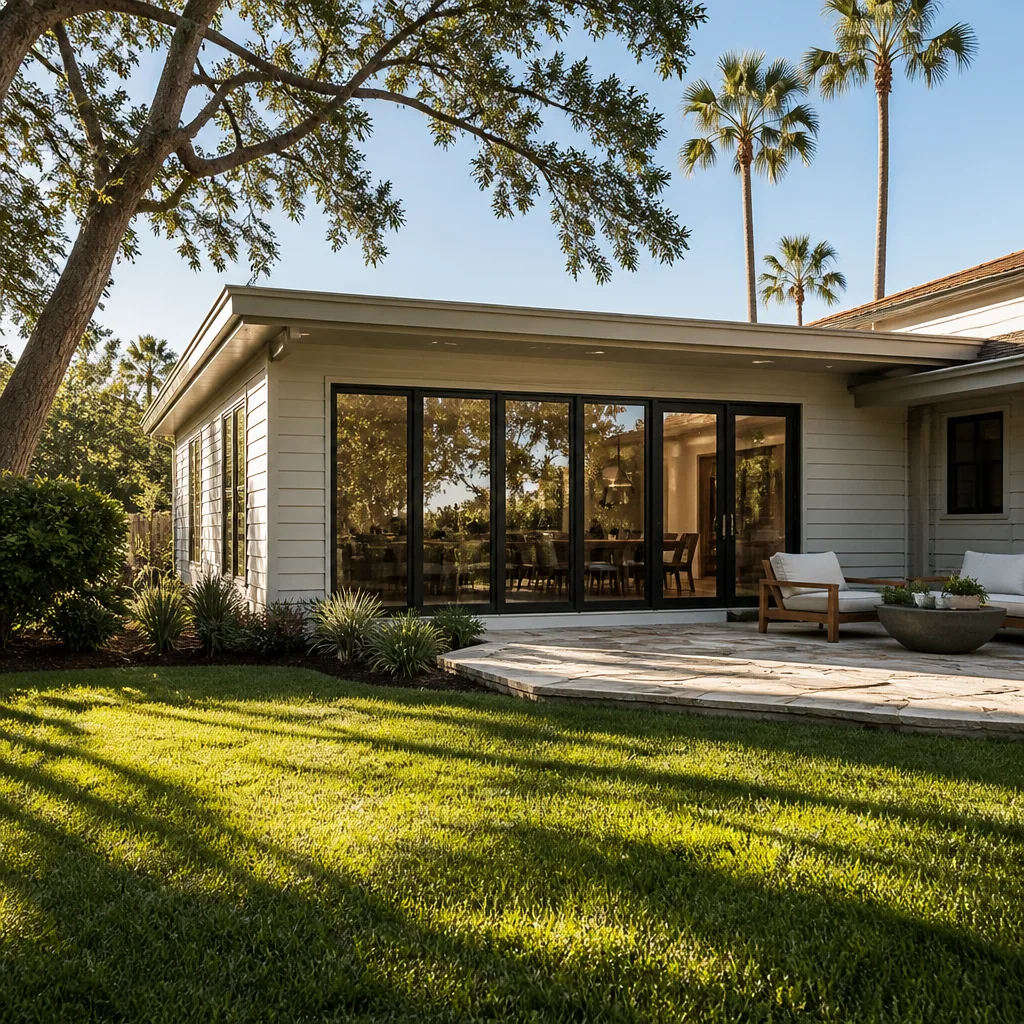
Your ADU isn’t extra square footage. It’s a second building with its own systems and its own failure clock, and the seam where it ties into your main house is the highest-risk spot on the property. Maintenance is a calendar, not a list. Keep the four touchpoints running – tie-in inspections twice a year, mini-split filters every 30 to 60 days, tankless descale every 12 to 18 months, subpanel breaker tests twice a year – and everything else rides on the quarterly or annual cycle. Budget roughly $100 to $200 per month for the five-year picture, and treat the logbook like a piece of the build. Catch a $400 flashing repair in year one and you avoid a $30,000 framing replacement in year four. That math is why ADU maintenance deserves its own schedule.
Maintenance has limits, and sometimes the right move is to bring in a professional before a small issue becomes structural. Whether you’re in Anaheim Hills, the Colony District, or anywhere in between, the crews we connect you with are background-checked, arrive in uniform, and work under upfront pricing with no surprises. Projects over $10,000 qualify for $1,000 off and 0% financing for 18 months, and every job is backed by our 730-Day Done Right Promise – if it’s not done right, we make it right. Calls are answered by a live person 24/7. For fences, pavers, or the ADU itself, we cover the full scope from foundation to finish line. Call (888) 300-3178 to schedule your free estimate.
Written by the team at Groundwork Construction Co. of Anaheim.
See the difference
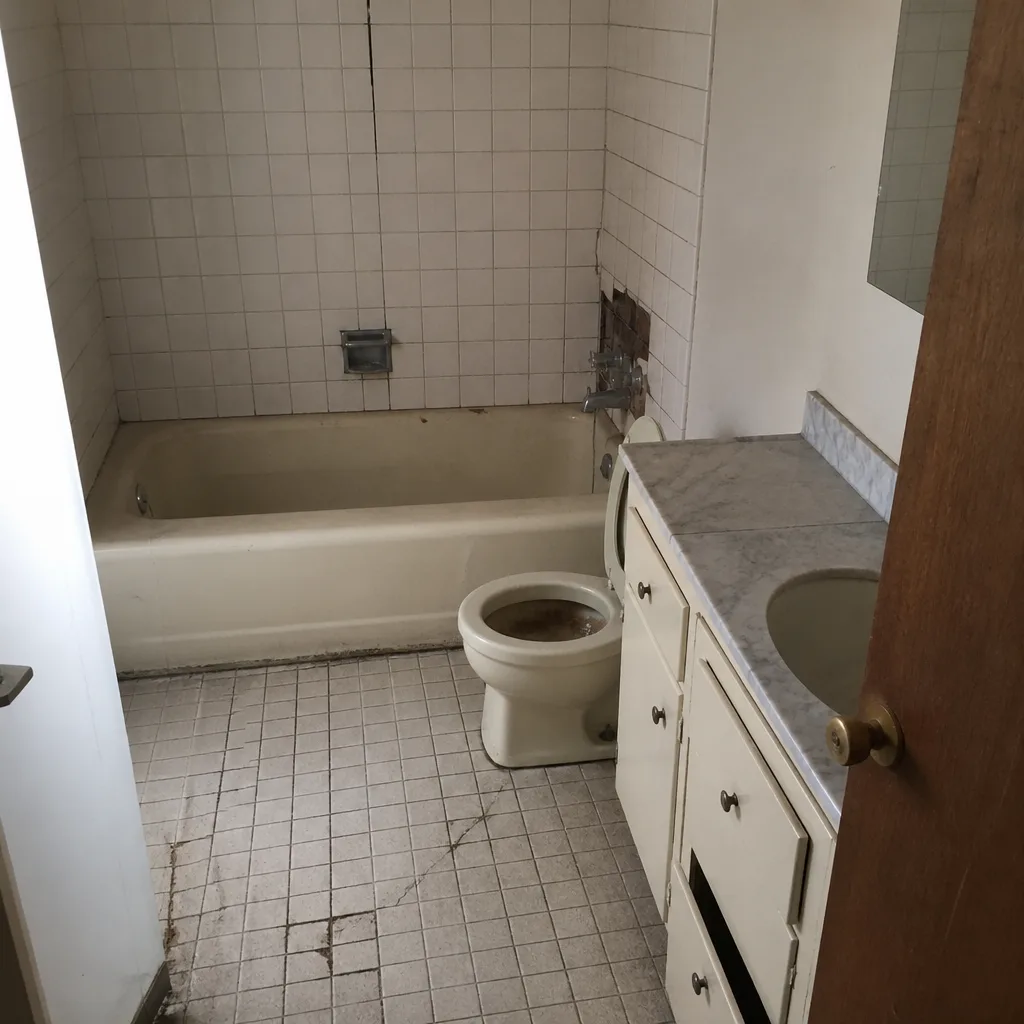 Before
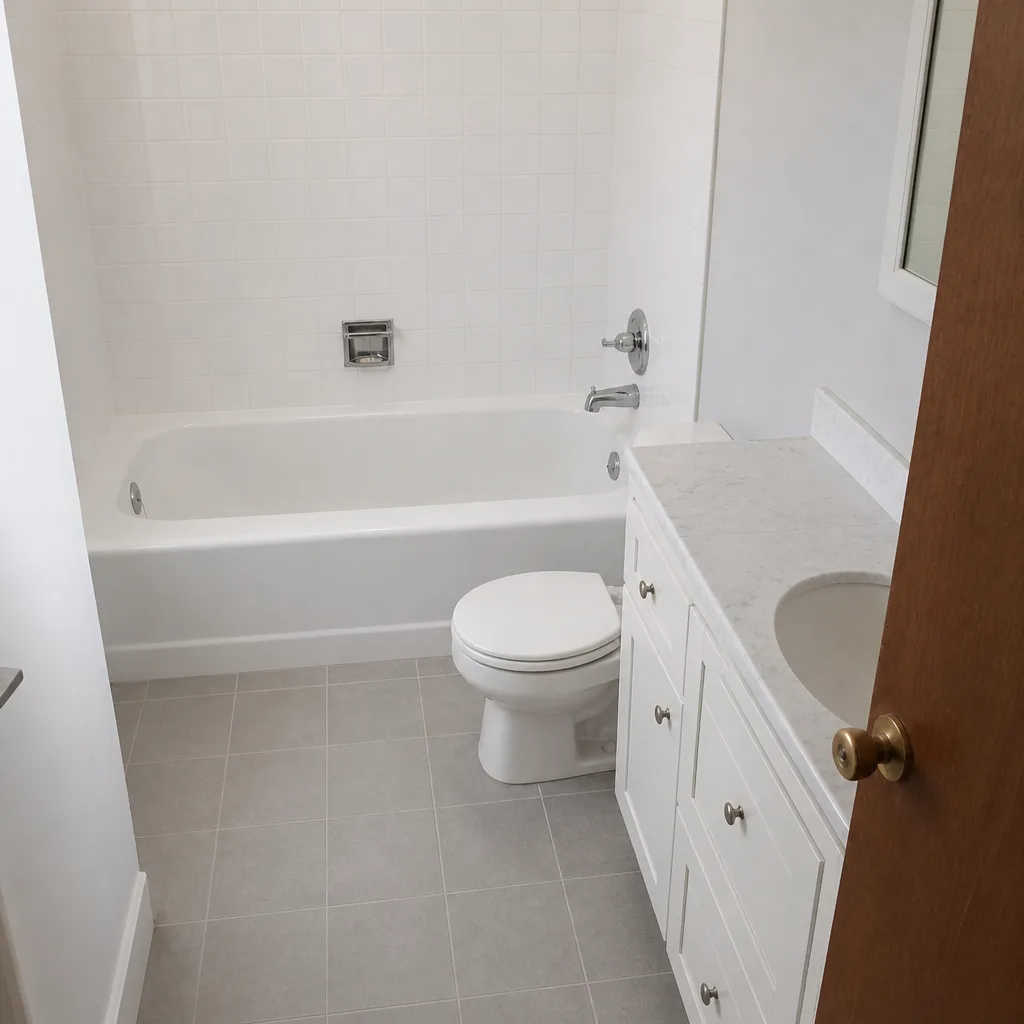 After
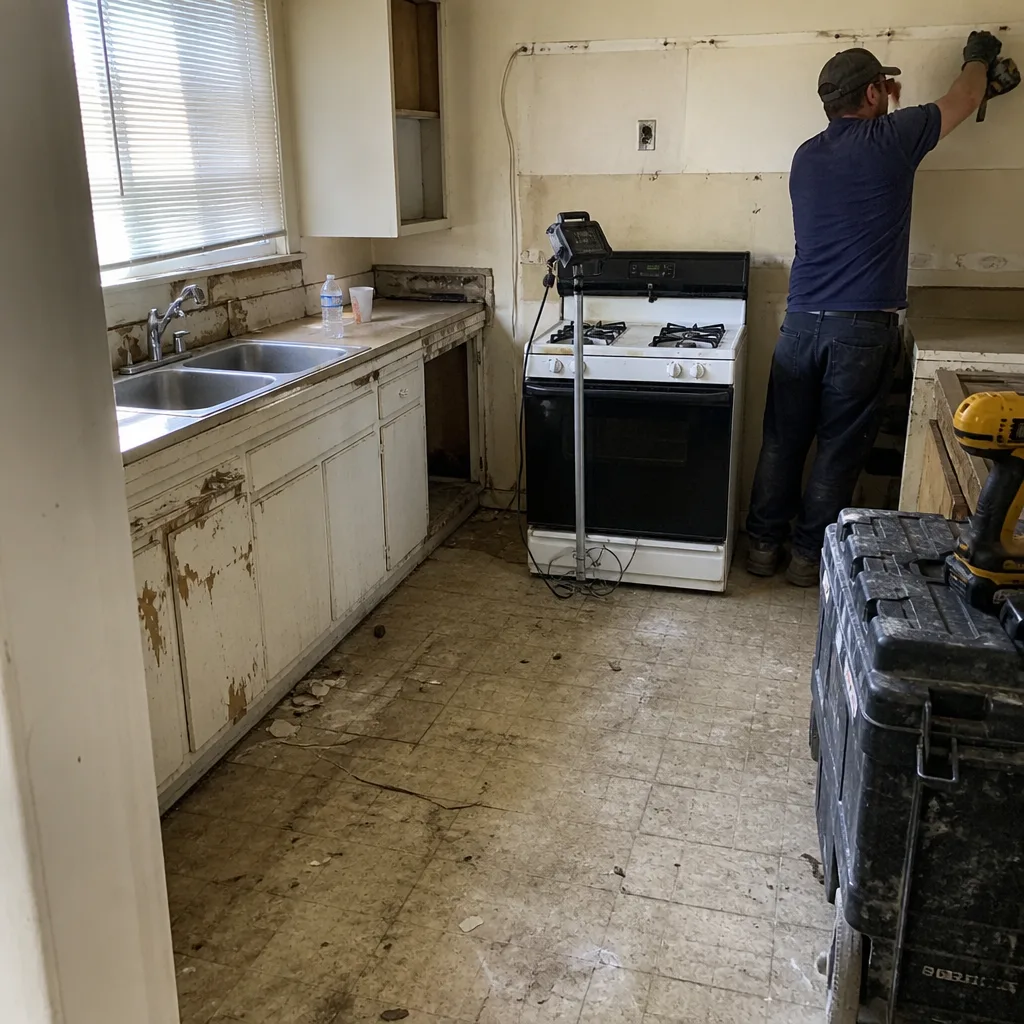 Before
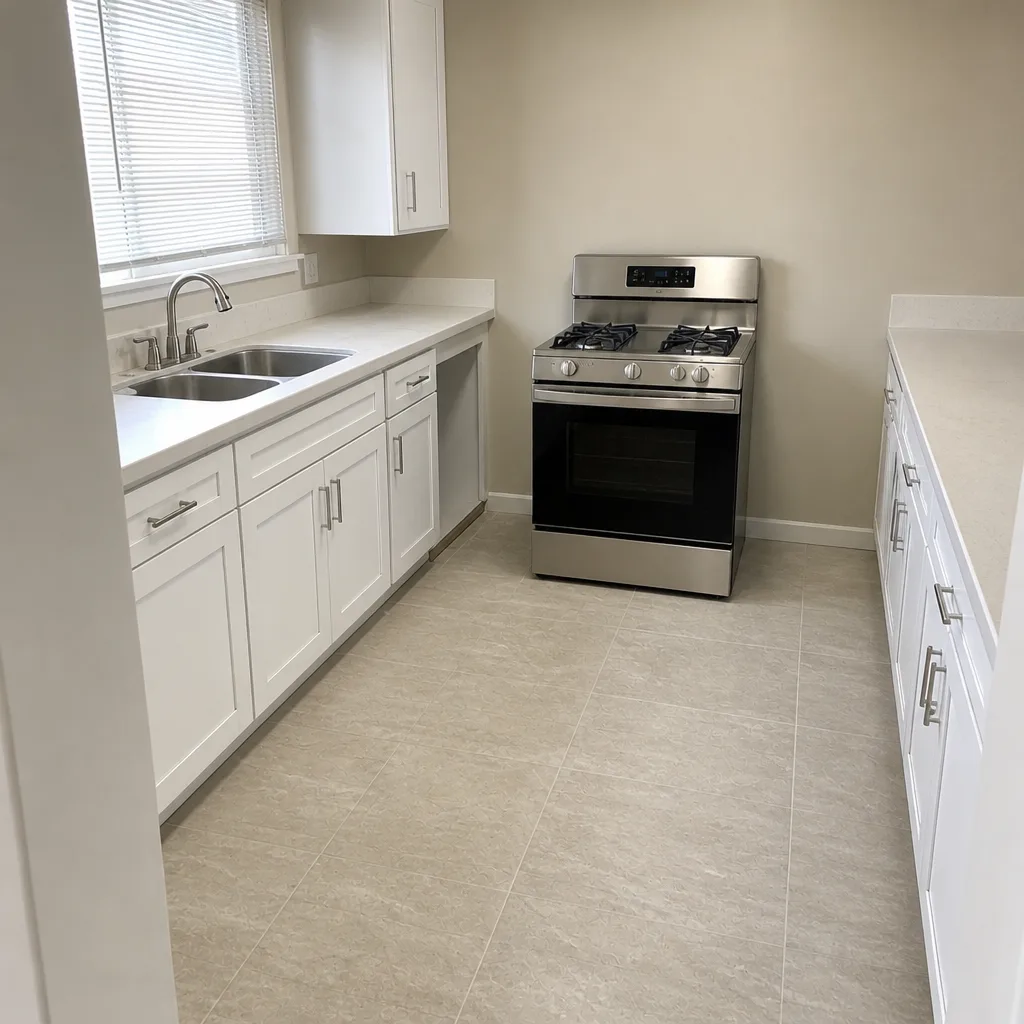 After
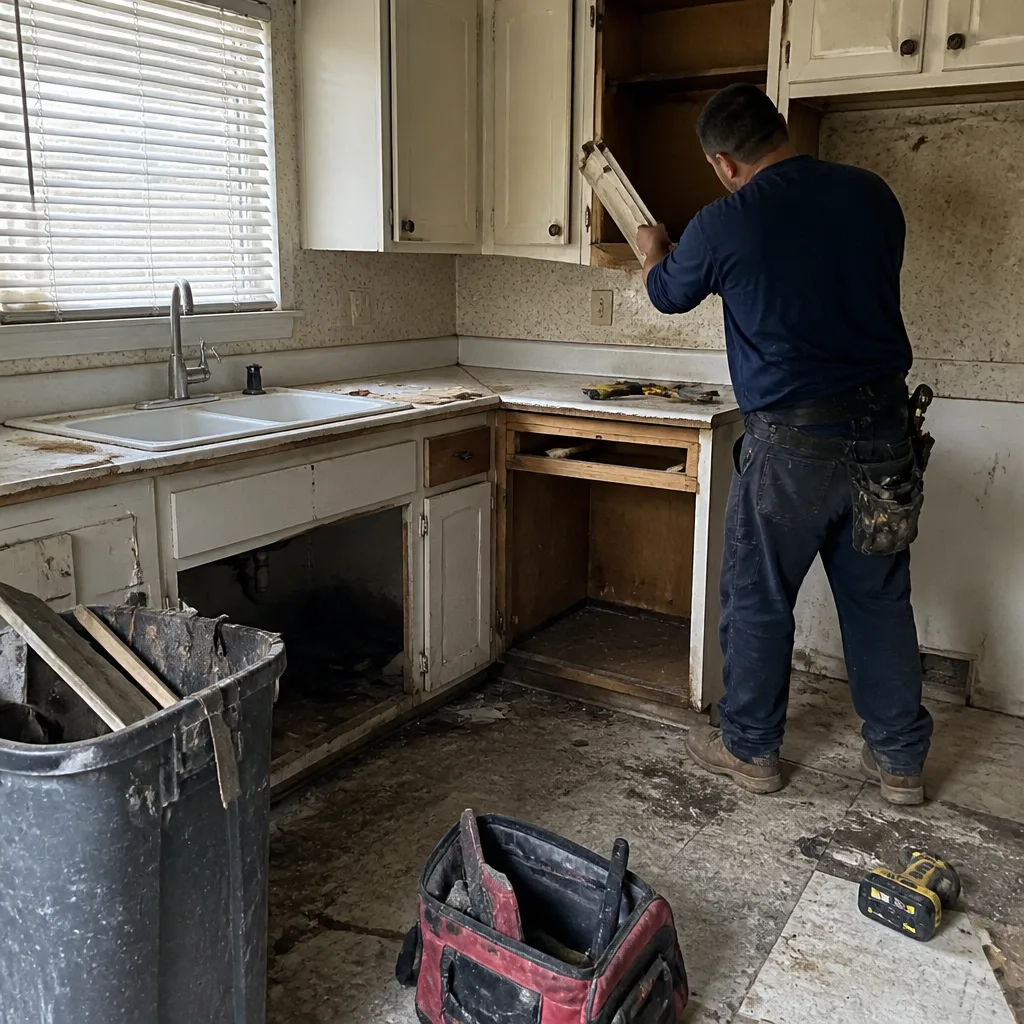 Before
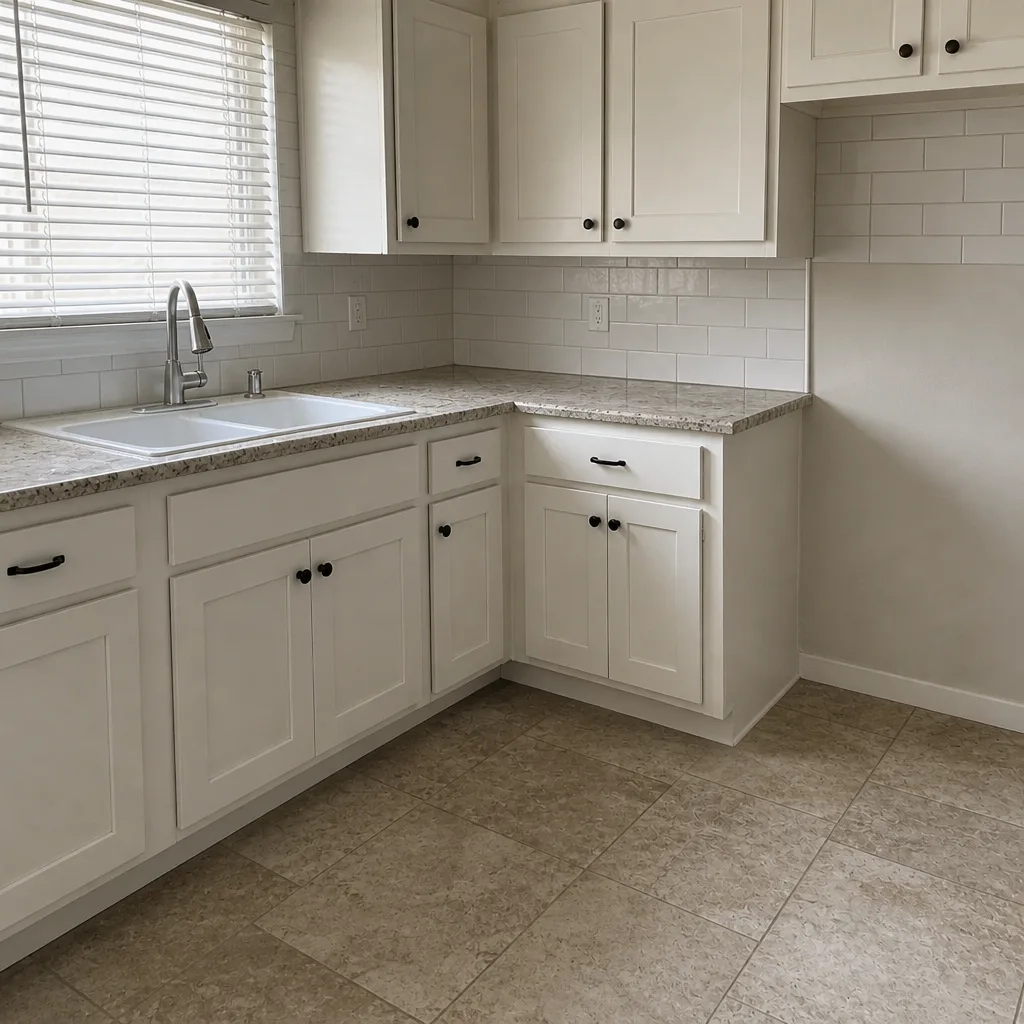 After