




Free written scope consultation - allowances, timeline, and change-order rules on paper before a single trade is scheduled
Styles & brands we work with
- Kitchen remodeling
- Bathroom remodeling
- Home additions & ADU
- Roofing
- Windows & doors
- Driveway & pavers
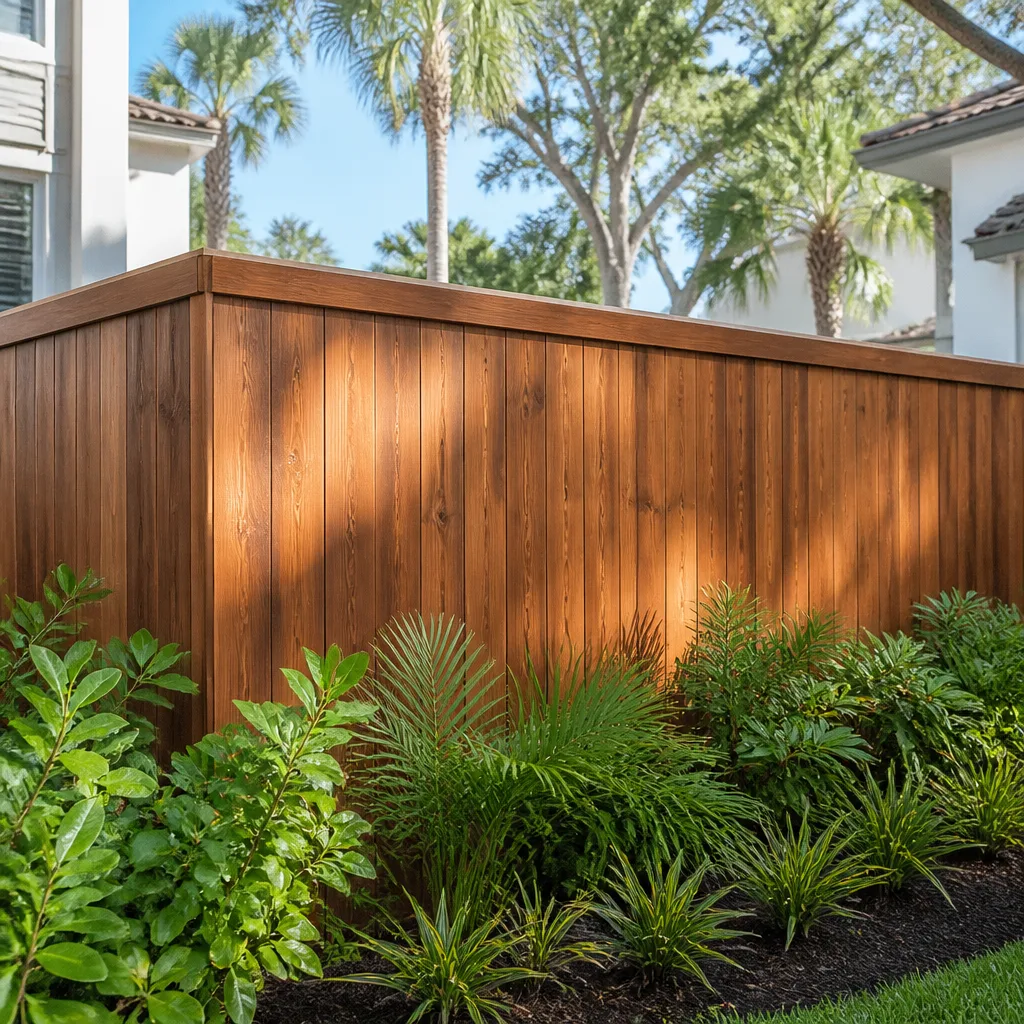
- Fence
See the difference
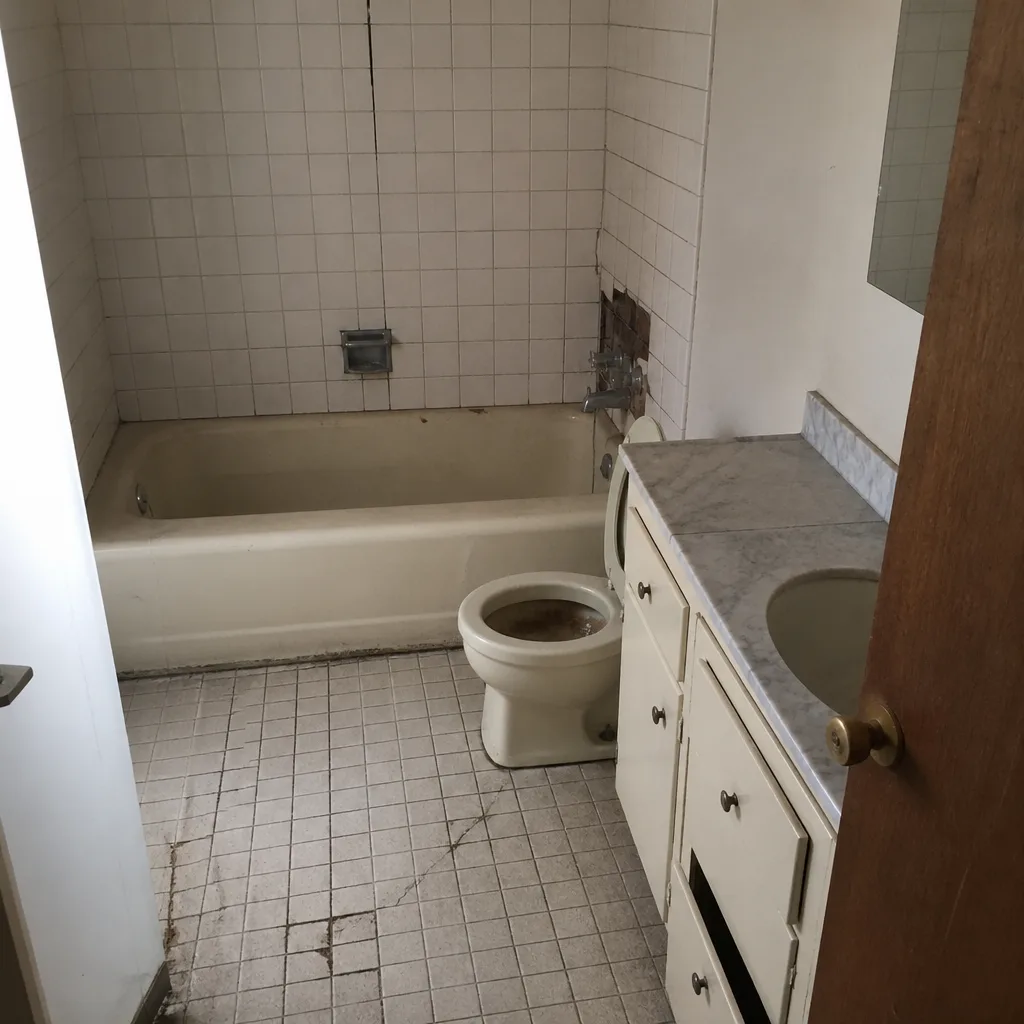 Before
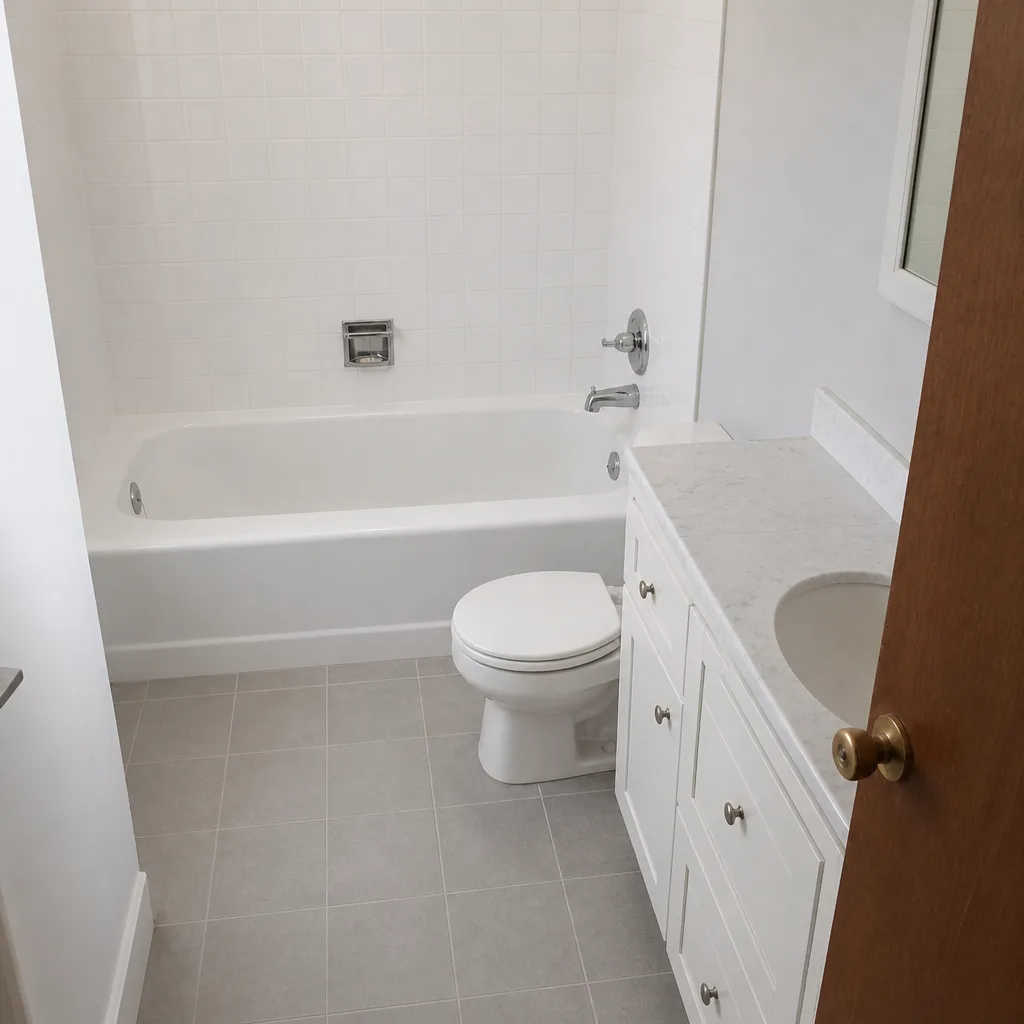 After
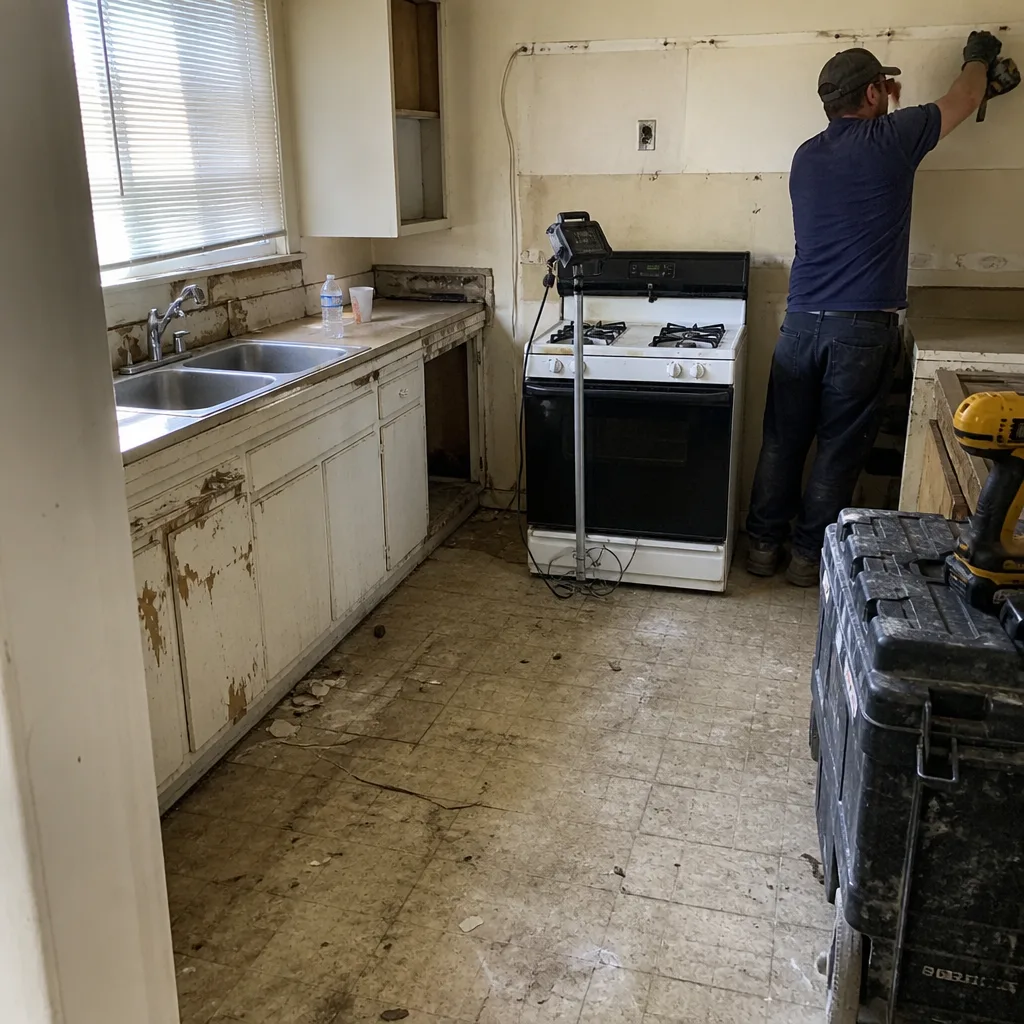 Before
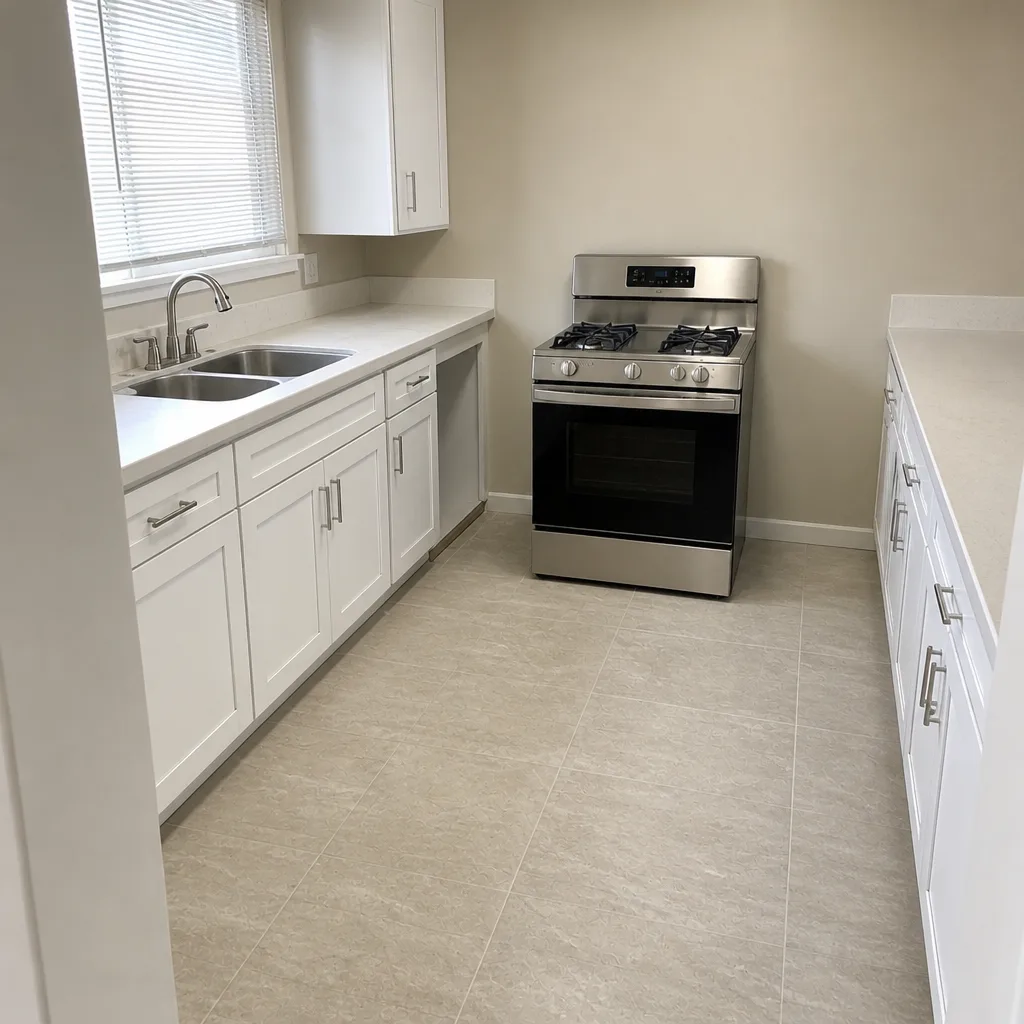 After
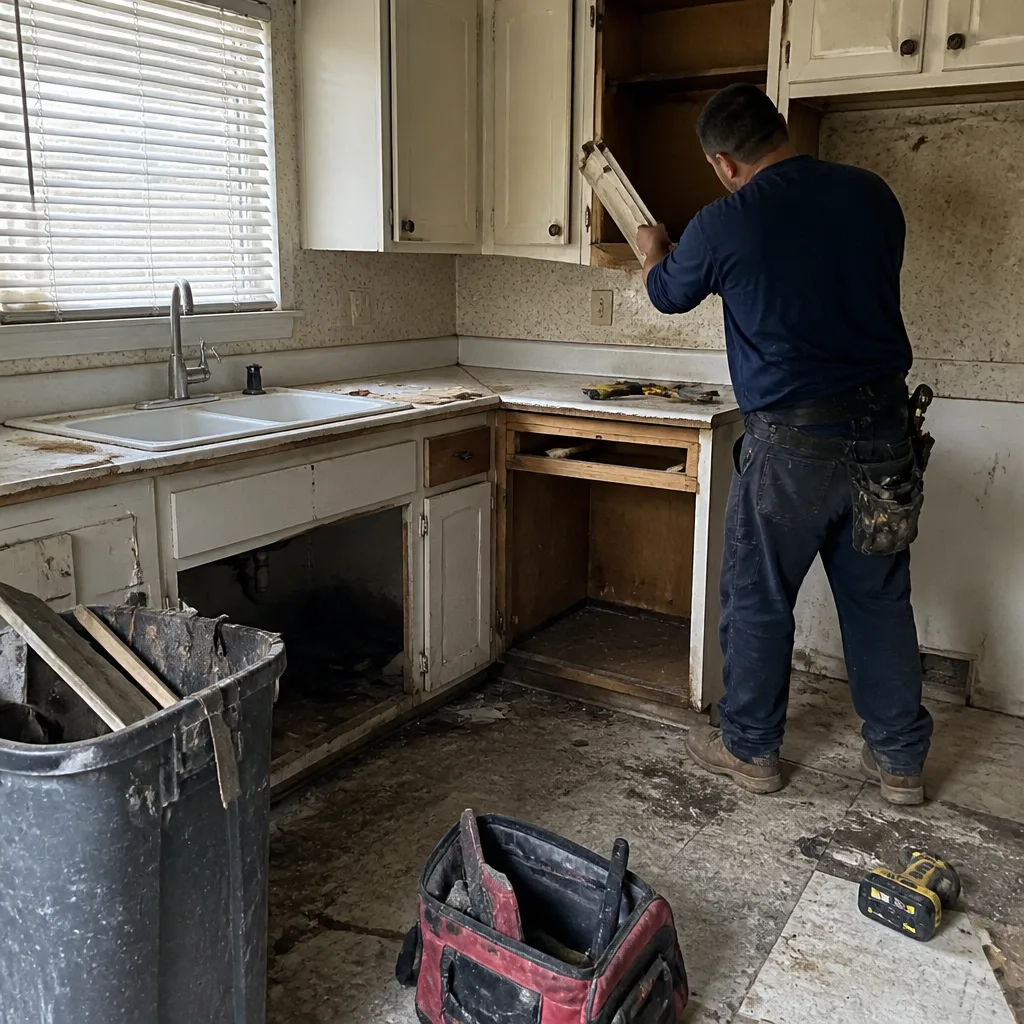 Before
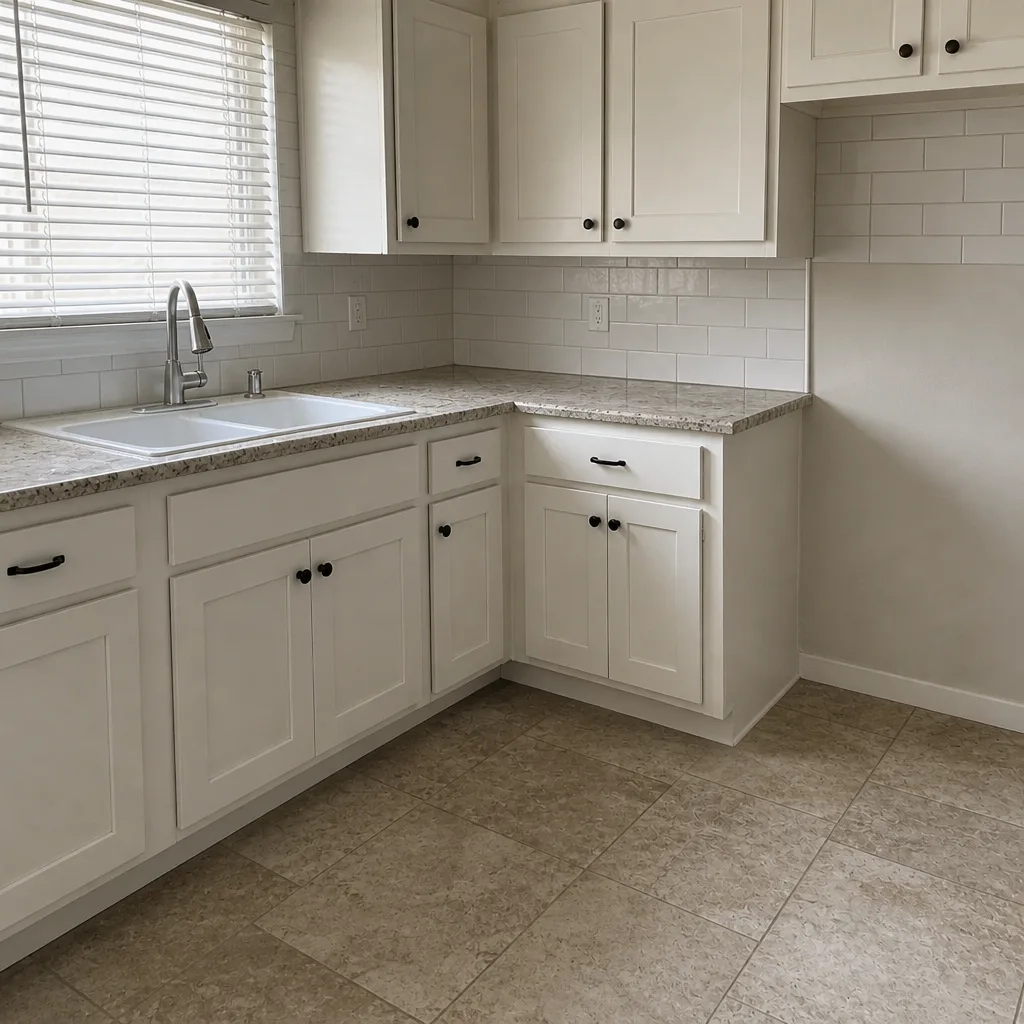 After
Signs You Need a New Roof in Anaheim, CA: What to Look For (and What the Generic Checklist Gets Wrong)
The clearest signs you need a new roof in Anaheim are granule loss washing into your gutters after rain, brittle shingles that crack instead of flex, and flashing pulling away from your stucco walls. Most “signs you need a new roof” lists were written for wet, cold climates, where moss, ice dams, and moisture rot top the warning list. Those problems barely exist in Anaheim.
Here, the semi-arid Santa Ana wind corridor and relentless sun do the damage quietly, through UV heat-cycling rather than water. Roofs fail from the top down and the edges in, and the first sign homeowners notice is often the one that costs the most to fix. If you want a straight read on yours, call (888) 300-3178 and we’ll send out a background-checked, uniformed technician with a written finding.
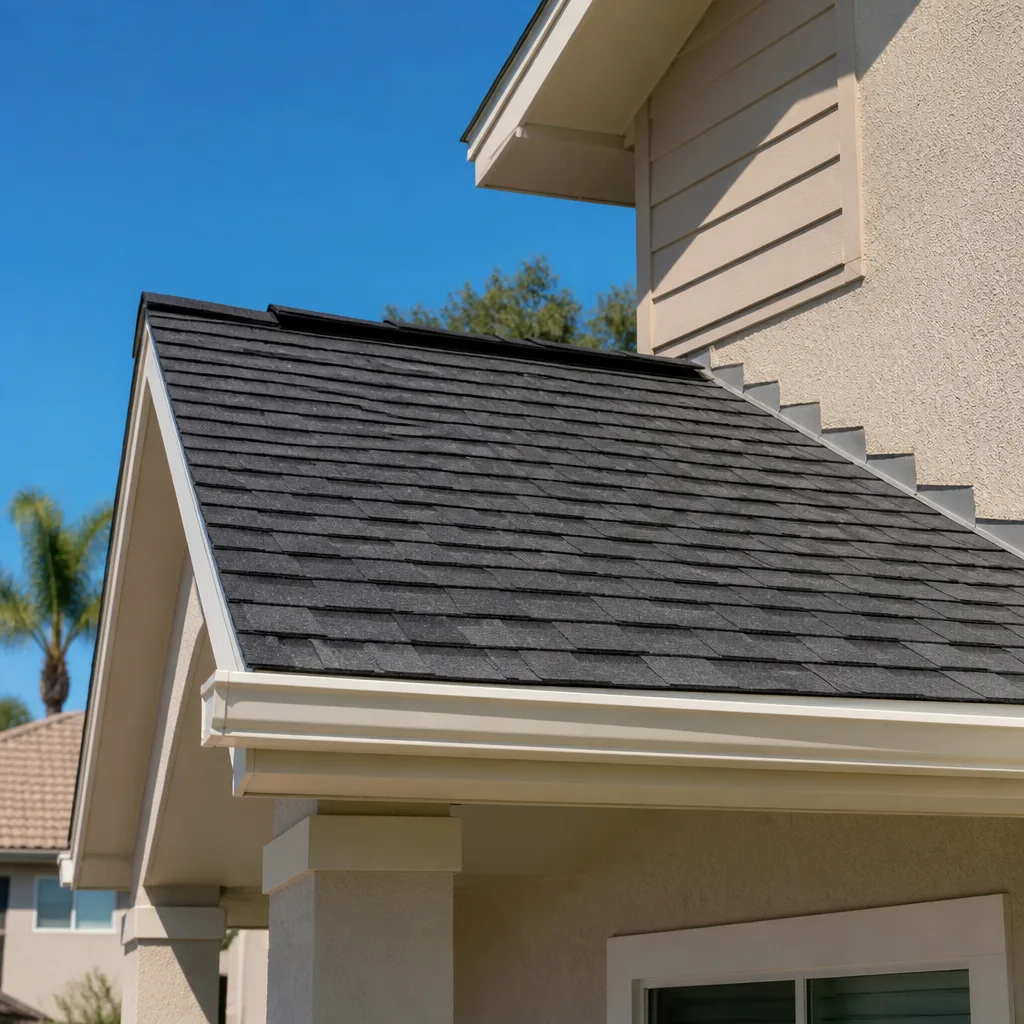
Why the Standard Checklist Doesn’t Fit Anaheim
Anaheim’s residential stock is mostly 1950s to 1970s single-story tract homes on slab foundations, especially in the Colony and the older west-side grid. Those roofs have spent decades baking under a sun that never lets up and almost never freezes. There’s no snow load, no freeze-thaw cycle, and no wet season long enough to grow moss on a pitched shingle roof. So the clues the national articles tell you to hunt for are mostly absent, while the ones that actually matter go ignored.
The heat-cycling problem is real and it’s specific. Flat, sun-baked lots take heavy UV load, and it shows up on stucco walls and decking long before it shows up as a ceiling stain. Contractors working this city deal with a split personality too: meticulous permitting around the Resort District versus the aging residential grid, where nobody has touched a roof in 30 years. We’ve spent enough time on both kinds of roofs to know the difference, and it shapes what we tell homeowners to watch.
Three Anaheim Signs That Actually Matter
1. Granule loss in the gutters and downspout outlets
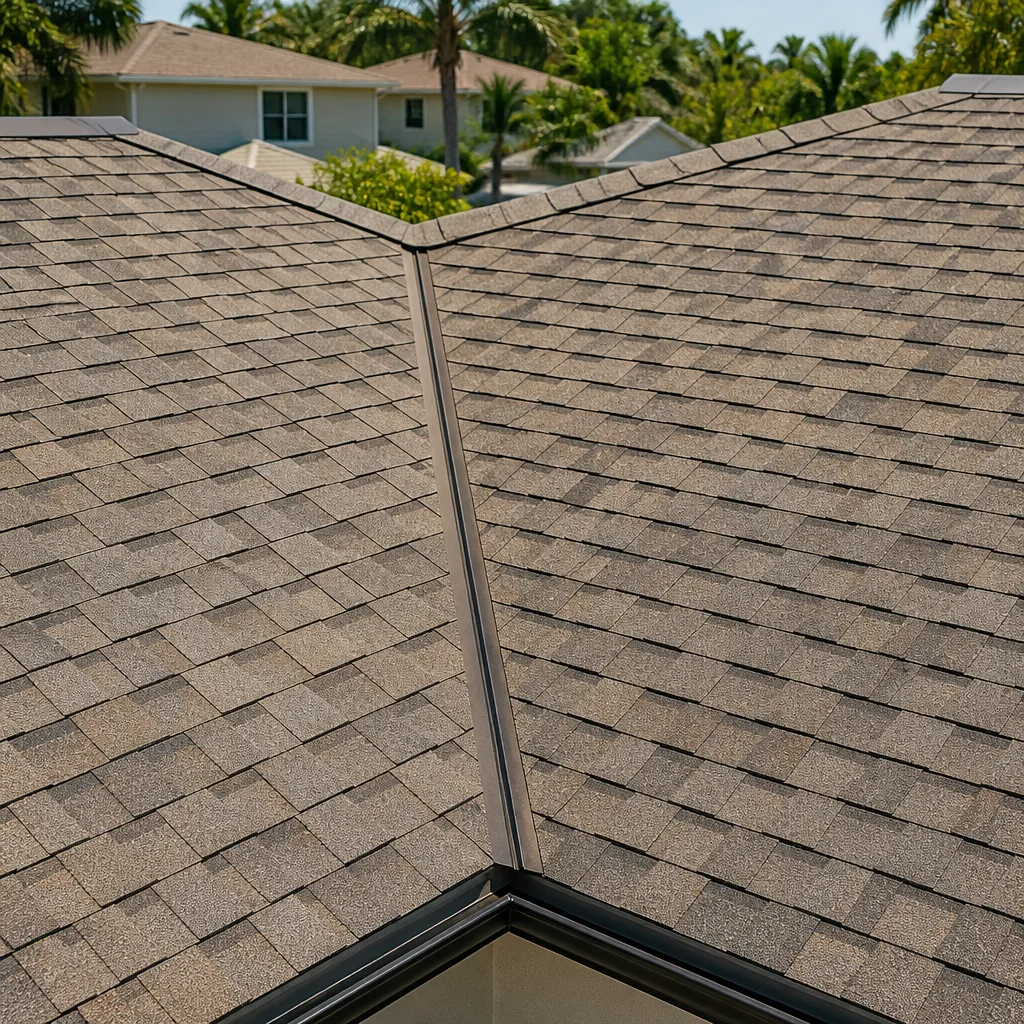
After any rain event in Anaheim, check the gutters and the downspout splash zones. If you’re seeing a gritty, sand-like accumulation of shingle granules, your roof is shedding its UV armor. In a dry climate, granule loss is the primary UV damage indicator, and it typically shows up two to three years before you’ll see visible cracking on the surface. Homeowners who wait for cracks are already behind. When the granules are gone, the asphalt underneath is exposed and the clock is running.
2. Stucco separation at the roof-to-wall flashing
Walk the perimeter of your house and look where the roofline meets the stucco. Anaheim’s thermal expansion cycle, hot days, cool nights, works flashing loose from stucco siding long before a single drop reaches your ceiling. You’ll see a gap, a lifted edge, or a bead of sealant that’s cracked and pulled away. This is the warning sign people walk past every day for years. Left alone, the first heavy rain of the season finds that gap and the interior damage shows up all at once. If your flashing is pulling away, that’s a Roofing call worth making early, not a wait-and-see.
3. Shingle brittleness you can test from the attic
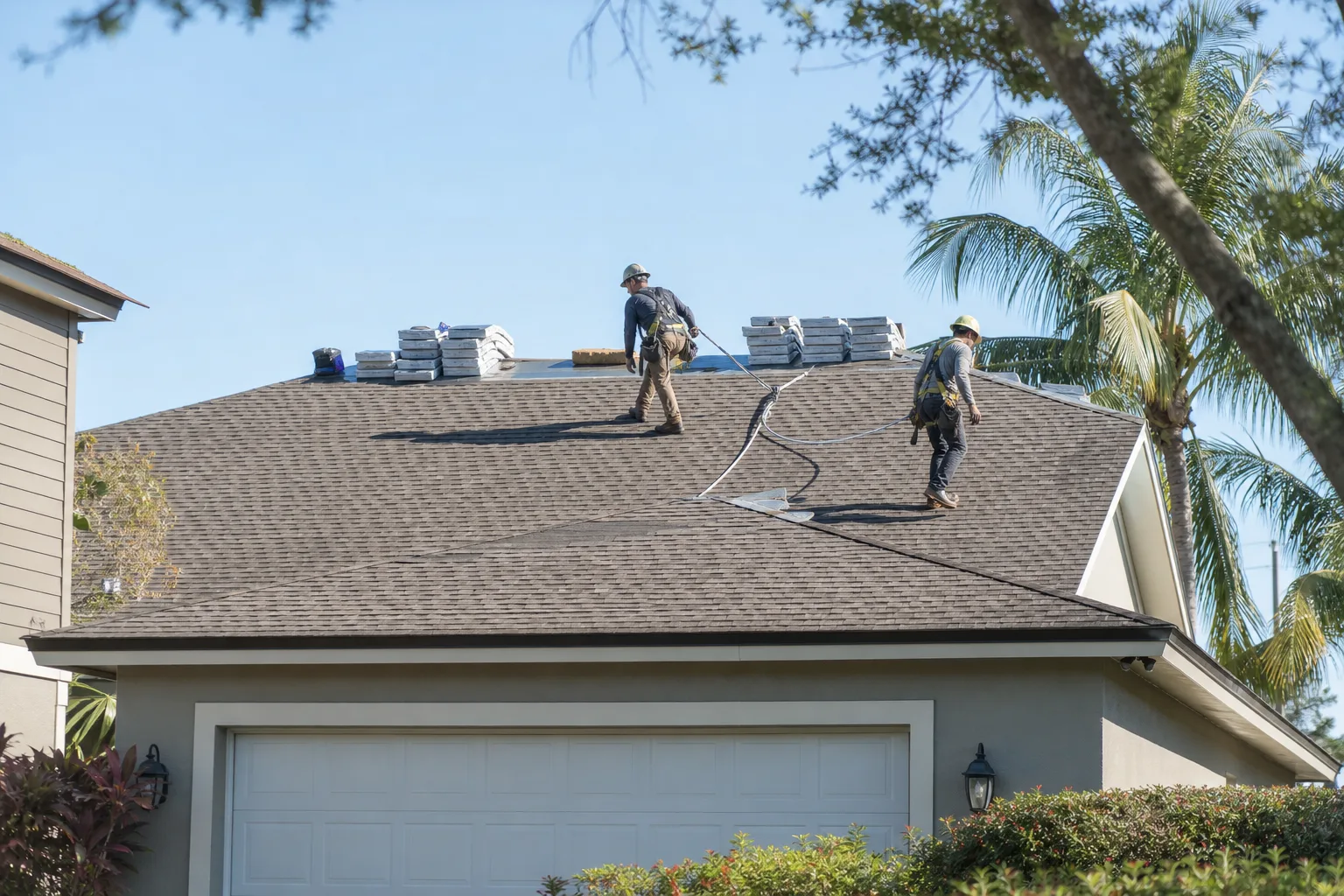
On 1950s and 1960s slab homes, attic ventilation often falls well short of current code, and the decking gets hot enough that shingles bond to it. Instead of flexing, they shatter. From inside the attic, you can sometimes see daylight through the deck or notice that the underside is discolored and heat-stained. From outside, tap a shingle edge gently; if it cracks rather than bends, the roof is done regardless of how intact it looks from the street. That’s a replacement signal, not a repair one.
The Age Reality Check for Anaheim Housing Stock
Here’s the part most checklists skip. If your home is a 1950s to 1970s Colony or west-side Anaheim tract build and you have no documented full roof replacement, the roof is almost certainly at or past end of life, whether or not you can see a problem. Original roofs from that era don’t outlast their materials. “It looks fine” is the most common thing we hear, and it’s also the sentence that comes right before a leak. Age plus no paper trail is a replacement signal on its own.
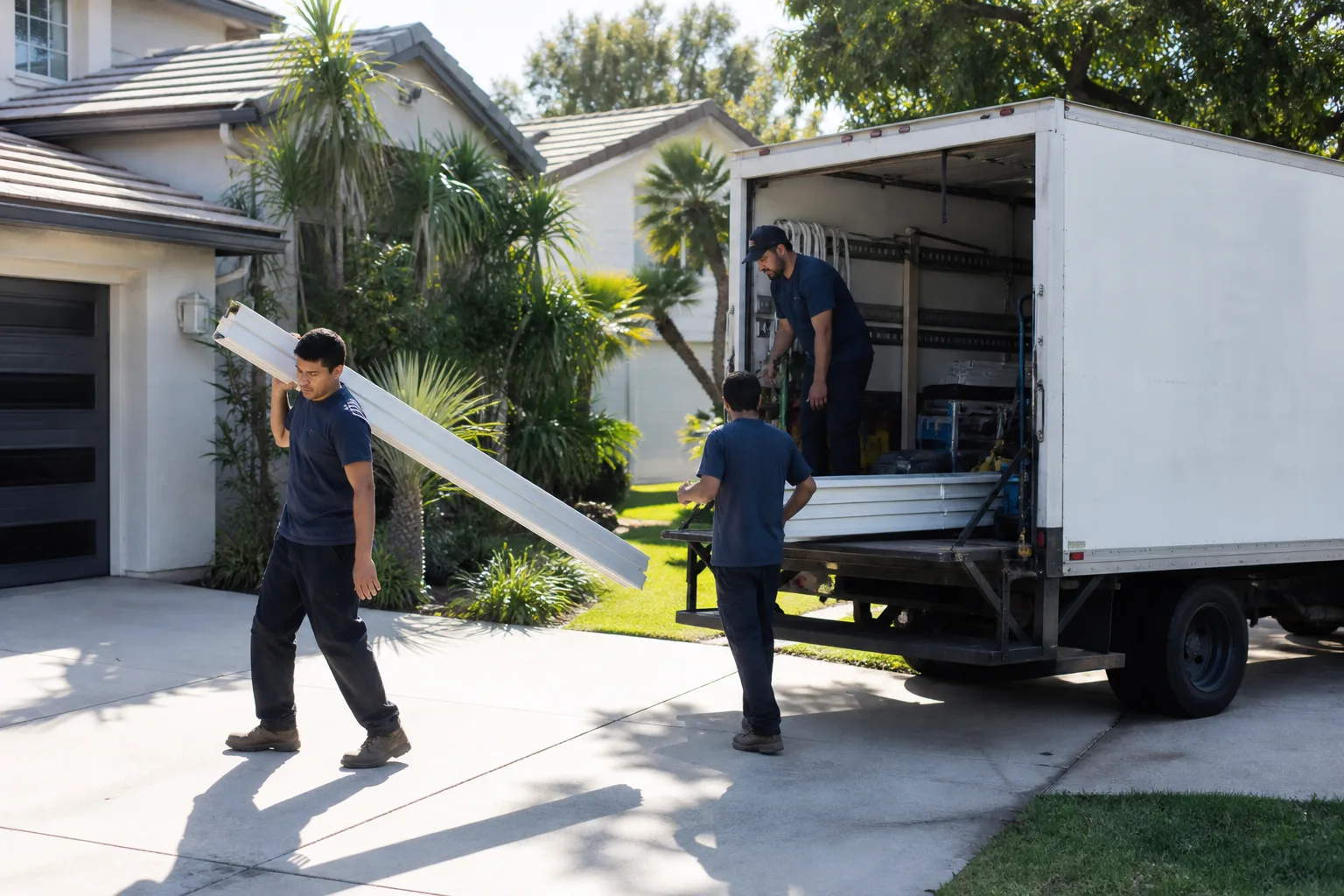
When it’s time to replace rather than patch, we work with brands like GAF and Owens Corning, so you’re choosing quality rather than whatever’s in stock. Most replacements fall in this range for Anaheim homes:
| Service | Typical Anaheim Range |
|---|---|
| Roof Replacement | $8,000-$20,000 |
| Roof Repair | $400-$1,800 |
| Metal Roof Installation | $15,000-$40,000 |
| Tile Roof Repair | $600-$2,500 |
Every project carries our 730-Day Done Right Promise, which means if it isn’t done right, we make it right. That’s one of the longest workmanship guarantees in the residential construction space, and it’s written, not spoken.
A Real Inspection, Not a Sales Call
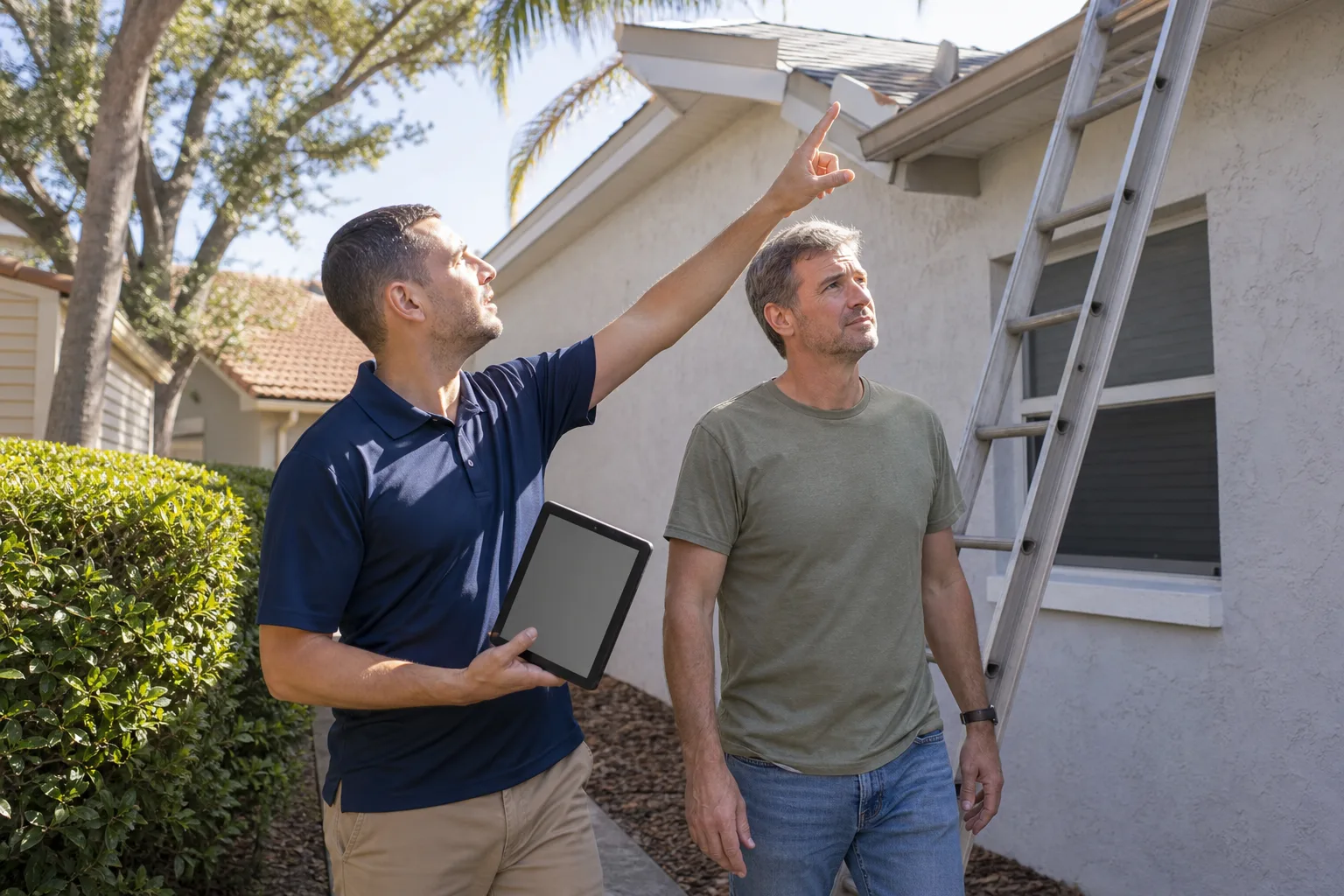
Plenty of “free estimates” are really sales calls in disguise: someone glances at the roof from the driveway, tells you it’s shot, and hands you a number with no documentation. We do it differently. A background-checked, uniformed technician gets up on the roof, checks the flashing at the stucco, looks in the attic, and writes down what they actually found. You get a written finding you can keep. That’s also why we answer the phone with a live person 24/7, not a voicemail box that waits until Monday.
You don’t need to climb a roof to make this decision, and we’d rather you didn’t. Shingle work is height work, and walking a pitched roof is a fast way to get hurt. The tapping test and the flashing check are things you can do safely from a ladder or from the ground with binoculars. Anything past that is a job for someone who’s trained for it. If you’re in the Anaheim service area, we’ll take it from there and put what we find in writing.
Frequently Asked Questions
You repair when the damage is localized (one flashing joint, a few cracked shingles, a single valley) and the deck, granule coverage, and overall age are still sound. You replace when granule loss is widespread, shingles are brittle, or the roof is on an older Anaheim tract home with no replacement history. A written inspection tells you which case you’re in instead of guessing. Call (888) 300-3178 for an exact quote; estimates are free.
No. A single leak is often a flashing or sealant failure, not a sign the whole roof is done. In Anaheim, leaks frequently trace back to dried-out flashing at the stucco wall rather than failed shingles. The trick is finding it before it spreads. We can trace the source and tell you plainly whether repair covers it or replacement is the better money spent.
UV exposure, not weather, is what shortens roof life here. The sun and heat-cycling wear asphalt shingles out faster than a wet climate would, and poor attic ventilation accelerates it further. That’s why checking granules and brittleness matters more than waiting for a leak. If your roof is showing those signs, it’s worth an inspection now rather than after the first storm.
Yes. We answer calls with a live person 24/7, so you can reach us any time, and we schedule inspections quickly. A uniformed, background-checked technician comes out, gets on the roof, and leaves you a written finding. Call (888) 300-3178 to set a time; there’s no pressure and no surprise number at the end.
Straight Answers Before You Decide
If you’d rather have it looked at than guess from the driveway, Groundwork Construction Co. of Anaheim offers a no-pressure assessment in Anaheim. Our technicians bring up to 12 years of experience, transparent upfront pricing, and a written finding you can actually use. Call (888) 300-3178 for a free estimate and let us tell you what your roof is really doing.
Written by the team at Groundwork Construction Co. of Anaheim, serving Anaheim, CA.