Last updated November 18, 2026



Free written scope consultation - allowances, timeline, and change-order rules on paper before a single trade is scheduled
How Long Does Driveway & Pavers Take? Timelines and What to Expect
A driveway paver job quoted at “one day” is either very small or missing a phase – and the phase most commonly skipped to hit that number is the one that determines whether your driveway lasts 8 years or 25. That phase is base preparation, and it’s also the one you can’t see once the pavers are down. In Anaheim, where clay-heavy soil and seasonal winter rain put real stress on hardscape, the difference between a rushed timeline and an honest one shows up two or three years later as settling, rutting, and shifting joints. This guide breaks down every phase of a paver installation, how long each one actually runs, and how to read a contractor’s schedule as a signal of how they operate.
Quick Answer
A typical residential driveway paver installation in Anaheim takes 3 to 7 working days from demo to final joint sand. Small driveways under 500 square feet can wrap in 2 to 3 days, while larger driveways over 1,000 square feet with complex borders or a culvert crossing usually run 7 to 10 days. The biggest variable isn’t the paver laying itself – that’s fast – it’s demolition, excavation, and base compaction with proper drying time between passes.
Styles & brands we work with
- Kitchen remodeling
- Bathroom remodeling
- Home additions & ADU
- Roofing
- Windows & doors
- Driveway & pavers
- Fence
Key Takeaways
- Paver laying is usually 1 to 2 days; base preparation is 2 to 4 days and determines how long the driveway lasts.
- Base compaction requires staged lifts with moisture conditioning, not one pass with a plate compactor.
- Anaheim’s winter rain pattern and clay-heavy soils demand a real drainage plan, not just compaction.
- A quote with no curing or compaction time built in is a quote that moved that time to your future repair bill.
- Driveway access, existing material, and the number of paver cuts heavily affect real timeline over headline timeline.
- An experienced crew shortens a job by working efficiently within each phase, not by skipping phases.
Table of Contents
- Phase-by-Phase Timeline: What Actually Happens on a Paver Driveway
- Why Base Compaction Takes Multiple Days and What Happens When It’s Rushed
- How Driveway Size, Existing Material, and Access Affect the Timeline
- What Anaheim Weather Does to Paver Installation Schedules
- How to Read a Contractor’s Timeline: Red Flags vs. Legitimate Speed
- How to Plan Your Paver Project Without Wasting Days
- Common Mistakes to Avoid
- When to Call a Professional
- Frequently Asked Questions
- The Bottom Line
Phase-by-Phase Timeline: What Actually Happens on a Paver Driveway
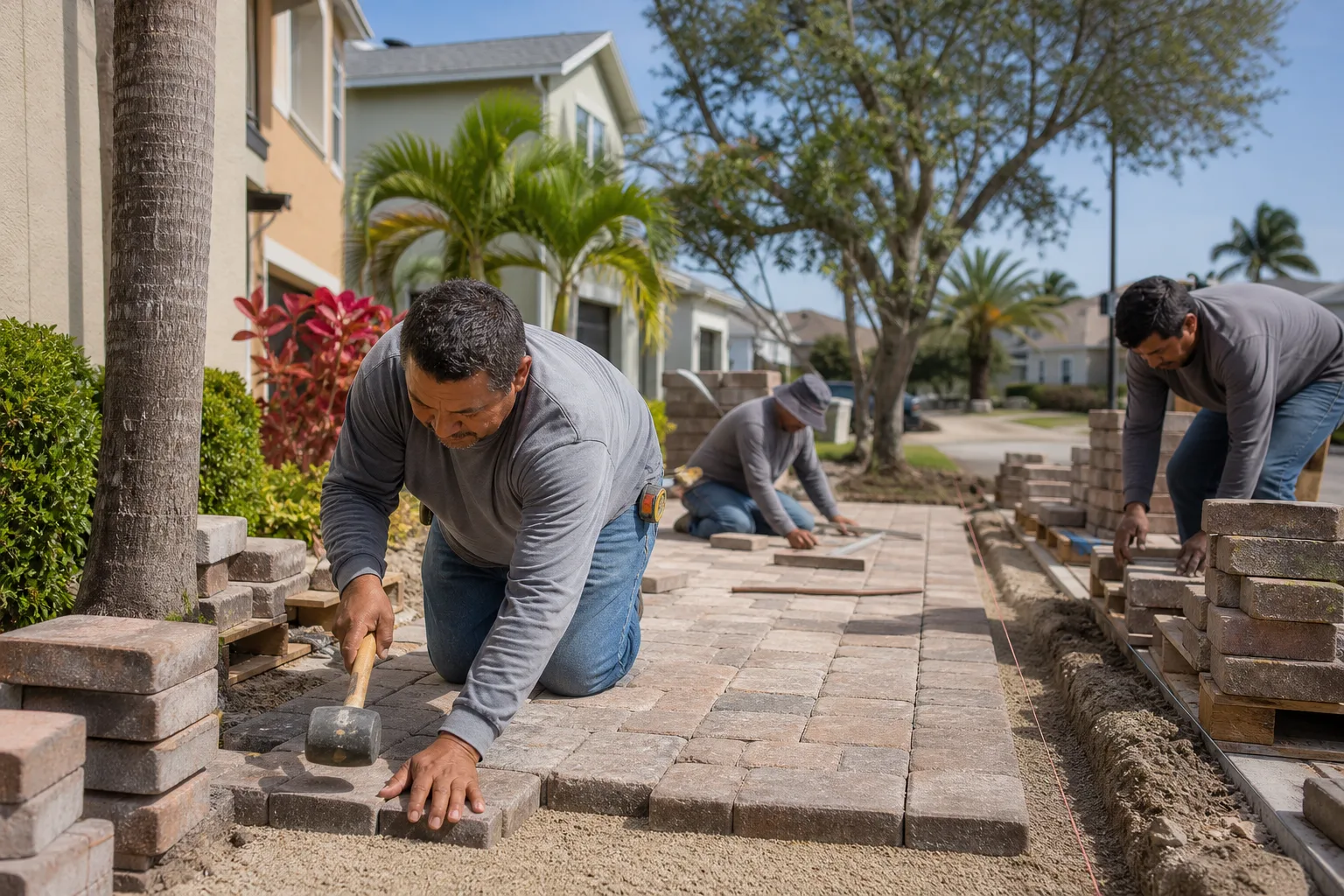
Every honest paver timeline is built from the same eight phases. Skip one and the driveway still looks finished on day three – it just doesn’t look finished on year five. Here’s how each phase actually runs on a typical Anaheim driveway of 700 to 900 square feet, which covers most of the residential lots in neighborhoods like West Anaheim, Brookhurst, and the streets off Lincoln Avenue.
- Demolition (half a day to 1.5 days). Removing existing concrete, asphalt, or old pavers. A concrete driveway 4 inches thick with rebar takes longer than asphalt. If the old concrete is reinforced and tied into a curb, budget a full day.
- Excavation (half a day to 1 day). Digging down to the subgrade – typically 6 to 10 inches below finished grade to make room for base, bedding, and paver thickness. Tree roots, old utility lines, and buried concrete from a previous pour all add time.
- Subgrade prep and grading (half a day). Shaping the subgrade to the correct slope so water drains away from the garage, not toward it. In Anaheim, this grading matters more than homeowners realize because winter storms push water hard against garage slabs on flat lots.
- Base installation and compaction (2 to 3 days). Crushed aggregate base installed in 2- to 4-inch lifts, moisture-conditioned, and compacted in staged passes. This is the phase that decides the driveway’s lifespan, and the phase most often compressed.
- Bedding layer (half a day). A 1-inch layer of coarse sand screeded to the final grade. Screeding takes skill; a bad screed shows up as an uneven surface forever.
- Paver laying (1 to 2 days). The satisfying part. An efficient crew lays 400 to 700 square feet per day, faster on large open fields, slower on borders, corners, and pattern work.
- Cutting (half a day). Edges, curves, and any obstructions – a clean cut line is what separates a professional driveway from a hobbyist one. Borders, soldier courses, and a curved driveway apron all add time.
- Edge restraint, joint sand, and cure (half a day plus 24 to 48 hours). Plastic or concrete edge restraints are pinned into the base. Joint sand is swept in and compacted into the joints. The driveway is walkable immediately, but joint sand needs to set and you shouldn’t drive on it for 24 to 48 hours minimum.
Add it all up for a standard Anaheim driveway and you land between 5 and 8 working days. For a smaller 400 square foot parking pad, 2 to 3 days. For a long driveway that runs from a frontage lane back to a detached garage in neighborhoods like The Colony or around Pearson Park, expect the upper end or beyond.
If you’re also planning to bring fencing or a gate into the same project window – common on a driveway remodel – you can read more on timing in our guide to Fence Installation in Anaheim.
Why Base Compaction Takes Multiple Days and What Happens When It’s Rushed
This is the section that matters most. Base compaction is why a driveway install takes a week instead of three days, and it’s where the two-year vs. twenty-five-year lifespan is decided.
Crushed aggregate base doesn’t compact into a solid mass by magic. It has to be installed in lifts – meaning layers – of about 2 to 4 inches, brought to the right moisture content, and compacted with a plate compactor or, better, a vibratory roller. Then the next lift goes on and the process repeats. Between lifts, the base needs enough time for the moisture to work through the material and for the compaction to stabilize.
If a crew pours 8 inches of base in one pass and hits it with a compactor once, the bottom of that layer stays loose, the top gets dense, and the middle is a gradient. Pavers sit on top of an unstable sandwich. As traffic cycles and water enters the joints (and it will during a winter storm), the loose material settles unevenly. That’s where you see the failures – longitudinal rutting along tire paths, rocking pavers near the garage slab, and joints that widen over the second year.
Staged passes with drying time between them cost the contractor an extra day, sometimes two on a large driveway. Skipping them saves the contractor a day and costs the homeowner a repair.
What proper base compaction actually looks like
- 2 to 4 inch lifts, each compacted across the full surface with multiple overlapping passes.
- Moisture conditioning – the base is wetted between lifts, not bone-dry, not soaked.
- Compaction testing on large installs – density verification with a nuclear or sand cone gauge.
- Time between lifts, especially when the base was delivered saturated.
- Adequate base depth. In Anaheim’s clay-heavy soils, 4 to 6 inches of compacted base is a realistic minimum for a driveway under car traffic; more on sites with poor drainage.
That last point is where you’ll want to be honest about the schedule when you get an estimate. If a contractor quotes compaction as a half-day item on a driveway over 600 square feet, you’re either about to have a very thin base or a very rushed install. Neither ages well. When we quote a paver driveway through Groundwork Construction Co., base compaction shows up as its own line item in the schedule with days behind it – not something glossed over in a lump-sum number.
For homeowners who want to see this phase done right the first time – and then verified through a real warranty – our Driveway & Pavers in Anaheim page covers how we handle feasibility, drainage, and the 730-Day Done Right Promise that backs the install. If it’s not done right, we make it right.
How Driveway Size, Existing Material, and Access Affect the Timeline
The single biggest gap between a headline quote and a real schedule is that most quotes quote square footage and don’t account for what sits on top of it and how the crew gets to it. Here’s what actually shifts a timeline.
Driveway size
- Under 400 sq ft (single parking pad): 2 to 3 working days.
- 400 to 700 sq ft (single-car driveway): 3 to 5 working days.
- 700 to 1,200 sq ft (two-car driveway): 5 to 8 working days.
- Over 1,200 sq ft, or long runs back to a detached garage: 7 to 12 working days.
Existing material
Old pavers come out fastest – often half a day for a driveway. Asphalt is next. Concrete is the slowest, especially reinforced concrete with rebar or wire mesh, and especially concrete that was poured thick or tied into the garage slab. How a crew breaks out the concrete affects the schedule: jackhammering produces more material to haul, and in an Anaheim neighborhood where the driveway butts up against a shared property line or a mature tree, you can’t always get equipment in where you want it.
Access
A driveway that opens directly onto the street is straightforward. A driveway that sits behind a gate, on a slope, or with a parked car that can’t be moved can add a day to demo and a day to hauling alone. Old Anaheim properties with narrow side yards, ficus hedges in the setback, or a shared-lane easement need the timeline to reflect reality. Ask your contractor how many cubic yards of debris the job generates and where the dumpsters are going to sit – the answer will tell you whether they actually thought about access or just filled in a number on a form.
Paver pattern and border complexity
A simple running-bond field with soldier course borders lays fast. A herringbone pattern, curved soldier courses, a circular motif at the driveway apron, or “step-down” transitions from driveway to entry all add cutting time. The cutting phase alone can double on a complex layout. If you’re choosing pavers through a brand like Belgard, design decisions made early in planning save days on install.
Gates, drainage, and utility access
If the driveway is having a drainage channel installed at the apron, a catch basin, or a channel drain plumbed to a swale, add a day. If the driveway sits over the water or sewer lateral, extra excavation and protection measures are required. These aren’t optional items – they’re code items in Anaheim, and a contractor who quotes a driveway without asking about them hasn’t dealt with how Anaheim does inspections.
What Anaheim Weather Does to Paver Installation Schedules
Anaheim is a good climate for paver work for most of the year, but it has two specific seasonal effects that most out-of-area estimators don’t account for.
First, winter rain. Between November and March, Anaheim can get multi-day storms that make excavation and compaction impossible or unsafe. Working wet clay subgrade is a real mistake – you can’t compact it, and if you do, you trap moisture that will cause settlement later. The honest move when it rains is to stop the excavation or base phase and resume when the subgrade has dried enough to grade. That’s a one to three day weather hold that doesn’t reflect poorly on the contractor. What you want to avoid is a crew that says “we’ll work through it” and rolls pavers on top of a wet base. It’ll survive summer and fail next winter.
Second, summer heat. In July and August, Anaheim temperatures can hit the high 90s, and joint sand and bedding sand dry out faster than crews can work with them. Real crews start earlier in the morning and may work shorter days to avoid the heat – which extends the job by a day without changing the quality. That’s normal. Schedules should be built with it in mind, not pretending July works like April.
What to do about it:
- If your project window is November through March, build in a weather contingency of 2 to 4 working days.
- Schedule the excavation phase so it doesn’t sit open over a weekend if rain is forecast.
- Ask the contractor what they do if rain hits mid-compaction – a good one has a plan for covering the base and drying it out before continuing.
- If your project runs June through September, expect earlier start times and possibly a slightly longer calendar – that’s quality, not slowness.
Anaheim homes in older neighborhoods near downtown and around the Packing District often have poorly graded lots where a heavy rain hits the driveway and runs toward the house. That’s not just a paver question – it’s a drainage question. If you’re also planning hardscape around the house or a patio tie-in, it’s worth planning the paver project alongside a bigger scope, and our Groundwork Construction Co. of Anaheim home page covers how we think about whole-property flow. Some homeowners doing a driveway that wraps around a detached structure find they’re already halfway to an ADU conversation, and our Home Additions & ADU in Anaheim guide covers that path in more detail.
How to Read a Contractor’s Timeline: Red Flags vs. Legitimate Speed
An experienced crew can absolutely finish a paver driveway faster than a new crew. But not by skipping compaction or cure time. They’re faster because they’ve worked out the sequencing, they don’t waste days on mobilizing and demobilizing, they’ve seen the pattern before, and they can do a clean cut on the first pass. That’s efficiency. Here’s how to tell the two apart.
Legitimate speed signals
- The quote breaks down phase-by-phase and names the compaction and cure time as line items.
- The contractor walks the driveway with you before quoting and asks about existing material, access, drainage, and utilities.
- The schedule reflects weather as part of the plan, not as an excuse when it happens.
- They talk about base depth in inches and can explain why that depth is right for your subgrade.
- They put the timeline in writing with a start date and completion range.
Red flags
- A one-day quote on a driveway over 300 square feet with no word about base or cure – that’s not a full installation, it’s an overlay.
- No mention of compaction passes or lift thickness.
- “We’ll lay it and you can drive on it that evening” – joints haven’t set, sand hasn’t settled, and any weight on the pavers during cure causes shifting you can’t fix later without pulling them back up.
- A quote that lumps excavation, base, and paver laying into a single day on any driveway with existing concrete.
- No written warranty on the workmanship – if they’re that confident in the speed, they should be confident in the warranty.
- No demolition plan for the old concrete, no debris hauling in the estimate, no dumpster on the schedule.
A 730-Day Done Right Promise – which is what you’ll get on a Groundwork Construction Co. driveway project – is only meaningful if the install behind it was built to survive two years plus one day. Paved correctly, it will. Rushed, the failures show up in the middle of that warranty window, and nobody wants to spend the summer of year two having a driveway torn back up. Built to last, backed in writing is a promise you can only make if the timeline supports it.
How to Plan Your Paver Project Without Wasting Days
Half the time lost on a paver project is lost before the crew ever arrives – decision lag, missed inspections, or pavers arriving late. Here’s the sequence that keeps a real timeline intact.
- Get the estimate right, with a scope, not just a number. Free project estimate and design consult is standard for us. The estimate should include demolition, debris, base depth, paver type, pattern, edge restraint, joint sand, drainage, and the timeline by phase.
- Choose materials and lock them early. Paver selection and color take time. Brand partner options through companies like Belgard give you real choices, but the lead time on the order is part of your schedule. Late material delivery is one of the most common reasons a project starts late.
- Handle HOA or permit items up front. Anaheim HOAs and some neighborhoods require architectural approval for hardscape changes visible from the street. If your project involves any right-of-way work at the apron, a permit may be required. Ask your contractor who pulls it.
- Clear the driveway and plan for displacement. Cars need somewhere to go for the full week. If you’ve got a two-car household, plan that before the dumpster hits the driveway.
- Confirm access logistics. Street parking for the dumpster, equipment, and material deliveries. In denser Anaheim neighborhoods, permit parking or narrow streets can shift the schedule.
- Time the project around your calendar. A paver driveway means no cars in the driveway for 5 to 10 days, plus no driving on the pavers for 24 to 48 hours after joint sand goes in. Schedule around anything that needs the car – school drop-off, work travel, delivery windows.
- Build a weather buffer if you’re installing between November and March. A 2 to 4 day buffer costs nothing if the weather holds and saves you a scramble if it doesn’t.
- Plan the final walkthrough before the last day. Walk the finished driveway with the contractor – check joint sand, edge restraint, drainage, and the pattern line. Get the warranty in writing. If you’re used to dealing with contractors who disappear after the check clears, this is the moment where a real workmanship promise becomes a paper fact.
Common Mistakes to Avoid
- Believing a one-day quote on a normal driveway. On anything measured in hundreds of square feet with existing concrete, you’ll either get an overlay or an install with no base work. Both fail inside three years.
- Driving on new pavers before the joint sand has set. Twenty-four to 48 hours minimum. Driving on it the same afternoon shifts pavers and fattens joints you can’t fix without pulling them up.
- Choosing pavers before confirming base depth and drainage. A premium paver on 2 inches of rushed base costs the same as the cheap paver on the same base. Neither lasts. Base first, paver second.
- Skipping the drainage plan in Anaheim’s compact lots. Many Anaheim driveways are flat and share a grade with the garage. If your install doesn’t slope away from the structure, winter storm water will find the joint.
- Not asking who pulls permits and handles inspections. Especially on any apron or right-of-way work. Permit mistakes can pause a project for a week.
- Ordering pavers too late. A crew shows up and the pavers aren’t there. You lose days, sometimes a full week, and your contractor’s next start date doesn’t move to accommodate.
- Accepting a verbal warranty. If the warranty isn’t written into the contract and backed by the company – not the individual, not the crew lead – it doesn’t exist when you need it.
When to Call a Professional
Call a professional if your driveway has any of these: existing concrete that needs removal, a slope that runs toward your garage or house, a drainage problem you’ve noticed for more than one winter, a driveway that requires a permit at the apron, or any plan involving a pattern, border, or curved layout. Also call a professional if you’re getting a quote that feels fast without explanation. Compaction, drainage, and grading are the phases that drive the lifespan of your driveway, and they’re the phases that require training to do right. Getting them wrong isn’t an inconvenience – it’s a full redo with a real number attached.
Groundwork Construction Co. of Anaheim offers free estimates in Anaheim for paver driveways and full-scope hardscape. Our technicians have up to 12 years of experience, they arrive background-checked and in uniform, and calls are answered by a live person 24/7 – no voicemail, no waiting until Monday. Call (888) 300-3178 to schedule your free estimate.
Frequently Asked Questions
Most residential paver driveways in Anaheim take 3 to 7 working days from demolition to final joint sand, with larger or more complex jobs running 7 to 10 days. Small parking pads under 400 square feet can finish in 2 to 3 days. The base compaction phase is usually the largest and most variable part of the schedule, and the phase most often compressed to make the timeline look faster. Call (888) 300-3178 for an exact estimate on your driveway.
Concrete is poured, screeded, and cures in one phase, so a concrete driveway can finish in 1 to 2 days of work plus a cure window. Pavers require demolition of the old material, excavation to a wider depth, staged base compaction with time between lifts, a screeded bedding layer, pattern laying, cutting, edge restraint, and joint sand – a longer sequence of quality-critical phases. That extra time is what gives pavers a 25-plus year service life versus concrete’s 15 to 20 in comparable conditions.
No. Walking on them is fine almost immediately, but driving on new pavers needs 24 to 48 hours after joint sand goes in, and 48 hours on a hot-weather install. The bedding sand hasn’t fully settled, and the joint sand needs time to interlock. Driving on new pavers early shifts them and fattens the joints – a failure mode that isn’t covered under most warranties. Call (888) 300-3178 to get a full schedule for your project including the cure window.
The crew stops the excavation and compaction phases and waits for the subgrade to dry. Working wet clay subgrade traps moisture and creates later settling, so a real crew won’t run through it. Expect a 1 to 3 working day weather hold during Anaheim’s rainy season, which runs roughly November through March. A good estimate builds in 2 to 4 days of weather contingency for projects started in that window. Call (888) 300-3178 for a schedule that reflects the weather.
Yes, roughly linearly in the laying phase and slower than you’d think in the base and cutting phases. Under 400 square feet is 2 to 3 days; 400 to 700 is 3 to 5; 700 to 1,200 is 5 to 8; over 1,200 or a long run to a detached garage is 7 to 12. Complex patterns, curved borders, and a driveway that requires removal of reinforced concrete all push toward the upper end. Call (888) 300-3178 to get a schedule for your specific driveway size.
A written workmanship warranty from the company – not the crew lead, not the salesperson – that covers base prep, drainage, and installation failure for at least two years. Groundwork Construction Co. backs paver installations with the 730-Day Done Right Promise: if it’s not done right, we make it right. That’s one of the longest workmanship guarantees in the residential construction space, and it’s standard on every paver project we manage. Call (888) 300-3178 to walk through what that looks like for your install.
The Bottom Line
The timeline a contractor quotes on a paver driveway is a read on their operation. An honest schedule shows demolition, excavation, staged base compaction with drying time, bedding, laying, cutting, and a cure window – and it lands between 3 and 7 working days for most Anaheim driveways. A too-short schedule either skipped a phase or moved that phase to your future repair bill. If the quote doesn’t show the base compaction as its own timeline item, the price is hiding a shortcut. Build in Anaheim’s rainy season, plan for a 24 to 48 hour cure before driving on the finished pavers, and get the warranty in writing.
Call Groundwork Construction Co. of Anaheim at (888) 300-3178 for a free estimate. Upfront pricing, no surprises – the number you see is the number you pay. Every project backed by the 730-Day Done Right Promise.
Written by the team at Groundwork Construction Co. of Anaheim.
See the difference
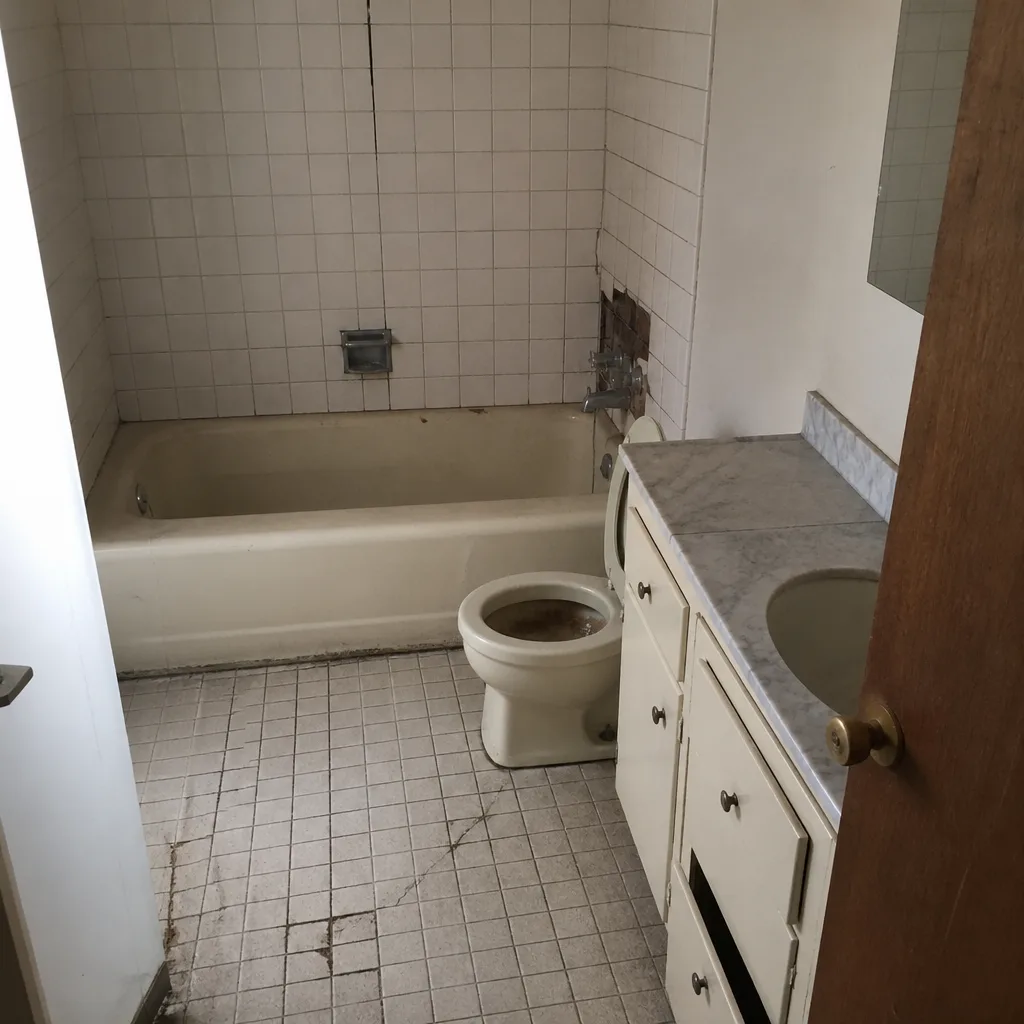 Before
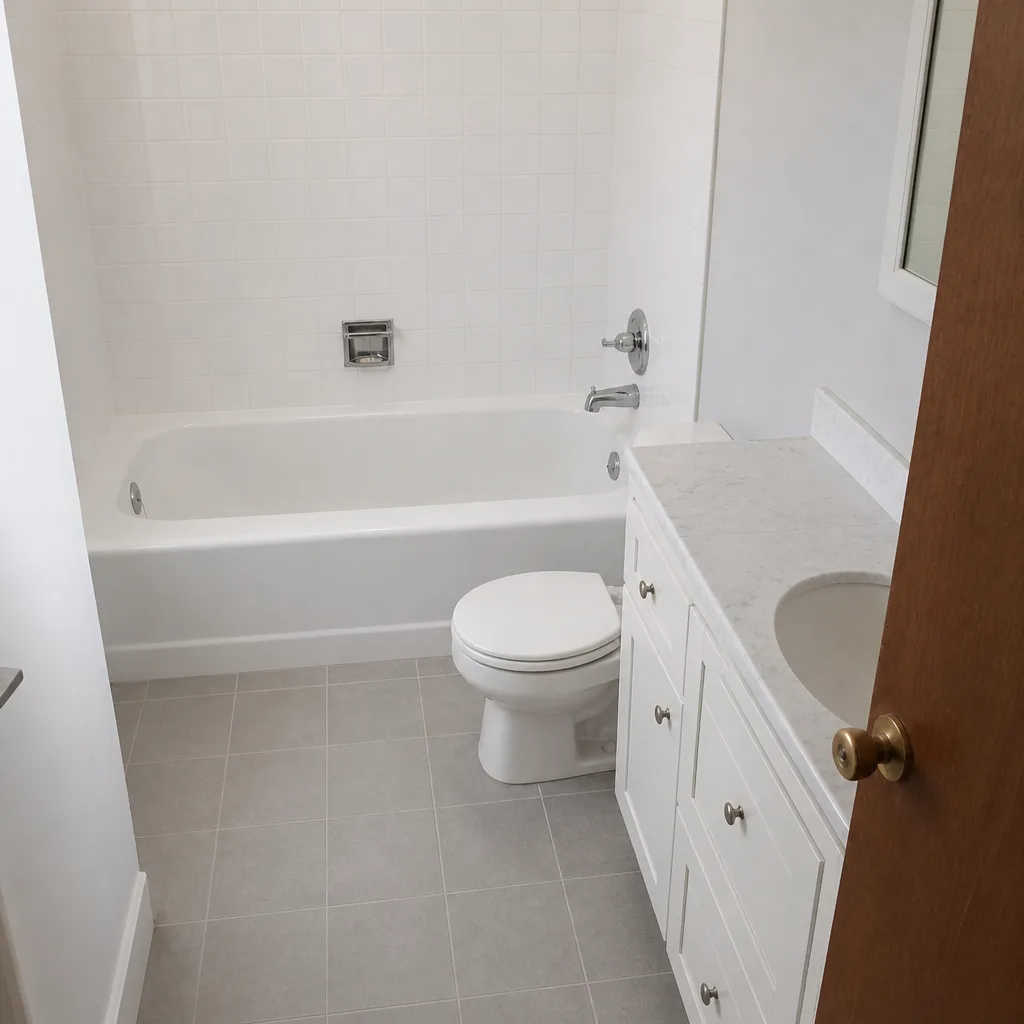 After
 Before
 After
 Before
 After