Last updated November 18, 2026



Free written scope consultation - allowances, timeline, and change-order rules on paper before a single trade is scheduled
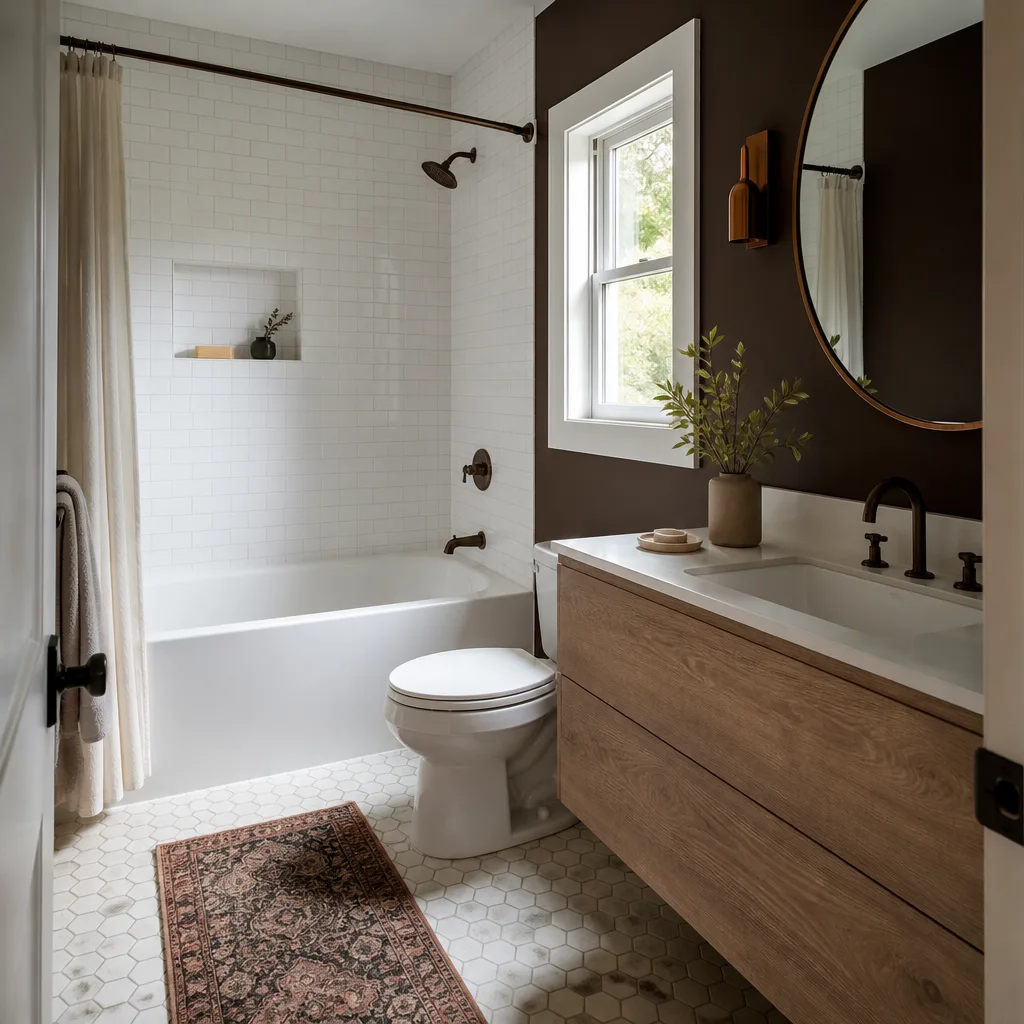
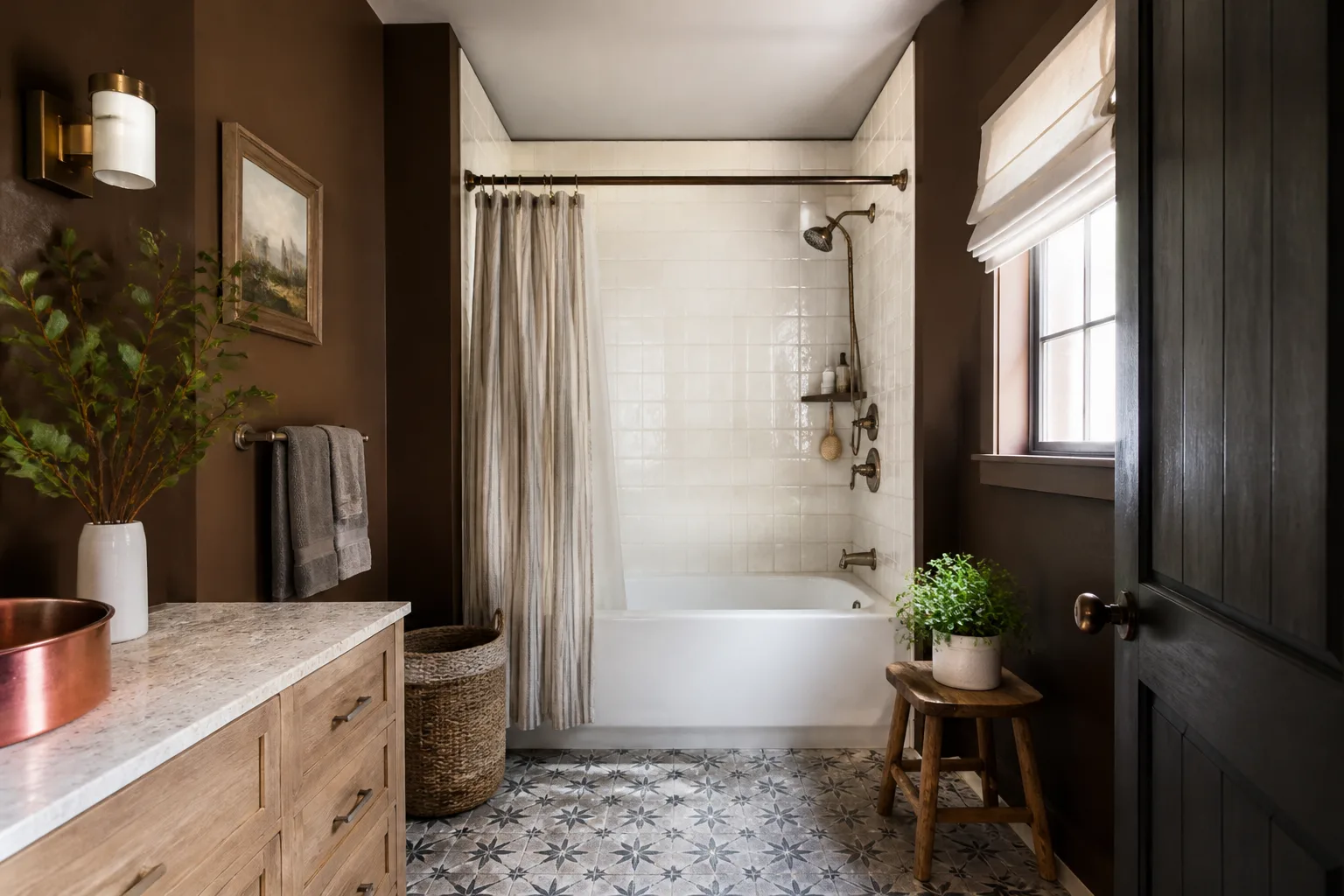
DIY vs Professional Bathroom Remodeling: What’s Safe to Do Yourself
Water damage from a single improperly set tile pan costs an average of $4,500 to remediate, and that’s before anyone has even opened a wall. That number is bigger than the savings most homeowners gain by tiling a shower themselves. This guide treats DIY vs. professional bathroom remodeling as a question of consequence rather than capability. We draw the line at three things: code, water, and structure. Everything else you can probably do. Here’s exactly which is which, with a task-by-task risk matrix built around Anaheim homes, California code, and what our technicians see on the job.
Styles & brands we work with
- Kitchen remodeling
- Bathroom remodeling
- Home additions & ADU
- Roofing
- Windows & doors
- Driveway & pavers
- Fence
Quick Answer
Cosmetic work is safe for a careful DIYer: painting, replacing a vanity top, switching out a mirror or fixtures, installing a showerhead, hanging towel bars. Anything that touches the building code, the plumbing rough-in, or the waterproofing membrane behind the tile should go to a licensed professional in California. The dividing line isn’t your skill level, it’s the cost of failure if you’re wrong.
Table of Contents
- Where the Line Really Is: Code, Water, Structure
- Which Bathroom Tasks Legally Require a Licensed Contractor in California
- What Experienced DIYers Can Genuinely Do Without Risk
- Why Plumbing Rough-In Is Not a DIY Job
- Why Waterproofing Membrane Installation Is Non-Negotiable
- How Partial DIY Can Void the Warranty on Professional Work
- The Risk-Rating Matrix: 15 Common Bathroom Tasks
- Anaheim-Specific Considerations
- Common Mistakes to Avoid
- When to Call a Professional
- Frequently Asked Questions
- The Bottom Line
Where the Line Really Is: Code, Water, Structure
Most homeowners evaluate a task by asking “can I do this?” That’s the wrong question. The right question is “what happens if I get it slightly wrong?” For a paint job, the worst case is a bad finish and a weekend lost. For a shower pan, the worst case is a slow leak behind the wall that swells a floor joist and grows mold in the subfloor for six months before you smell it. Same skill level required. Very different downside.
We frame every bathroom decision around three failure categories:
- Code. Some work is regulated by the California Building Code and local building department rules. Getting it wrong means inspection failures, permit problems, disclosure issues at sale, or a red tag on your electrical panel. You cannot DIY your way around a code requirement no matter how careful you are.
- Water. Bathrooms are wet rooms by design. Every water line, drain connection, and waterproofing layer is a place where a small mistake grows into five-figure remediation. Water doesn’t announce itself. It shows up six months later as a soft spot or a mold smell.
- Structure. Anything involving moving walls, cutting joists, or supporting a tub full of water on a subfloor that wasn’t engineered for it. Cut the wrong member and you’ve traded a remodel for a repair.
Tasks that fall into none of those three buckets are fair game. Tasks that fall into even one belong to a licensed contractor. That’s the whole framework. Apply it to every task on your list and the answer usually becomes obvious.
Which Bathroom Tasks Legally Require a Licensed Contractor in California
California doesn’t leave this to opinion. The Business and Professions Code and the Contractors State License Board (CSLB) set out which work requires a licensed contractor, and the California Building Code governs the installation itself. When a contractor performs work requiring a license, the license must be active and in the right classification. Here’s what that means for a bathroom in Anaheim.
The following tasks require a licensed contractor under California rules:
- Any project over $500 in labor and materials combined. California’s threshold for requiring a licensed contractor is very low. If your bathroom remodel totals more than $500 in combined labor and materials, it’s legally contractor territory. Most real remodels blow past that before the fixtures arrive.
- Plumbing rough-in. Moving a drain, relocating a supply line, installing a new shower valve behind the wall, or changing the location of a toilet requires a licensed plumber and a plumbing permit.
- Electrical work beyond a like-for-like fixture swap. Adding a GFCI outlet, moving a circuit, installing a new exhaust fan circuit, or rewiring anything behind the wall requires a licensed electrician and an electrical permit.
- Water heater replacement. Not strictly a bathroom task unless your water heater lives there, but the same rule applies. Permits, licensed installer, and inspection.
- Structural changes. Removing a wall, enlarging a window opening, reframing a floor for a different tub layout. Structural work requires engineering, permits, and a licensed contractor.
- Gas work. If you’re converting to a gas fixture or moving a gas line, only a licensed contractor with gas certification can perform it.
What that leaves for a DIYer in Anaheim is the non-permitted, non-code-triggering, non-plumbed side of the room: surfaces, finishes, and cosmetic fixtures. That’s a lot of value. Just be clear-eyed about where the legal boundary sits, because a failed inspection or a permit problem can complicate a home sale in Anaheim neighborhoods like Anaheim Hills or The Colony faster than a bad paint job ever will.
What Experienced DIYers Can Genuinely Do Without Risk
We’re not going to pretend there’s no value in doing part of the room yourself. There is. And a homeowner who handles the right parts of a remodel while leaving the risky parts to us gets a better result than either full-DIY or full-contract. Here’s where the savings are real.
Low-risk tasks where DIY genuinely pays off:
- Painting. Walls, ceiling, trim, cabinet fronts. The skill ceiling is low, the cost of correcting a mistake is one gallon of paint, and the visual payoff is high. Use a bathroom-rated paint with mildew resistance, and don’t skip the primer over any old finish.
- Vanity swap. Replacing a freestanding vanity with a similarly sized unit can be a legitimate DIY job if the plumbing connections land in the same place. You’ll still want the supply and drain connections made by someone who knows what they’re doing, but removal and replacement of the cabinet itself is a homeowner task.
- Mirror installation. Hanging a new framed mirror on drywall with the right anchors is safe and reversible.
- Hardware replacement. Cabinet pulls, towel bars, toilet paper holders, robe hooks. If you own a drill and a level, you’re qualified.
- Showerhead and faucet swap. A like-for-like showerhead replacement is a wrench-and-Teflon-tape job. A full pressure-balance valve behind the wall is not. Know which you’re doing.
- Accessories and staging. New bath mats, storage, shower curtains, LED strip lighting powered by a plug, art. These add to the perceived finish quality of the room without touching anything structural.
- Demolition (with conditions). Pulling out old tile, vanity, and drywall can be DIY if you know where the water shutoffs are and you don’t cut into anything you shouldn’t. A bathroom demolition gone wrong usually means a broken pipe behind the wall. If you’re not confident, leave it.
That’s a real chunk of the room. For a bathroom in the $15,000-$25,000 range, the list above can honestly save $2,000-$4,000. For a bathroom where the number is closer to $6,000, the savings shrink because the risk isn’t worth it. The math varies, which is why doing the risk assessment before the project starts matters so much.
Why Plumbing Rough-In Is Not a DIY Job
Rough-in is the phase before the walls close up. It’s where the pipes, drains, and shower valve go in. And it’s where most bathroom remodels fail six months after the project is done. The work itself isn’t glamorous, which is exactly why homeowners underestimate it.
Three things make rough-in non-negotiable professional work:
- It gets inspected before it gets covered. In Anaheim, plumbing rough-in requires a permit and an inspection. If an inspector finds an unsweated joint, a drain pitch that’s too shallow, or a valve set at the wrong depth, the wall doesn’t get signed off until it’s corrected. Building that inspection into the schedule from the start is one reason a proper bathroom remodel takes longer than a weekend.
- Every pipe has to slope correctly. Drains slope about 1/4 inch per foot so water moves and solids don’t linger. Off by even a small amount and you get standing water, slow drains, or a smell that no amount of cleaning fixes. You can’t see the slope once the wall is closed.
- Valve depth is a tight tolerance. A pressure-balance valve set too deep or too shallow means your new trim plate doesn’t seat, or your showerhead is an inch off-center. Either way, the wall comes back open.
There’s also the interaction with the waterproofing. Rough-in mistakes show up as water where water isn’t supposed to be, and the waterproofing step is the only thing standing between a small leak and a $4,500 remediation. We’ve walked into Anaheim bathrooms where a homeowner installed the valve and tile themselves, and the resulting leak into the attached bedroom had already stained the ceiling by the time anyone called. The rough-in wasn’t the visible part of the failure. But it was the cause.
If your project involves moving the drain, relocating the shower, or replacing a valve behind the wall, that work belongs to a licensed plumber. Where we can help is coordinating it so the tile, the waterproofing, and the plumbing schedule line up instead of colliding.
Why Waterproofing Membrane Installation Is Non-Negotiable
Waterproofing is the single most consequential step in a shower or tub surround, and it’s the one most often skipped, rushed, or misunderstood by DIYers. It doesn’t show. It doesn’t impress anyone on a walkthrough. But it’s the difference between a shower that lasts twenty years and a shower that grows mold behind the tile in two.
Waterproofing in a modern shower typically means a bonded membrane system or a sheet membrane over cement backer board, with seams sealed, corners reinforced, and the whole assembly tied to a properly sloped and drained pan. The pieces that matter:
- The pan has to slope. A pre-sloped pan liner that drains to the weep holes at the drain is not optional. A flat pan with tile over it holds water and eventually fails.
- Every change of plane gets a membrane band. Inside corners, outside corners, the curb, the transition to drywall. Water finds these joints first.
- Screw penetrations have to be sealed. The one place a home improvement video will skip is the one place a shower fails.
- Cure times matter. A membrane installed and tiled over the same day doesn’t cure. It fails.
- Tile and grout are not waterproof. They’re a wear surface and a decorative finish. The waterproofing lives behind them.
In our experience, waterproofing is where the DIY-vs-pro question is decided. The cost of doing it right is a few hundred dollars in membrane and a day of labor. The cost of doing it wrong starts at $4,500 in remediation and climbs from there, especially in Anaheim homes where the original 1960s-era framing often has less ventilation than modern construction. Anaheim’s inland climate runs warm and dry most of the year, but that’s deceptive. Bathroom moisture doesn’t escape the way exterior moisture does. It stays in the wall cavity and it compounds.
This is not a place where we recommend a homeowner watch a video and jump in. It’s a place where a licensed tile and waterproofing contractor earns their price.
How Partial DIY Can Void the Warranty on Professional Work
Here’s a scenario that surprises homeowners and costs them real money. A homeowner hires a pro to waterproof and tile the shower. They finish. A month later, the homeowner decides to install a floating vanity themselves and drills into the wall in the wrong spot, not realizing the shower plumbing valve runs behind that finish. Now the shower is leaking. The waterproofing and the tile both look fine. But the warranty doesn’t cover the repair because the failure traces back to the homeowner’s work.
Warranties on bathroom work usually carve out damage caused by work the contractor didn’t perform. That carve-out doesn’t feel fair in the moment, but it exists for a reason. A contractor can’t warrant an assembly they didn’t build end to end. When you mix DIY and professional work in the same wet zone, that risk is real.
Common paths to warranty trouble:
- Drilling into a waterproofed wall. Any penetration of the membrane breaks the seal. The best practice is to plan anchor points before tile, not after.
- Adding a niche or bench after the shower is finished. Even well-executed retrofits compromise the liner.
- Replacing a showerhead or valve trim without re-sealing. The trim plate is a water barrier. Take it off the wrong way and water gets behind the wall.
- Installing a new light fixture near the shower without GFCI. A code violation and a safety issue that no warranty will cover.
- Painting over an improperly prepped wall and then blaming the contractor for the finish. It’s a small one, but we’ve seen it. Prep belongs to whoever paints.
Our 730-Day Done Right Promise means if it’s not done right, we make it right. What it can’t do is undo a homeowner modification. Before you drill, mount, or modify anything in a wet zone, call us first. It’s a short call and it protects both of us.
The Risk-Rating Matrix: 15 Common Bathroom Tasks
Here’s the whole guide in a single view. Each task below is rated Low, Medium, or High based on the cost of getting it wrong, not the difficulty of doing it right. A High-risk task can still be technically easy. It just fails expensively.
- Low: You can do this yourself if you’re careful.
- Medium: DIY is possible but you should call if the details confuse you. Consider partial professional help.
- High: Professional only. Code, water, or structure.
Low-Risk Tasks (DIY Friendly)
- Painting walls and trim. Low. Cost of failure: one gallon of paint and a sanding sponge.
- Replacing cabinet hardware. Low. Cost of failure: a misdrilled hole and 30 seconds of wood filler.
- Hanging a framed mirror. Low. Cost of failure: a broken mirror and a trip to the store.
- Installing towel bars and accessories. Low. Cost of failure: patching drywall.
- Swapping a showerhead. Low. Cost of failure: a leaky connection you can re-tape.
- Replacing a toilet seat. Low. Cost of failure: none meaningful. Buy the right size.
Medium-Risk Tasks (Possible but Call if Unsure)
- Replacing a freestanding vanity (same size, same plumbing location). Medium. Failure risk: a slow leak at the supply or drain connection behind the cabinet. Have a licensed plumber make the final connections.
- Replacing a faucet. Medium. Failure risk: cross-threaded supply lines and a slow drip that damages the cabinet over months.
- Removing old tile and drywall for demolition. Medium. Failure risk: a broken pipe or cut wiring behind the wall if you don’t know what you’re cutting into.
- Installing a new light fixture outside the shower zone. Medium. Failure risk: wiring mistakes and a code issue if not GFCI protected. Licensed electrician recommended.
- Regrouting and re-caulking tile. Medium. Failure risk: moisture intrusion at freshly opened joints if the grout line was already failing. If you see soft grout or a spongy wall, call us before you touch it.
High-Risk Tasks (Professional Only)
- Shower pan installation. High. Cost of failure: $4,500 or more in water remediation and the whole shower comes out.
- Waterproofing membrane installation. High. Cost of failure: hidden moisture, mold behind tile, structural rot.
- Plumbing rough-in (drain relocation, valve replacement, supply line rerouting). High. Failure risk: water where it isn’t supposed to be, failed inspection, and a wall that has to be reopened.
- Electrical work behind the wall. High. Failure risk: fire, code violation, and a real safety hazard.
- Structural changes (moving a wall, enlarging a window, reframing for a new tub). High. Failure risk: structural damage that requires engineering to fix.
Notice something about the high-risk list: not one of them is “too hard for a capable person.” They’re all tasks an experienced DIYer could technically do. They’re on the list because the cost of getting them wrong sits in the thousands of dollars, and because California code and inspection require a licensed contractor for most of them anyway.
Anaheim-Specific Considerations
A bathroom guide written for a Midwest suburb doesn’t translate cleanly to Anaheim, and vice versa. Here’s what’s different about doing a bathroom in our city.
Permit volume and inspection timelines. The City of Anaheim’s building division handles a lot of permits, and inspection scheduling fills up during the peak spring remodel window. If you’re doing a permitted remodel, work with a contractor who pulls permits early rather than the week before tile goes in. That’s a scheduling discipline question, not a code question, but it separates a smooth project from a stalled one.
Aging housing stock. Plenty of Anaheim homes were built in the 1950s, 1960s, and 1970s. Galvanized plumbing, cast iron drains, and undersized electrical panels are common in Anaheim neighborhoods like West Anaheim and The Colony. A bathroom remodel in a 1962 home is a different project from a bathroom remodel in a 2005 build, even if the visible scope looks the same on paper. What a homeowner thinks is a tile job can turn into a plumbing upgrade once the wall opens. That’s not a contractor trying to upsell. That’s what’s actually behind the wall.
Water hardness. Anaheim’s municipal water runs on the harder side, and that affects fixtures and grout over the long run. It’s a boring fact that matters. Faucets, showerheads, and tile grout all age faster in hard water. Water softeners and quality fixtures made with real metal components instead of plastic internals last meaningfully longer. This is one of the reasons we partner with brands like Groundwork Construction Co. of Anaheim home – that is, businesses whose fixture lines hold up over time rather than the cheapest option on the shelf.
Local climate nuance. Anaheim runs warm most of the year, which reduces some moisture risks and increases others. Bathroom ventilation still matters. An exhaust fan that actually pulls air outside the home, not into the attic, is the single cheapest thing you can do to protect the room. If your fan is louder than a conversation, it’s probably undersized or failing.
For projects that go beyond a bathroom (which they often do once the walls open), our team also handles Driveway & Pavers in Anaheim, Fence Installation in Anaheim, and Home Additions & ADU in Anaheim. One contractor for the whole property saves a lot of coordination, especially when a bathroom remodel turns into a project that touches more of the house.
Common Mistakes to Avoid
We’ve seen every one of these on a job site, some of them more than once. Each one is fixable. Some of them are just expensive.
- Skipping the permit because it’s “just a bathroom.” A permit isn’t busywork. It’s how the work gets inspected, and it’s how you avoid a surprise disclosure problem when you sell. Unpermitted bathroom additions in Anaheim have killed more deals than bad tile work.
- Waterproofing over green board drywall instead of proper backer board. Green board resists surface moisture but it doesn’t stop water that gets behind the tile. It’s not a shower substrate. The wall will fail from behind.
- Buying the cheapest tile. Cheap ceramic tile chips at the edges and cracks on cut pieces. It also has fewer size options, which means more awkward transitions. You don’t have to buy the most expensive tile, but buying the cheapest one is how a $1,800 tile job turns into a $3,200 tile job after breakage and reordering delays.
- Installing a vanity before the floor is leveled. A bathroom floor is rarely perfectly flat, and a vanity installed on out-of-level floor shows gaps at the toe kick. Level the floor first, then the cabinet.
- Cross-threading a supply line when installing a new faucet. The classic small mistake that becomes a slow leak dripping into the cabinet for six months. Hand-tighten first, wrench last, check for weeping before you close the wall back up.
- Using a showerhead or valve trim that doesn’t seal. O-rings and gaskets fail. The trim plate has to press against the wall to keep water out. Skip the gasket and water goes behind the tile.
- Mixing DIY and professional work in the same wet zone. Discussed above. It often voids the warranty. Agree the boundaries with the contractor before work starts, in writing.
- Assuming Anaheim’s dry climate protects a shower. It doesn’t. Bathroom moisture is inside the room, not outside it. Ventilation and waterproofing matter every bit as much here as they do anywhere else.
When to Call a Professional
Call a licensed contractor when your project touches any of these: plumbing rough-in, shower waterproofing, shower pan installation, electrical work behind the wall, structural changes, gas work, or anything requiring a permit. Also call when you’re not sure whether a task falls into one of those categories. A short conversation before the work starts is cheaper than a remediation after.
Groundwork Construction Co. of Anaheim offers free estimates in Anaheim, with a line-item written quote so you know exactly what you’re paying for before a single tile is set. Our technicians have up to 12 years of experience, arrive background-checked and in uniform, and carry the full project on a 730-Day Done Right Promise. If it’s not done right, we make it right. Calls are answered by a live person, 24/7, so you’re never stuck waiting until Monday morning to ask a question. Call (888) 300-3178 to schedule your free estimate.
Frequently Asked Questions
A cosmetic bathroom refresh in Anaheim typically runs $6,000-$12,000. A full gut renovation with new tile, fixtures, plumbing updates, and ventilation usually lands between $18,000 and $35,000, with high-end finishes pushing past that. The single biggest cost variable is whether the walls open up to reveal outdated plumbing or electrical, which is common in Anaheim homes built before 1980. Call (888) 300-3178 for an exact quote on your specific bathroom – estimates are free and line-item written.
You can legally do some of it, but not all of it. California requires a licensed contractor for any project over $500 in combined labor and materials, and separately for any work involving plumbing rough-in, electrical beyond a like-for-like swap, gas, or structural changes. Cosmetic work like painting, hardware, mirrors, and vanity replacement is fair game. The work that requires a license isn’t a matter of skill, it’s a matter of code.
Yes, for anything involving plumbing, electrical, mechanical, or structural work. Cosmetic work that doesn’t touch those systems doesn’t require a permit. When in doubt, assume a permit is required, especially in a home older than a few decades where the underlying systems haven’t been touched in a while. Pulling permits is part of what any reputable bathroom contractor should offer as standard.
Not with Upfront pricing. Our written proposal is the number you pay, provided the scope of work doesn’t change. The one legitimate exception is when opening a wall reveals something that wasn’t visible during the inspection, such as old galvanized plumbing that fails a pressure test or a structural issue behind the shower. In those cases, we document the issue, quote the added work, and get written approval before proceeding. No surprise invoices.
Waterproofing, because the failure is hidden and expensive. A shower that’s waterproofed incorrectly doesn’t show a problem for months. By the time a mold smell or a soft subfloor appears, the damage has usually spread behind a wall or under a floor, and remediation starts around $4,500. There’s also the electrical side to consider: a GFCI outlet that isn’t properly wired near a wet zone is a genuine safety hazard. For those two, we recommend a licensed professional every time.
Yes, and this is often the smartest path. A homeowner can handle painting, hardware, mirror installation, and demo, and hand off plumbing rough-in, waterproofing, and tile to a contractor who warrants their work. The savings vary, but on a $20,000 bathroom it’s common to save $2,000-$4,000 this way. The one rule is to agree the boundaries in writing before work starts, because DIY modifications to professional work often void the warranty on that work. It’s a short conversation worth having.
The Bottom Line
The DIY-vs-pro question isn’t about whether you’re capable. It’s about what happens if you’re wrong. Painting, hardware, vanity swaps, mirrors, and light fixture cosmetics are safe, real savings. Anything touching code, water, or structure belongs to a licensed contractor, because the cost of a mistake outruns the savings by a wide margin. Every high-risk task in this guide is one you could probably do. Every one of them is also one that fails expensively if the details aren’t perfect. Draw the line at code, water, and structure. The homeowners who come out ahead are the ones who save on the safe parts and hire for the rest. That’s a strategy, not a compromise.
If you’re ready to plan a bathroom remodel in Anaheim, or you want a second opinion on whether a task on your list is safe to DIY, call us at (888) 300-3178. Free estimates, line-item written quotes, upfront pricing, and a 730-Day Done Right Promise behind every job. Live person answers around the clock, background-checked technicians on every project, and brand partners you can verify before you sign anything.
Written by the team at Groundwork Construction Co. of Anaheim.
See the difference
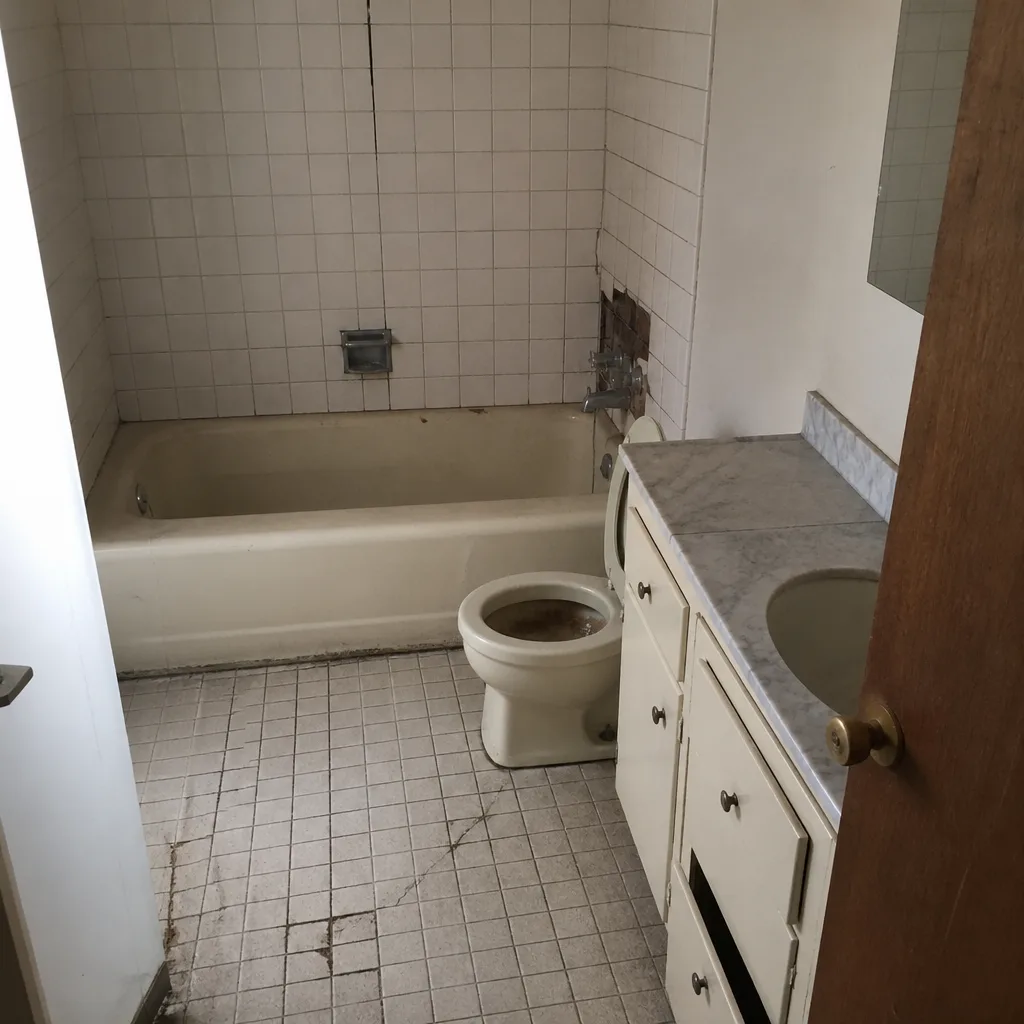 Before
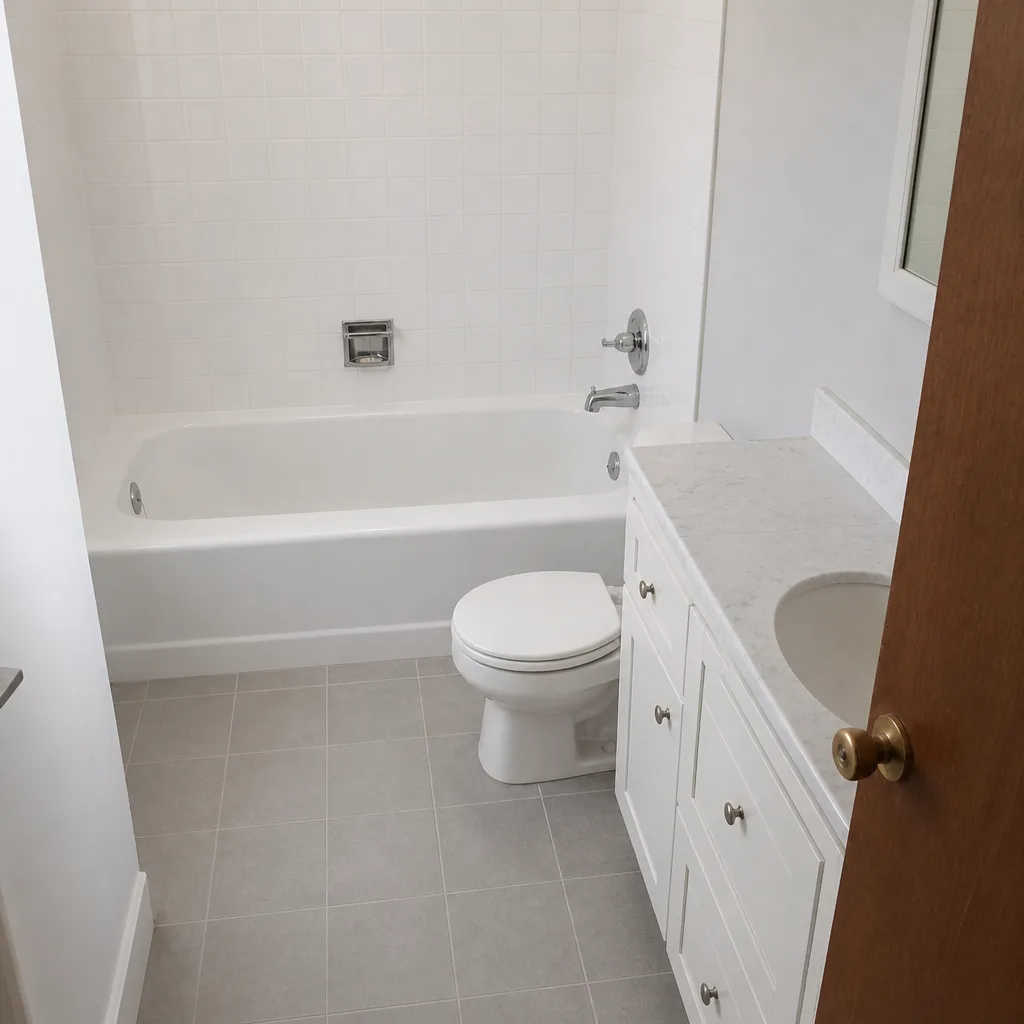 After
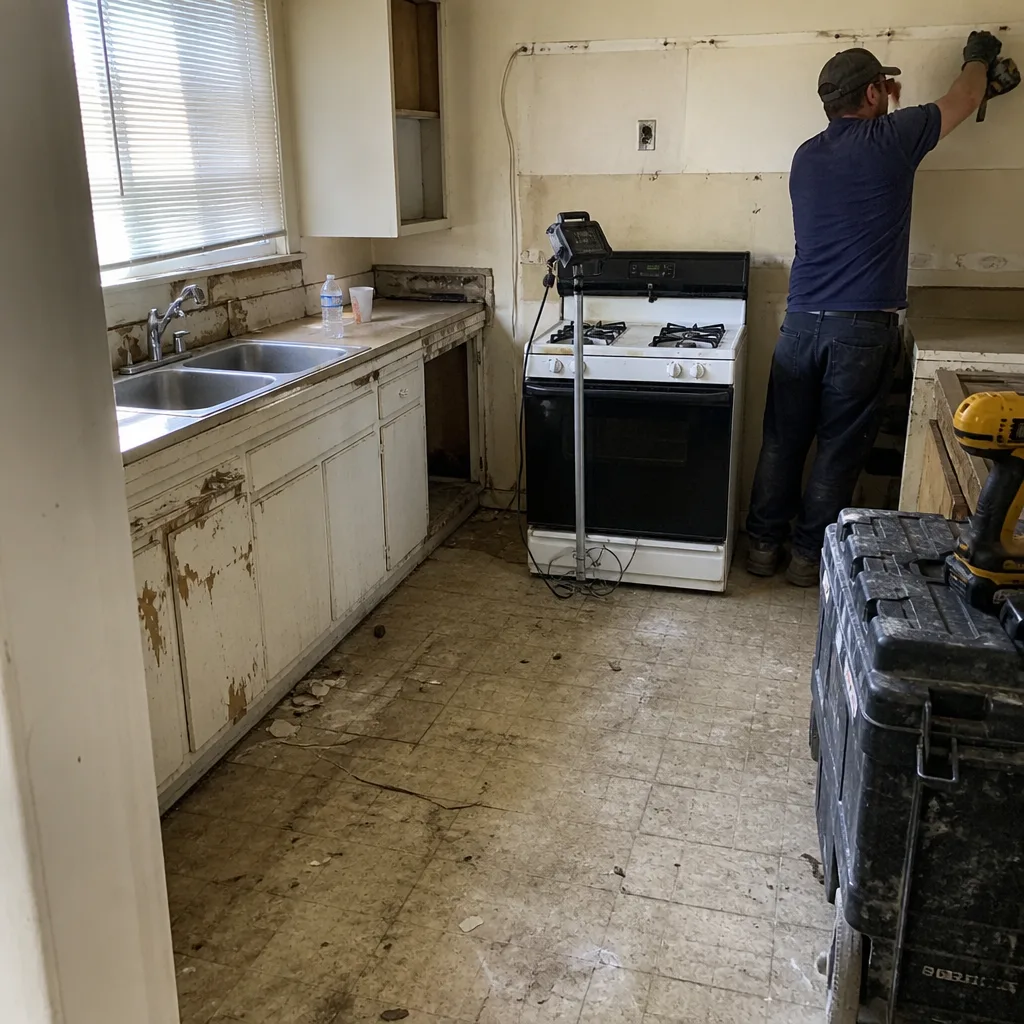 Before
 After
 Before
 After