Last updated November 18, 2026

Free written scope consultation - allowances, timeline, and change-order rules on paper before a single trade is scheduled
Driveway & Pavers Maintenance Schedule: What to Do and When
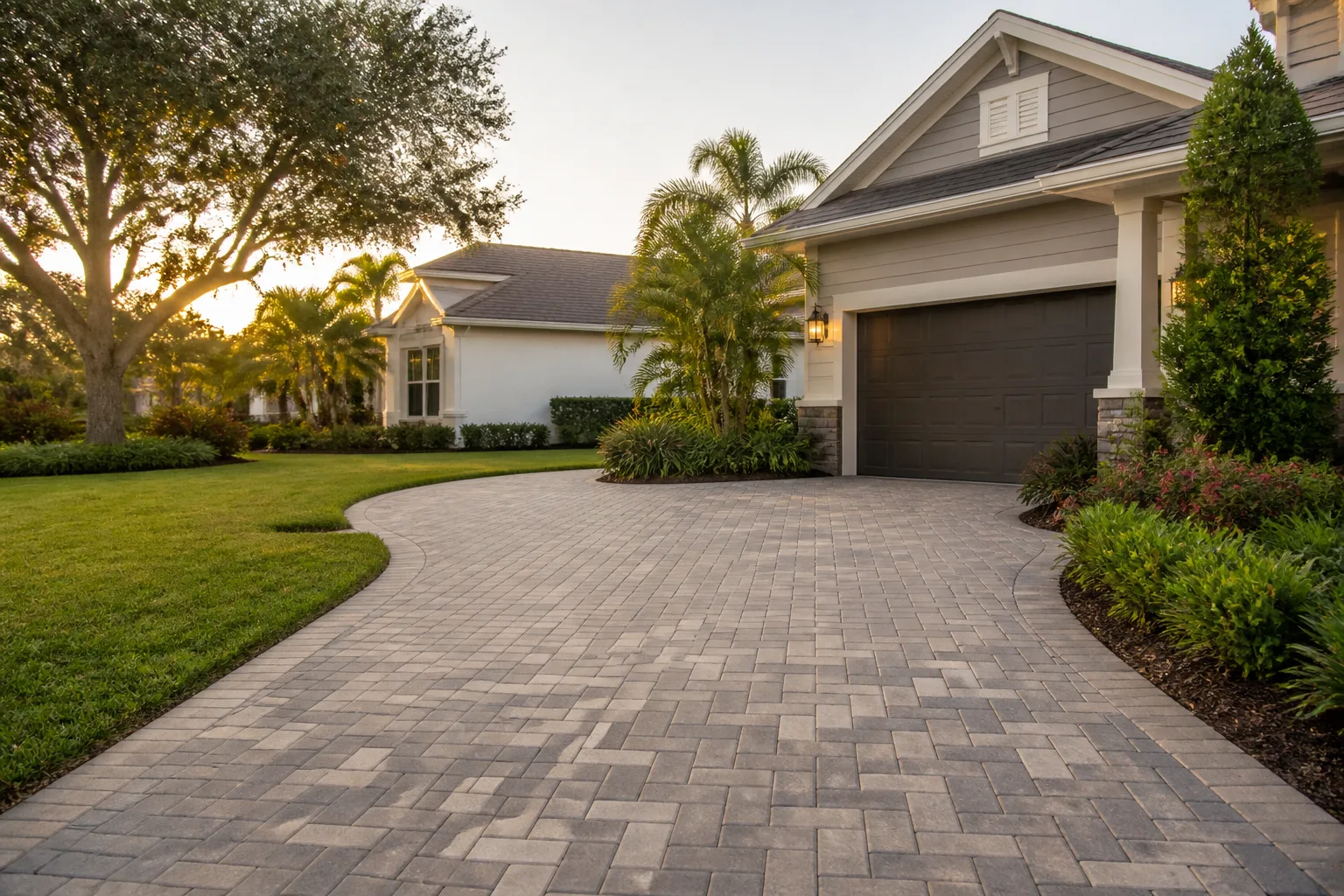
Resealing your pavers every year is one of the most common mistakes Anaheim homeowners make. Over-sealing traps moisture, clouds the surface, and costs money that should be going toward the two tasks that actually extend paver life. A paver system maintained on the right schedule in Anaheim’s climate will outlast one that’s simply “sealed when it looks bad” by fifteen years or more. The difference is knowing which tasks matter and which are contractor upsells. This guide gives you a month-by-month schedule calibrated for Anaheim’s weather, UV intensity, and Santa Ana wind season, plus the maintenance habits that protect the bedding layer underneath.
Quick Answer
In Anaheim, a driveway paver system needs joint sand inspection twice a year (March and October), a full polymeric sand reapplication roughly every 3 to 4 years, and a proper penetrating sealer every 4 to 5 years, not annually. The highest-ROI task most homeowners skip is polymeric sand inspection: when joints hollow out, the bedding layer underneath washes loose, and you go from a $300 reapplication to a $2,000 partial rebuild. Resealing yearly does the opposite of helping; it looks like maintenance but traps moisture and speeds up failure in Southern California’s UV cycle.
Styles & brands we work with
- Kitchen remodeling
- Bathroom remodeling
- Home additions & ADU
- Roofing
- Windows & doors
- Driveway & pavers
- Fence
Table of Contents
- Why Yearly Resealing Fails in Anaheim
- The Month-by-Month Maintenance Schedule
- Joint Sand Inspection and Polymeric Reapplication
- The Correct Resealing Interval for Anaheim’s UV Load
- Ants, Weeds, and the Bedding Layer
- The Five-Minute Annual Drainage Check
- Maintenance Tasks That Are Actually Upsells
- Anaheim-Specific Notes: Winds, Weather, and Site Conditions
Why Yearly Resealing Fails in Anaheim
Here’s the part nobody tells you when they sell you an annual seal-and-wash package. Paver sealer isn’t paint. It’s a thin film, and every coat that goes on a paver that’s already sealed builds up. After three or four annual coats on a driveway in Anaheim, you have a milky, yellowed layer sitting on top of the pavers. That layer stops the paver surface from breathing the way it’s supposed to. Water that gets into the joints underneath the film can’t work its way out, so it sits there. Over a summer, that trapped moisture softens the bedding sand and works on the joint material from below.
Southern California’s UV intensity makes this worse. Sealer breaks down under UV exposure, and around the third year in Anaheim’s sun it starts to chalk and flake. When the film fails, the flaking layer peels away and takes a micron or two of paver surface with it. That’s how driveways go from “sharp looking” to “washed out” in five years when the homeowner was dutifully resealing every spring.
What actually adds life to a paver system in Anaheim is joint integrity. The joint sand is the structural piece that holds everything in place, distributes load, and locks moisture away from the bedding layer. When the joints are solid, the paver system is solid. When they hollow, everything else on this maintenance schedule becomes damage control. We’ve seen Anaheim driveways in full-time sun that were never resealed in a decade and are still tight, because the homeowner stayed disciplined about joint sand. And we’ve seen ten-year-old driveways that got resealed every year and are already rocking because the sand was never checked.
That’s the whole thesis here: prioritize joints. Everything else is secondary. Everything else needs a schedule because it’s worth doing, but no other task in this guide has the leverage that joint maintenance does.
The Month-by-Month Maintenance Schedule
Anaheim has two seasons that matter for pavers: the dry Santa Ana wind season from roughly October through January, and the UV-heavy dry summer from May through September. The pattern of maintenance tasks follows both. Here’s the schedule we run for homeowners in the area, in order of when the work should happen.
March: Post-Winter Joint and Drainage Check
Anaheim’s rainfall is modest, but a wet winter still moves things around. Walk the driveway with a broom handle and tap along every joint. Hollow sounds mean missing sand. Look for hairline gaps between pavers wider than a credit card’s edge. That’s a joint that’s washed out and needs polymeric sand. Then check the lowest point of the driveway and the channel drain, if you have one. Wet spots that haven’t dried 24 hours after rain mean a drainage issue you need to address before summer temps bake the trapped water in.
May: Pre-Summer Sealer Assessment
This is when you decide whether you’re resealing this year or not. Not every May. Only every fourth or fifth May. The test: pour a small cup of water on the surface at an angle to the slope. If it beads and rolls, the sealer film is intact, and resealing now would just add a coat on top of a working film. If it soaks in within a few seconds, the film is gone and it’s time to reseal. Do the water test in three spots: sunniest, shadiest, and middle. You’ll often find that the sunny side has burned off and the shaded side is still intact. That’s normal and it means you’re ready for a reseal on a structured schedule, not a guess.
July: Post-Santa Ana Damage Sweep
The Santa Ana winds start earlier in some years, but by July you’ve had a full spring of dry wind events. Wind strips the top of joint sand away, especially on driveways with any exposure to open sky. Run the broom handle test again. Expect to find some hollow joints on the windward edge of the driveway. Fill them. This is the single most underrated maintenance window in Anaheim: catching post-wind joint loss in summer before the heavy UV does further damage.
October: Pre-Rain Joint Reapplication
The fall task is to get joints topped off before winter rain. Missing joint sand plus winter rainfall equals water in the bedding layer, which equals heaving and settling. Polymeric sand applied in October sets up over a few dry weeks and then locks in for winter. This is also the right time for a full reapplication if the joints have been losing sand at every check. Doing a full reapply in October rather than March means the system is at its strongest when the rain hits.
December or January: Storm Drainage Verification
Mid-winter is when you actually confirm the drainage works. After the first meaningful rain event of the season, walk the driveway and look for standing water. A little pooling at the bottom of a slope is normal. Pooling in the middle, water running back toward the garage door, or water tracking toward the foundation of the house are not. Those are visible problems that are much cheaper to fix in January than in August.
Ongoing: Ant and Weed Watch
Between the scheduled checks, walk the driveway once a month and look for sand trails coming out of joints. Those are ants. Look for green shoots in a joint. Those are weeds starting in the sand. Both should be knocked back the week you spot them; leave ants alone through one full season and they’ll hollow out the space underneath the joint into a tunnel that pulls sand down into the bedding layer.
If you’re replacing pavers or adding a driveway rather than maintaining an existing one, our team at Driveway & Pavers in Anaheim builds on the same principles: correct base, correct joint sand, correct sealer.
Joint Sand Inspection and Polymeric Reapplication
This is the highest-ROI maintenance task in the entire schedule, and the one most Anaheim homeowners skip entirely because nobody sold it to them. The reason it gets skipped: joint sand maintenance doesn’t look like anything. There’s no shiny surface at the end. You can’t tell the difference between a driveway with solid joints and one with hollow joints unless you tap it. But the difference between a paver system that lasts 40 years and one that lasts 20 is almost always the joint sand.
What Joint Sand Actually Does
- It locks each paver against lateral movement, so individual units don’t rock, shift, or chip
- It distributes the load of vehicles and foot traffic across the whole surface instead of point-loading individual pavers
- It keeps water out of the bedding layer underneath
- It blocks weed seeds, ant tunnels, and wind-blown debris from infiltrating the base
- It absorbs thermal movement so pavers don’t crack in Anaheim’s summer swing from 60s at night to 90s in the afternoon
How to Check Joint Sand Correctly
- Walk the full driveway with a stiff broom handle or the handle end of a trowel, tapping at a 45-degree angle every 2 to 3 feet.
- Listen for a hollow, “empty” tap instead of a firm, dull one. Hollow means the joint has lost sand.
- Look down the length of each joint line at a shallow angle, with sun behind you. Sunlight reveals gaps you can’t see from straight above.
- Try pushing a plastic credit card edge into the widest joints. If it goes in more than about 3/8 inch, there’s missing sand.
- Log the areas that need attention. Patterns repeat: the front tire zone, driveway edges, and the windward corner will be the first to go.
Polymeric Sand Reapplication Cycle in Anaheim
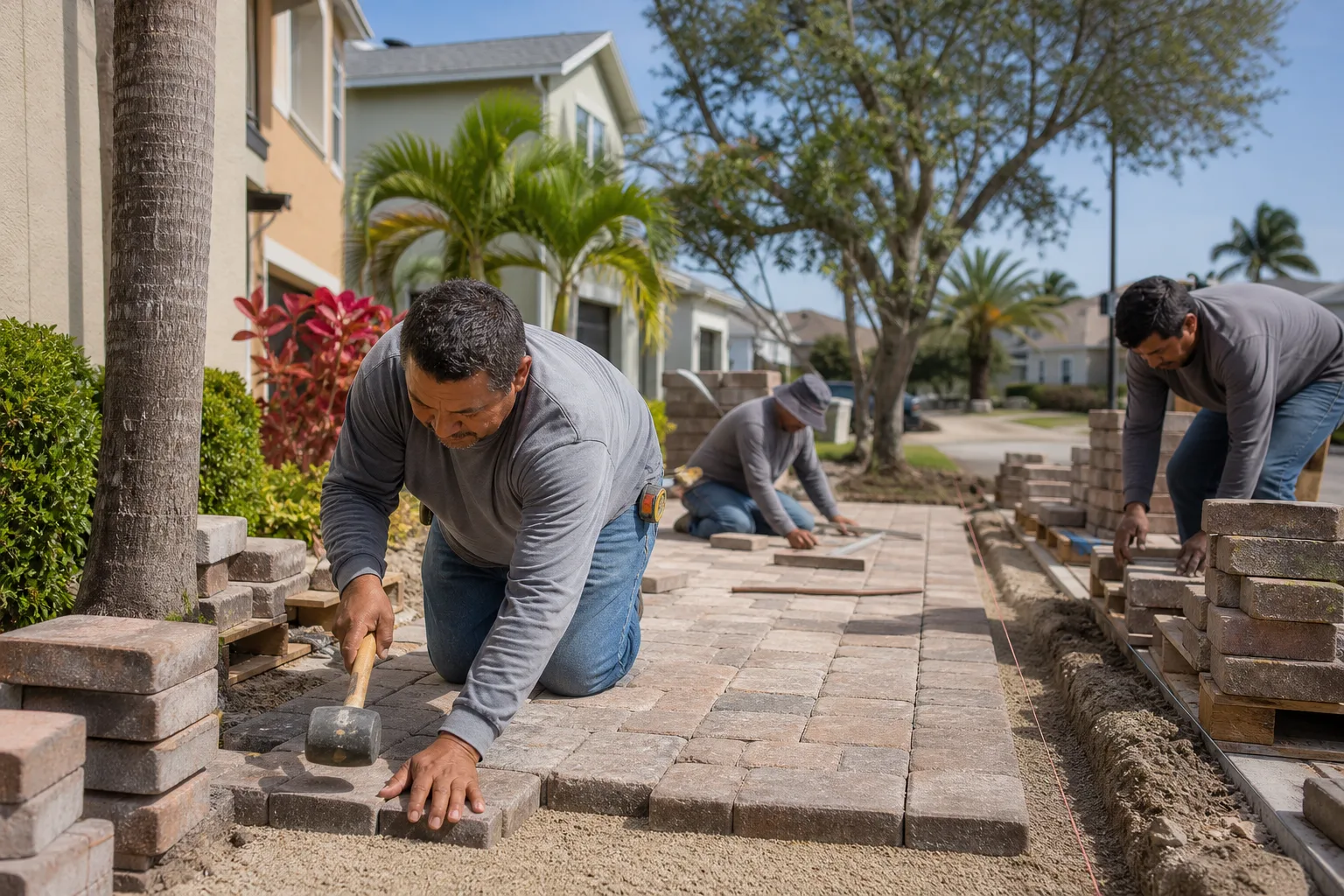
In Anaheim, expect to reapply polymeric sand roughly every 3 to 4 years on a residential driveway, and every 2 to 3 years if the driveway sees direct afternoon sun all day. Full reapplication means removing the top 1/4 inch of old joint material, cleaning out weeds and debris, and installing a fresh application with proper compaction and wetting to activate the polymer. Partial spot reapplication (topping off a few hollow joints) is a much smaller job and fits into the March and October check windows. Neither task involves any structural work; both are joint-level maintenance. Getting this right is what stops the driveway from needing structural repair later. Our team sees this pattern in Anaheim every spring: homeowners who topped off joint sand every fall rarely call us for repairs, and the ones who didn’t call us because pavers started rocking.
The Correct Resealing Interval for Anaheim’s UV Load
Read the back of any paver sealer bucket and you’ll see “reapply annually for best results.” That guidance was written for national markets, and for climates with a shorter UV season. For Anaheim, that recommendation is actively harmful. Here’s why: the film mechanics don’t care about the label, they care about the UV index and ambient heat on your specific driveway. Anaheim’s UV exposure from April through October is intense enough that sealer films break down at roughly the same rate as they do in Phoenix and Riverside, and much faster than they do in climates the labels were likely written for.
Why the Label Is Wrong for Southern California
Anaheim sits in a coastal-influenced inland basin. Average summer highs run in the mid-80s, with 90s and up during heat events. UV index routinely hits 10 or 11 in peak summer. That combination degrades acrylic sealers in 18 to 24 months in full sun. If you rescale on that schedule, you’re adding a new coat on top of a film that’s already started breaking down. The result compounds: three coats in, you have a cloudy, flaking film that looks worse than the paver, protects nothing, and has trapped moisture underneath it during short winter rains.
The Correct Interval for Anaheim
- Full afternoon sun, no shade: 4 years between seal applications, sometimes 3 in a hot exposure with a light-colored paver.
- Partial shade (some tree cover or building shadow): 5 years.
- Heavy shade and no full summer sun: 6 to 7 years, sometimes longer. Sealer film on a shaded driveway stays intact much longer.
- Water test governs: if water still beads at the surface, don’t add a coat no matter how long since the last application.
Which Sealer and Which Doesn’t Matter
Penetrating sealers (siloxane-based) soak into the paver and protect from the inside. They don’t build a film, so they can’t flake. They also don’t cloud or yellow. On Anaheim driveways, a penetrating sealer is often the better choice, because it tolerates the UV load and the annual weather swing without film buildup. Film-forming sealers (acrylics) give a wet-look gloss, which many homeowners want, but they need to be stripped back down before reapplication rather than built up coat-on-coat. That’s a much bigger job. If your driveway has three or four acrylic coats on it right now and looks milky, the correct maintenance task is stripping and redoing, not adding a fifth coat. Like most home projects, the right material matters more than the labor shortcut. Premium paver lines from brands like Belgard are designed with penetrating sealer in mind and will hold their color better over decades when the sealer type matches the paver. Our team builds with that match in mind, using premium material brands across every service category.
Ants, Weeds, and the Bedding Layer
The most expensive paver repair in Anaheim is a partial rebuild of the bedding layer, and the two things that cause it most often are ants and weeds. Neither looks like a problem the week you notice it. Both hollow out joint sand until the joint material is gone, then push the void down into the bedding sand. Once the bedding layer has lost compaction, the pavers above it start rocking, and rocking pavers chip and crack.
The Ant Problem
- Ants nest in the warm, dry, sandy layer under the pavers. It’s ideal habitat.
- They excavate tunnels that displace joint sand and loosen bedding
- You’ll often spot the problem as small sand mounds appearing along joint lines
- A driveway with ant activity in Anaheim typically shows the mounds next to the garage, along the street edge, and near expansion joints
- Monthly inspection is realistically the only maintenance that catches this early
Knock back visible ant trails when you see them and keep joint sand topped off. Ants can’t tunnel as effectively through well-compacted polymeric sand. That’s the reason polymeric sand beats regular joint sand in Anaheim: the polymer binding makes it resistant to insect excavation. The joint integrity is the pest control.
The Weed Problem
Weeds in pavers usually mean one of two things. Either the joint has hollowed enough to admit a seed, or the polymeric sand has degraded to where it’s holding dead organic matter. Both point to the same fix: reapply joint sand. Spot spraying weed killer buys you a few weeks and lets the underlying void grow. The right maintenance response to a weed in a joint is to pull it, then top off that joint the same week. Anything less and you’re treating the symptom.
For homeowners who want to extend that same “keep the structure sound” mindset to their property lines, our Fence Installation in Anaheim page covers how fence posts, gates, and hardscape interact at the edges of a driveway. Fence posts set next to pavers can shift if the paver edge isn’t maintained, and a good fence installation plan accounts for that.
The Five-Minute Annual Drainage Check
This takes about five minutes. Do it once in December after the first meaningful rain, and once in early summer after a garden hose test if the winter has been unusually dry. The check catches problems long before they become structural, when the repair bill is still small.
The Five-Step Routine
- Walk the slope. Stand at the high point of the driveway and look toward the street and the garage. Water should follow a visible slope toward a drain or the street edge. If you see low spots where the surface flattens out, mark them mentally.
- Check the perimeter. Look where the driveway meets the garage foundation, a side yard, or a landscape edge. Water tracking toward any of those is the earliest sign of a drainage failure.
- Watch the drain, if you have one. Channel drains and trench drains in Anaheim driveways clog with windblown debris and leaf litter. Lift the grate and clear it. If the drain is a French drain with a rock topping, watch the surface during rain for pooling at the edges.
- After the rain, revisit. Any spot that holds water for more than 24 hours after rain stops is a low spot in need of correction. Any water that has visibly run toward the house is a grading problem.
- Note changes year over year. The single best warning sign is a spot that used to drain and doesn’t anymore. That’s settling, and it usually traces back to joint sand loss.
What Early Warning Signs Prevent
Catching a drainage issue at year one is a $200 to $500 joint sand reapplication and re-grading. Catching it at year four is a partial rebuild: lift a section of pavers, reset the bedding layer, re-compact, reset pavers. That runs $1,500 to $4,000 depending on square footage. Catching it at year eight, when the foundation of the garage or the side of the house has been soaked repeatedly for a decade, is a much bigger problem that isn’t about the driveway anymore. The five-minute check is the cheapest insurance in the schedule.
Maintenance Tasks That Are Actually Upsells
Not everything that gets sold as “paver maintenance” is worth doing on an Anaheim driveway. Cutting the upsells from the schedule is how the money freed up goes to the tasks that actually extend life.
Skip the Annual Wash-and-Seal
Power washing a paver driveway annually is fine on its own as a surface clean. Bundling it with an annual reseal is the mistake. The wash is doing actual good; the reseal on a working film is doing harm. If a maintenance plan offers “annual clean and seal,” ask them to split it, or skip the seal portion until your water test says the film has failed.
Skip the “Deep Cleaning” Package
Aggressive paver cleaning with high-pressure surface cleaners above roughly 2,500 PSI will start to damage the paver surface itself, can strip joint sand, and on some paver types will dull the finish permanently. Paver cleaning should be low-pressure with a surface cleaner attachment, and it should happen when the driveway actually needs it, not on a monthly contract.
Skip Sand “Restoration” That Only Tops Off
If a contractor offers to restore joints by pouring sand over the top and sweeping it in, ask what happened to the failed old joint material. Any hollow joint with failing old polymer needs the top 1/4 inch removed before new material goes in, otherwise the new sand sits over a weak base and fails within a season. Legitimate reapplication involves cleaning out the joint first.
Skip Efflorescence Treatments Without a Diagnosis
White chalky stains on pavers (efflorescence) look alarming, but they’re moisture-related and often resolve with time and drainage correction. A chemical treatment sold as a maintenance item before the moisture source is diagnosed is money spent on the symptom. Fix the drainage first; treat efflorescence if it persists six months later.
What’s Worth the Money Every Time
- Joint sand top-off in March and October
- Full polymeric sand reapplication every 3 to 4 years
- Ant and weed spot checks once a month
- Annual drainage walk-through
- Water test each May to decide reseal yes or no
- Penetrating sealer every 4 to 5 years on full sun exposure
Anaheim-Specific Notes: Winds, Weather, and Site Conditions
Anaheim’s climate isn’t dramatic, which is exactly why paver maintenance runs on a schedule instead of on emergency response. There are no freeze-thaw cycles to speak of, rainfall is modest, and the ground stays warm. But the two things that matter most for pavers – UV degradation and wind-driven joint loss – are both active year-round here, and both follow a predictable pattern that you can plan around.
The Santa Ana Wind Effect on Joint Sand
Santa Ana wind events pick up fine sand and joint material and carry it off the driveway surface. The effect is worst on Anaheim driveways with exposure to open sky, especially near canyons and the eastern edge of the city where wind speeds run higher. After any major Santa Ana event, walk the driveway the following morning. You’ll often see pale fan-shaped drifts of joint sand pushed to one side. That’s your signal to top off joints on the windward edge immediately, before the next rain event.
UV Intensity and Paver Fading
Anaheim’s summer UV runs at a level that will visibly fade darker pavers in eight to fifteen years unless they’re sealed with a UV-stable penetrating sealer. Light-colored pavers fade more slowly but show dirt and joint discoloration more. Both fade patterns are cosmetic rather than structural, but they’re the reason sealer choice matters. Premium paver lines from Belgard, which our team uses across driveway projects, hold color noticeably longer than entry-level pavers under Southern California UV exposure. The material choice matters as much as the maintenance schedule; starting with a paver engineered for the UV load saves the sealer and the schedule from carrying all the work.
Marine Layer and Morning Dew
Anaheim’s coastal marine layer brings morning dew that wets paver surfaces even in dry months. That dew is why a paver driveway in Anaheim is more favorable to weed germination than the same driveway twenty miles inland, and why joint sand control matters more here. The dew wets the joint surface, and any seed that’s already in the joint has the moisture it needs to germinate. Inland driveways dry out and frustrate weeds; Anaheim driveways don’t. Monthly weed watch in Anaheim is not a suggestion; it’s a response to the marine layer.
What This Means for a Real Schedule
If you only do five things this year on an Anaheim paver driveway: joint sand check in March, water test in May, post-wind joint top-off in July, polymeric reapplication if due in October, and a drainage walk in December. That’s four hours of focused work across the year plus the reapplication cycle every third or fourth year. It’s not a maintenance contract; it’s a rhythm.
When maintenance turns into replacement or a new build, our Home Additions & ADU in Anaheim team sees how driveway and paver design interacts with property access and grading on every project. Prefab construction methods from brands like Plant Prefab and Mighty Buildings particularly depend on clean, level site access, which starts with a well-maintained driveway. The same is true of Dvele and Boxabl deliveries, all of which need a driveway that can carry a truck and a site that drains correctly.
Common Mistakes to Avoid
- Resealing every year. The most common mistake in Anaheim, and the one with the largest long-term cost. Sealer buildup clouds the surface and traps moisture, and the money spent on it is worth about fifteen years of paver life lost.
- Skipping joint sand checks because the driveway “looks fine.” Joint sand hollows out silently. You cannot see it from above the way you’d see a weed or a stain. The broom handle tap test is the only way to know.
- Treating ants as cosmetic. An ant infestation in Anaheim’s dry, warm climate hollows bedding layer fast. By the time a homeowner notices a “small mound,” the tunnel underneath is already significant.
- Top-coating brand new paver sand over a failing joint. If the joint is hollow to 3/8 inch, the right fix is to remove the top 1/4 inch of old material, then reapply. Topping off a failing joint over old polymer fails internally within one wet season.
- Power washing over 2,500 PSI on paver surface. Common on Anaheim maintenance contracts and genuinely damaging. It dulls the finish and strips joint sand in the process; a routine low-pressure surface clean does the same job without the damage.
- Ignoring water that doesn’t drain. Any pooling on an Anaheim paver driveway that lasts more than 24 hours after rain is a settling problem. Waiting one more season moves the repair cost from a few hundred dollars to a few thousand.
- Applying a high-UV film sealer and expecting it to last five years. Film-forming acrylics break down under Anaheim’s UV index in 18 to 24 months when the driveway sits in the sun. If the driveway is full-sun exposure, use a penetrating sealer or expect to strip and redo sooner.
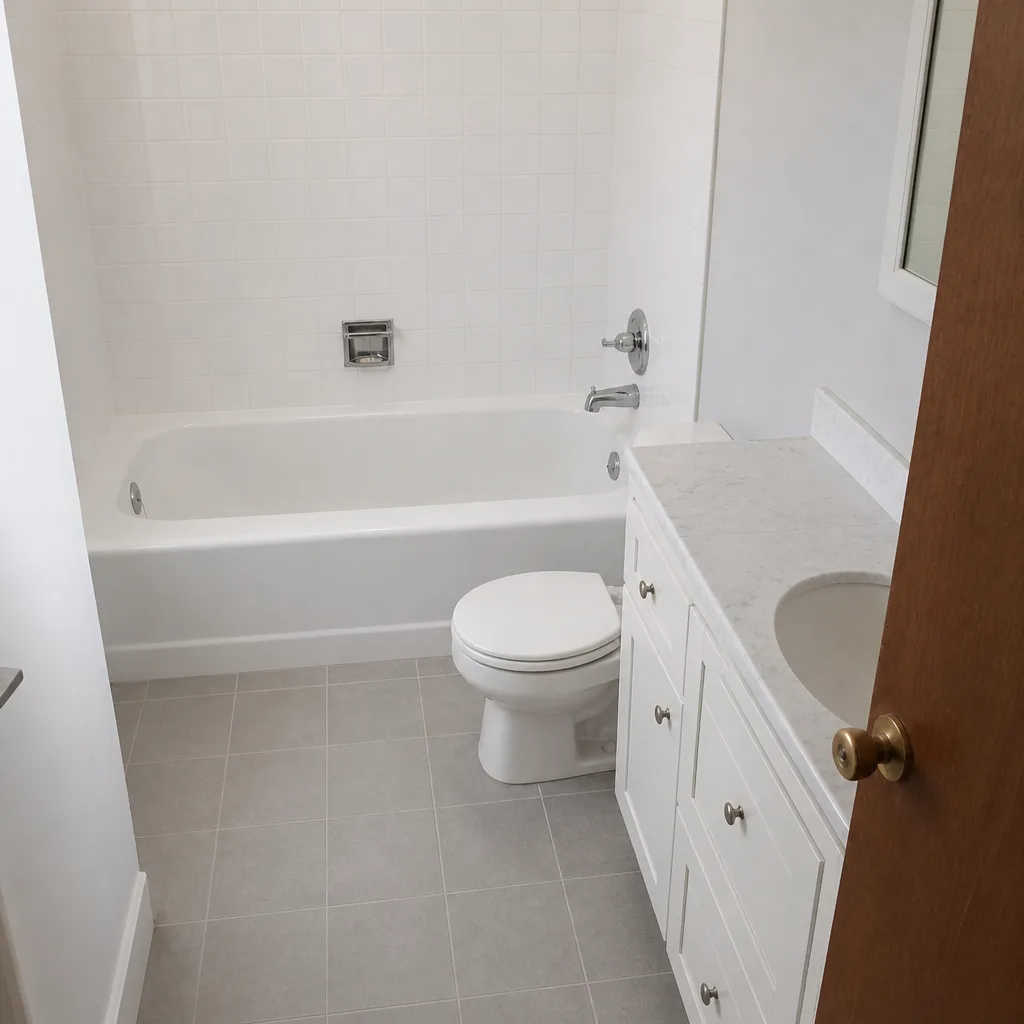
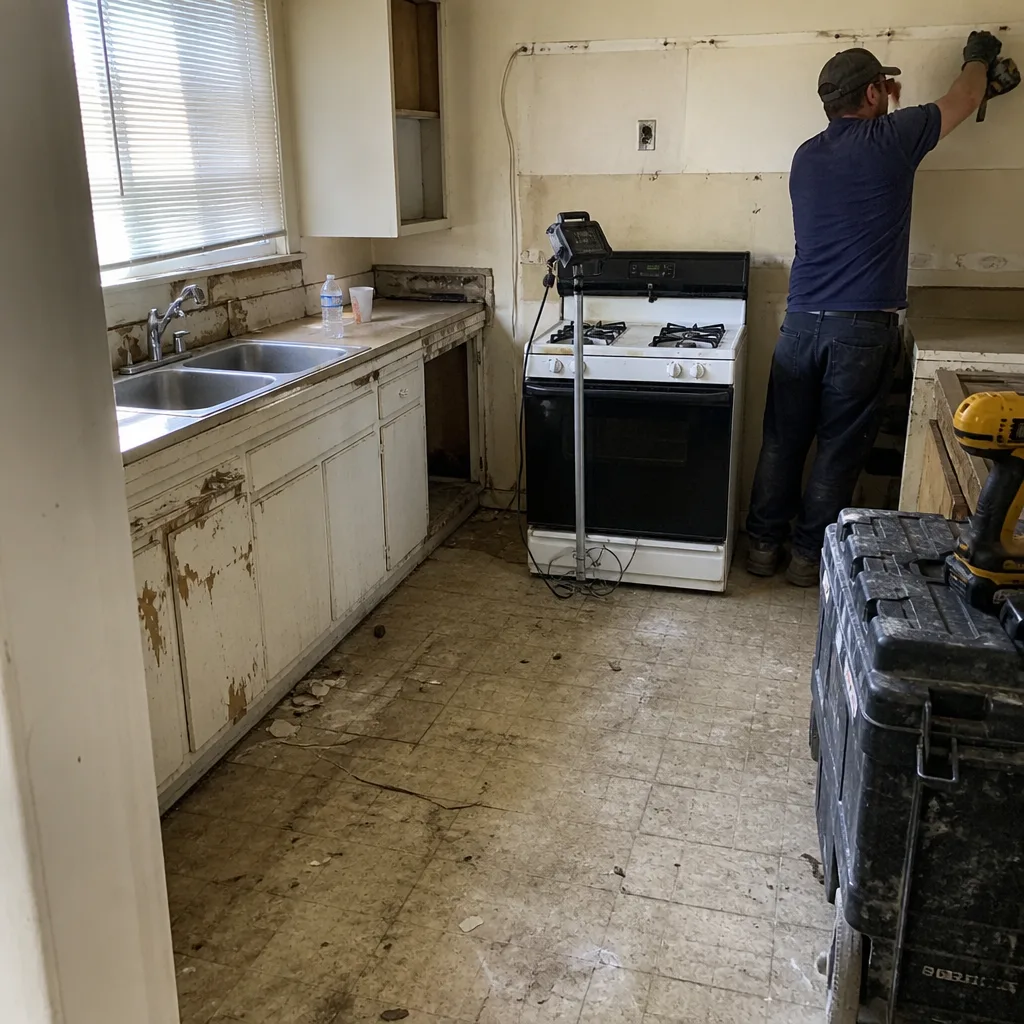
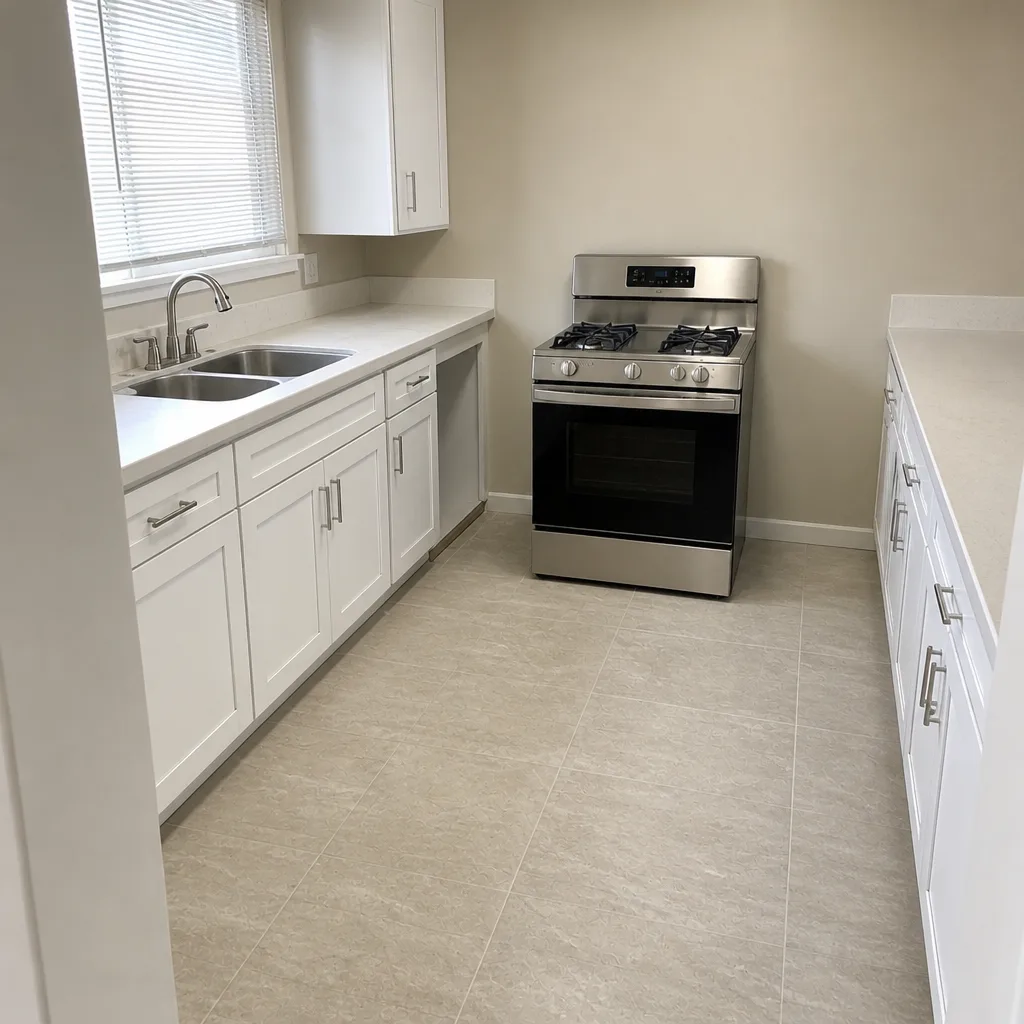
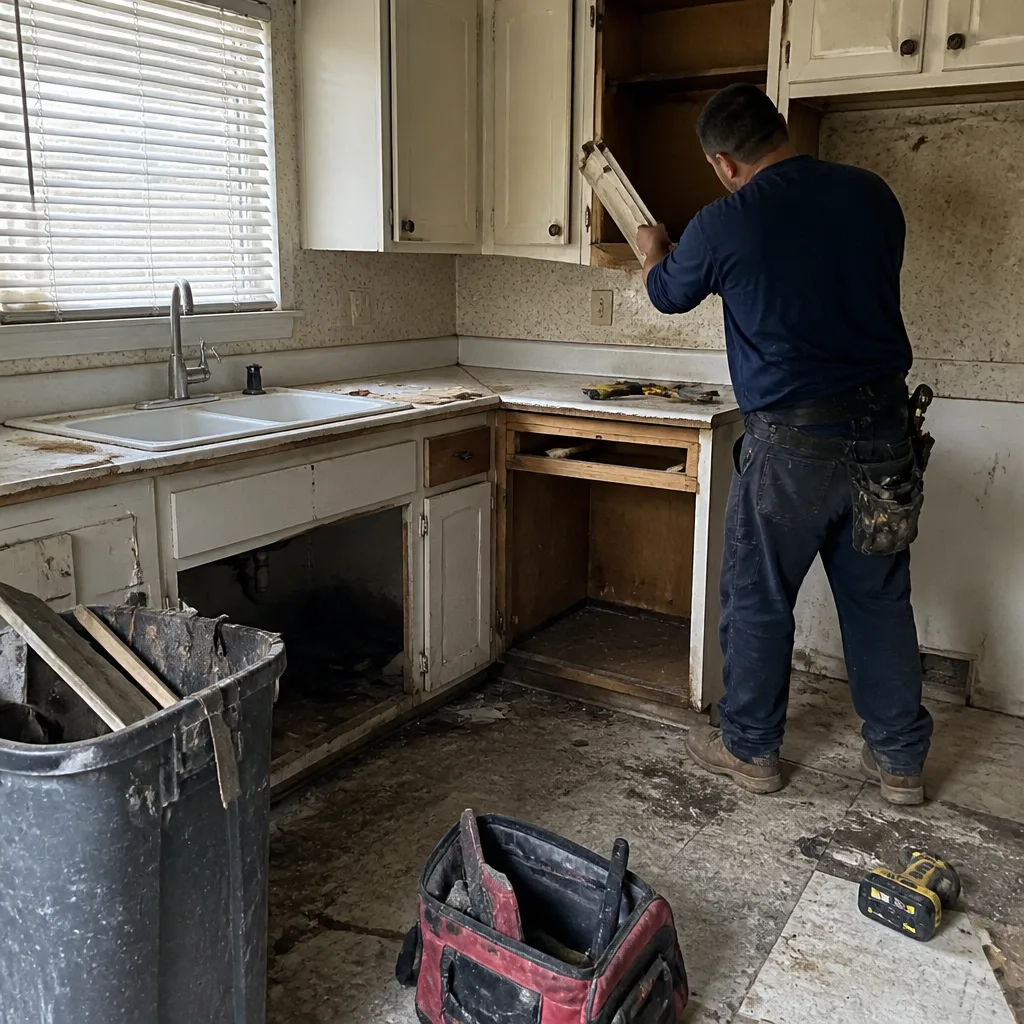
See the difference
 Before
 After
 Before
 After
 Before
 After
When to Call a Professional
Most paver maintenance is homeowner work: the tap test, a broom, a hose water test, weed pulling, and topping off a few joints with polymeric sand. When the work moves into structural territory, it’s time to call. Specific scenarios: pavers that rock underfoot in a section larger than about 10 square feet; a depressed area of the driveway where standing water doesn’t drain within 24 hours of rain and the dip has become visible from a standing position; polymeric sand reapplication on a driveway larger than about 600 square feet where the joints are failing across the whole surface (getting the compaction and wetting right across that area matters); a milky or peeling acrylic film that’s built up over 3 or more coat applications, which requires stripping back fully before redoing; and drainage corrections that involve re-grading the slope toward a proper drain. Our technicians have up to 12 years of experience in this work, all background-checked and in uniform, and our free estimates are written line-item; if it doesn’t need the work, we say so. No-hassle upfront pricing on any paver work we take on, backed by the 730-Day Done Right Promise. Call (888) 300-3178 for a free estimate.
Frequently Asked Questions
Every 4 to 5 years on a full-sun driveway in Anaheim, using a penetrating sealer. Do the water-bead test each May to be sure: if water beads and rolls, the sealer is intact, and a new coat will just build up. Film-forming acrylic sealers break down faster in Anaheim’s UV index and need stripping before reapplication, not a new coat.
Every 3 to 4 years on a typical Anaheim residential driveway, and every 2 to 3 years on a full afternoon sun exposure. Do a tap test with a broom handle in March and July. Any joint that sounds hollow and any gap that fits more than 3/8 inch of a credit card needs attention in that window, not deferred to the next reapplication cycle.
Yes. Santa Ana wind events strip joint sand from the windward edge of the driveway every fall. The marine layer brings enough morning dew to germinate weeds in joints that would stay dry inland. Both effects are stronger than most of Southern California. Plan for joint top-offs specifically in March and again after any major Santa Ana wind event.
Do the broom handle tap test on every joint across the driveway. If more than about 30% of joints sound hollow, it’s a full reapplication. If only a few are hollow and they’re clustered (for instance on the windward edge), it’s spot repair with the same polymeric sand. Full reapplication involves removing the top 1/4 inch of old joint material before applying new.
Not if you want the joint to last. Regular sand washes out with the first decent rain, gets wind-blown away during a Santa Ana event, and doesn’t resist ants the way polymeric does. Polymeric sand is the right material for Anaheim climate, and the minor extra cost is what makes joint sand maintenance actually hold.
Fixing joint sand before the bedding layer loses compaction. A March top-off is a few hundred dollars at most; a partial rebuild of a settled section runs $1,500 to $4,000. That gap is the entire argument for a maintenance schedule. If you’ve never had the joints checked, call (888) 300-3178 for a free estimate; our team walks the driveway and gives a written line-item inspection at no cost.
For homeowners planning a driveway replacement or paver upgrade in Anaheim, our Groundwork Construction Co. of Anaheim home page is where to start. And if you’re planning a larger project around the driveway work, additions, ADUs, and driveway access all interact, and our team scopes those together.
The Bottom Line
The right paver maintenance schedule for Anaheim is boring on purpose: joint sand check in March, post-wind top-off in July, pre-rain reapplication in October, drainage walk in December, and a water-bead test each May to decide whether sealer is worth doing that year. Reseal only when the water test says the film is gone; that’s 4 to 5 years on full sun, not annually. Reapply polymeric sand every 3 to 4 years. Watch for ants and weeds monthly because Anaheim’s marine layer keeps joints damp enough for both to grow. Do this and a paver driveway will last 15 years longer than one that got “resealed every spring” by a nice guy in a truck. Everything else sold as paver maintenance is noise on top of those five tasks.
If you’d rather have the driveway inspected by professionals who’ll tell you honestly whether it needs reapplication or just a top-off, our team at Groundwork Construction Co. of Anaheim runs free inspections and written line-item estimates. No-hassle upfront pricing, technicians in uniform, background-checked, and all work backed by the 730-Day Done Right Promise. Call (888) 300-3178 to schedule your free estimate, or start with Driveway & Pavers in Anaheim to see our paver work across the city.
Written by the team at Groundwork Construction Co. of Anaheim.