Last updated November 18, 2026
Free written scope consultation - allowances, timeline, and change-order rules on paper before a single trade is scheduled
DIY vs Professional Home Additions & ADU: What’s Safe to Do Yourself
California’s owner-builder permit lets homeowners pull their own construction permits. It also means you’re personally liable for every code violation found during a future sale inspection, including work done years after you move out. That trade-off catches more Anaheim homeowners than any other single decision in the ADU process. Most people start with a simple question, “what can I do myself,” and end up signing a disclosure form they never fully read. We’re going to walk through exactly where the law draws the line, which tasks genuinely save you money, and where owner labor quietly costs more than a licensed crew.
Quick Answer
In California, you can legally handle demolition, insulation, painting, cabinet installation, finish carpentry, and landscaping on an ADU or home addition, usually through an owner-builder permit. You cannot legally perform electrical panel work, structural framing, or gas line connections yourself, and any work inside the permit scope must be performed or directly supervised by a licensed professional. The financial savings from owner-contributed labor are real but smaller than most homeowners expect – typically 8 to 15 percent of total project cost – because labor isn’t the biggest line item on a modern ADU.
Styles & brands we work with
- Kitchen remodeling
- Bathroom remodeling
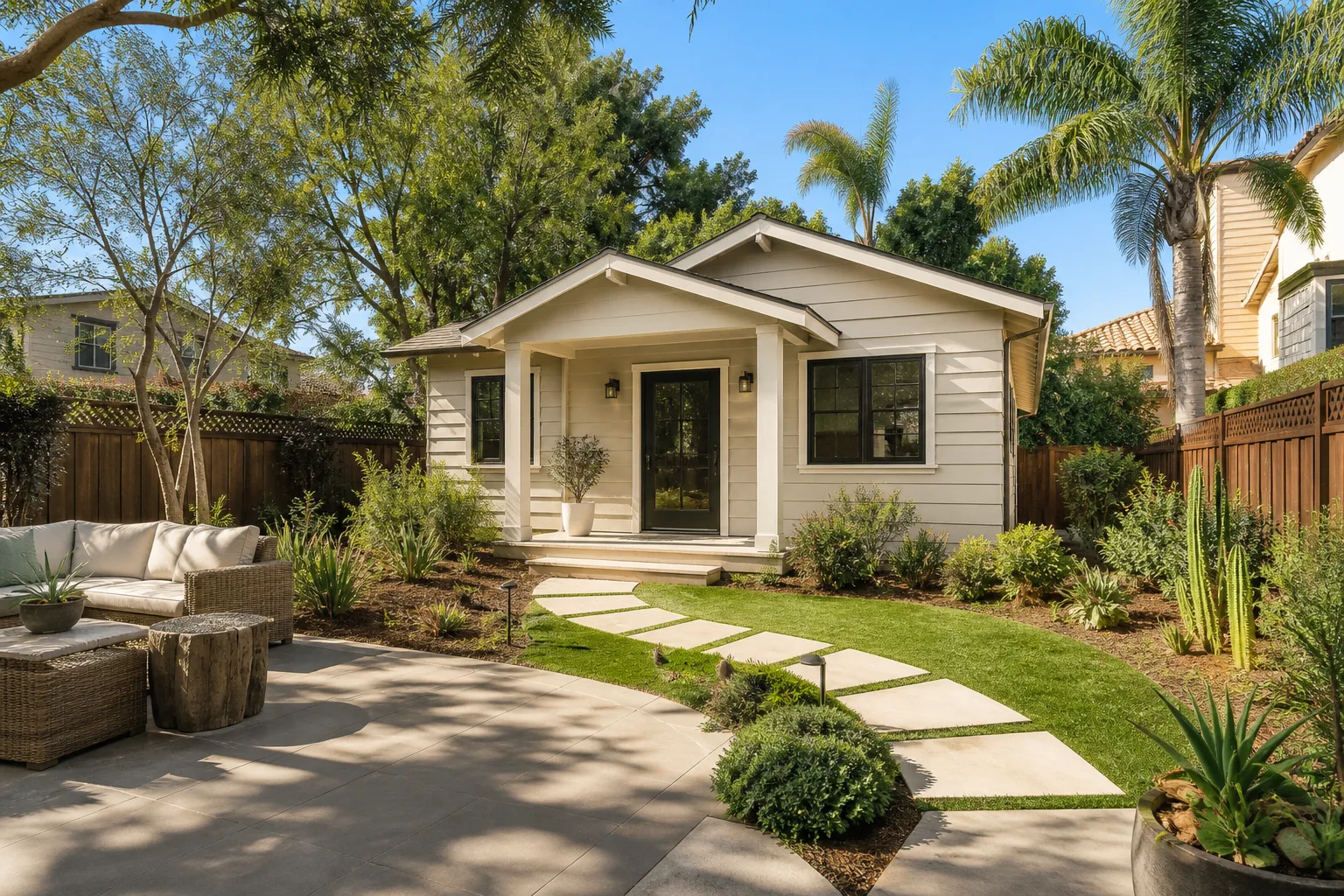
- Home additions & ADU
- Roofing
- Windows & doors
- Driveway & pavers
- Fence
Table of Contents
- What California’s Owner-Builder Permit Actually Allows
- The Resale Restriction Clause Most Homeowners Skip
- DIY Tasks That Are Legitimate and Cost-Effective
- Tasks That Require a Licensed Contractor by Law
- The Inspection Failure Risk Nobody Warns You About
- Real Dollar-Savings Breakdown: Labor vs. Time
- Anaheim-Specific Considerations for ADU Owners
- The Hybrid Approach: How Owner-Builders Actually Win
What California’s Owner-Builder Permit Actually Allows
An owner-builder permit allows a homeowner to pull a building permit on their own property without holding a contractor’s license, provided they intend to occupy the residence for at least one year before selling it. The permit is issued by the local building department – in Anaheim, that’s the city’s Building Division – and it lets you act as the general contractor on your own project. You hire subcontractors, manage the schedule, order materials, and take responsibility for the finished work. Every task in that scope has to comply with the California Building Standards Code, and you sign paperwork acknowledging that you, not the person who poured your foundation, are the responsible party.
What the permit does not allow is a workaround for licensed trades. California Business and Professions Code Section 7042 requires anyone performing work valued over $500 in a licensed classification to hold that license. Electrical, plumbing, mechanical, and structural work each carry their own license requirements. So even as an owner-builder pulling the permit, you still cannot legally perform your own electrical rough-in or gas connection. You can hire a licensed electrician, and when you do, that electrician must be the one who signs off on the work inside the permit scope.
In Anaheim, this plays out the same way it does across Orange County. Homeowners who try to save on framing by hiring unlicensed helpers usually discover the problem at the first inspection when the inspector asks to see the contractor’s license number on the permit card. In our experience, that conversation ends with a stop-work notice and a scramble to find licensed trades who can and will take over someone else’s framing mid-project.
There’s a quieter issue too. Owner-builder permits obligate you to pull every required permit, not just the main one. In Anaheim that can mean separate permits for the ADU itself, the electrical service upgrade if you need one, and any grading or stormwater work. Miss one and the whole project stalls at final inspection.
The Resale Restriction Clause Most Homeowners Skip
When an owner-builder permit is issued, California law requires you to sign a disclosure that reads, in substance, that the property is intended for owner-occupancy for a minimum of one year. If you sell before that year is up, the buyer can sue for rescission of the sale or damages – and the disclosure form gets recorded against the property title, meaning every future buyer and every title search sees it. Most homeowners skim past this paragraph because it doesn’t feel relevant during construction. Then a job transfer or unexpected sale force them into a negotiation.
The second disclosure most homeowners miss is the one about liability. Owner-builder permits do not expire, and the responsibility doesn’t follow the person who performed the work – it follows the property. If an inspector flags an issue at a resale inspection years later, or an insurance adjuster finds an unpermitted electrical panel during a claim, the current owner (which may not be you anymore) has to remediate it, or you’re the one getting sued. This is the single biggest reason we advise Anaheim homeowners to treat the owner-builder permit as a serious legal instrument rather than a cost-saving hack.
If you plan to move within a couple of years, the math on owner-builder almost never works. Hire a licensed contractor through a home additions & ADU partner who can carry the permit in the company name, and the resale clause becomes irrelevant. That single decision removes an entire category of risk from your property record.
DIY Tasks That Are Legitimate and Cost-Effective
Here’s where owner-builder actually makes sense. The list of tasks that are both legal for you to perform and genuinely worth your time:
- Demolition and site prep. Tearing out an old garage, a shed, or interior finishes on an attached addition is pure labor. No license is required for most demo, and it’s hard, time-consuming work – meaning it’s expensive to hire and cheap to do yourself if you have the time.
- Insulation. Batt insulation installation in walls and ceilings is code-sensitive (R-values matter in Anaheim’s climate zone) but not licensed. Any homeowner can install it; the inspector verifies correctly. This typically saves $1,500 to $3,000 on a 600-square-foot ADU.
- Painting. Interior and exterior painting is the highest-leverage task because it’s a big cost line and it’s completely within homeowner scope. Save $2,000 to $5,000 on the labor portion alone, depending on square footage.
- Cabinet installation. Ready-to-assemble and semi-custom cabinets – brands like KraftMaid, available through licensed partners – can be installed by a careful homeowner. It’s finicky work but not dangerous, and it’s often $2,500 to $6,000 in labor savings.
- Finish carpentry. Baseboards, door casings, closet shelving, and trim. Time-consuming but low-risk. Budget three times longer than you think it will take.
- Landscaping. Sod, mulch, plantings, and simple hardscape outside the permit scope. Anaheim’s clay-heavy soils need amendment, but that’s a shovel problem, not a code problem.
In our experience, the homeowners who save the most on DIY labor are the ones who pick two or three of these and commit fully. The ones who try to do all of them while working a day job usually end up hiring a finish carpenter at a premium to fix what they started.
Tasks That Require a Licensed Contractor by Law
This is the section that prevents lawsuits. In California, the following work must be performed by a licensed professional within their classification. Attempting these yourself is not a gray area; it’s a code violation that gets caught at inspection and becomes a disclosure item on the property record:
- Electrical panel work. Any work on the main service panel, subpanel installation, or service upgrade requires a licensed electrician. This includes the panel itself, the main breaker, and the service feed from the meter. There’s no safe or legal way for a homeowner to work on a live 200-amp panel. This kills people every year.
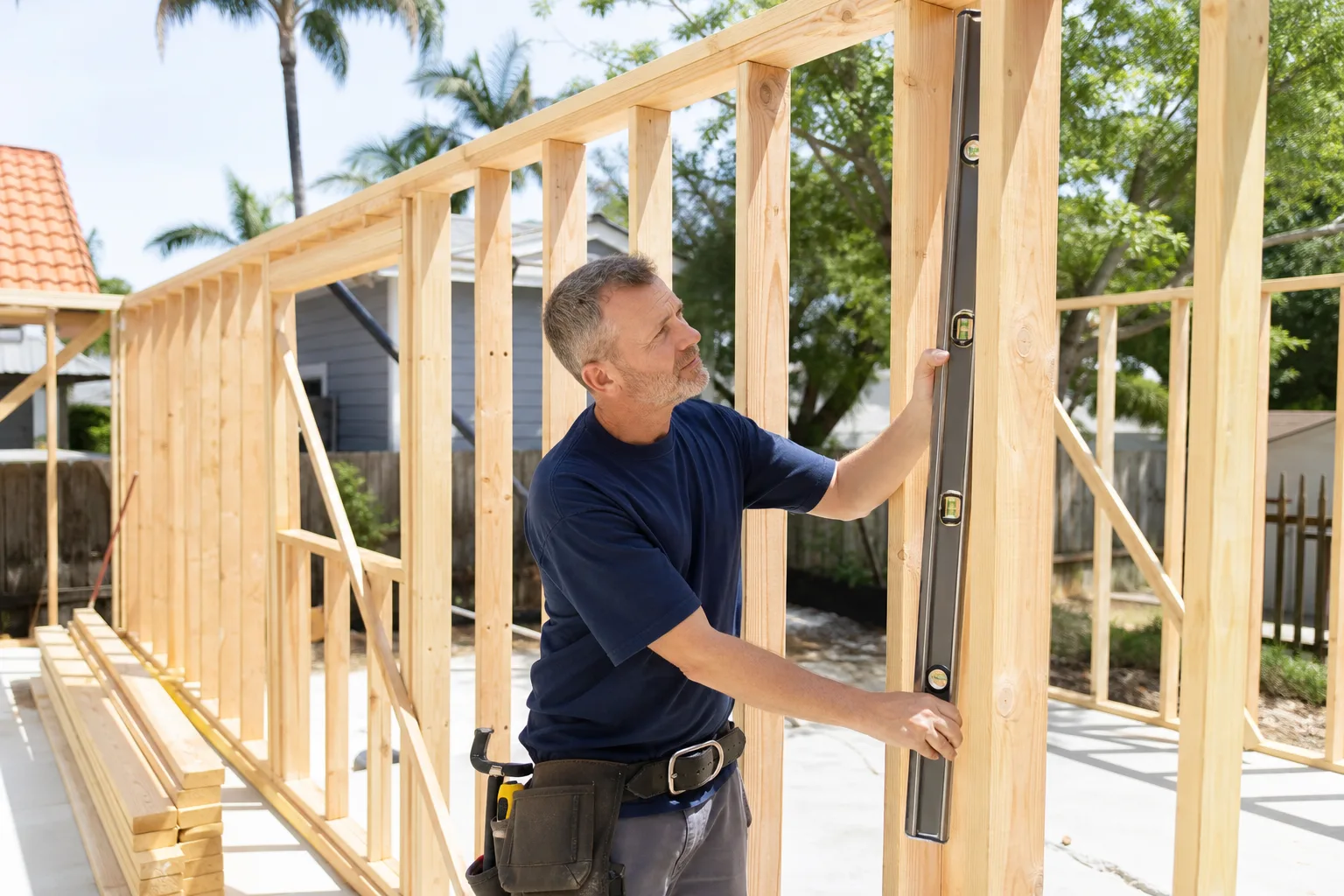
- Structural framing. Wall framing, roof framing, beam installation, and any load-bearing modification must be performed under a licensed contractor’s scope. Frame it wrong and you’re looking at a red-tag inspection and structural remediation.
- Gas line connections. Any gas line – for a tankless water heater, a range, or a dryer – requires a licensed plumber. Leak testing and pressure testing must be documented by the licensed trade.
- Plumbing rough-in and final connections. Even in an owner-builder scenario, plumbing requires a licensed plumber in California. Your Schluter or Grohe fixtures get installed by a licensed plumber under the permit; you can install the tile around them.
- HVAC and mechanical work. Mini-split installation, ducting, and refrigerant work all require licensed mechanical contractors.
- Fire sprinkler or fire-rated assemblies. Some ADU configurations in Anaheim require fire-rated walls or sprinklers due to lot-line proximity. These must be installed by licensed fire-protection contractors.
The pattern here matters: if the work involves electricity, gas, water pressure, or load-bearing structure, it’s off-limits to the homeowner regardless of how confident you are. Our ADU construction specialists see this every month in Anaheim. The projects that get through inspection clean are the ones where homeowners respected the line.
The Inspection Failure Risk Nobody Warns You About
Here’s the failure mode that costs homeowners the most money and almost nobody plans for: DIY work fails the first inspection, and the whole schedule collapses. In Anaheim, a framing inspection might get scheduled two to three weeks out. If you did the framing yourself and the inspector finds insufficient nail patterns, a missing shear panel, or a header sized for a shorter span than the plans call for, you get a correction notice. Now you’re not just fixing the framing; you’re waiting weeks for a re-inspection slot while your foundation crew, your plumber, and your electrician all wait on hold.
For every week a permitted ADU project sits idle waiting on a failed inspection, owners typically lose $1,500 to $3,500 in unexpected costs – trades who schedule elsewhere, materials sitting exposed to weather, and interest on any construction loan. Multiply that by two or three inspections if the DIY work was substantial, and the “savings” from owner labor disappear. We’ve seen a $3,000 homeowner framing job turn into $14,000 in project delay costs and remediation labor.
The second risk is inspection sequencing. Anaheim inspects rough-in and finish in a specific order. If your electrical rough-in was done by the electrician but your recessed LED cans were set by you in the wrong locations relative to the ceiling framing, you can fail the electrical inspection even though the electrician did nothing wrong. The inspector doesn’t care who did what; the property fails, the correction is issued, and the clock restarts.
If you’re going the hybrid route, the smartest approach we’ve seen is to have your licensed general contractor schedule their scopes around your DIY scopes so you’re never the crew holding up a scheduled inspection. That coordination is exactly the kind of thing a full-scope contractor brings. Pull the whole permit through one licensed partner and you keep one throat to choke when inspection day comes.
Real Dollar-Savings Breakdown: Labor vs. Time
Homeowners tend to overestimate what owner labor saves because they mentally subtract labor from the total project cost. But most of a modern ADU’s cost isn’t labor – it’s materials, permits, site work, utility connections, and specialty trades. Here’s what an owner-builder can realistically save by doing each task themselves on a 600-square-foot detached ADU in Anaheim, and honestly, how much time it takes:
- Demolition of old garage or shed: saves $2,500 to $5,000; takes 3 to 5 weekends with two people, plus a dumpster.
- Batt insulation: saves $1,500 to $3,000; takes 40 to 60 hours over two weeks.
- Interior and exterior painting: saves $2,000 to $5,000; takes 80 to 120 hours if you do prep correctly.
- Cabinet installation: saves $2,500 to $6,000; takes 30 to 50 hours, plus you need to shim plane the walls first.
- Finish carpentry (trim, baseboards, casing): saves $2,000 to $4,500; takes 50 to 80 hours if you own the tools and know how to use them.
- Landscaping (sod and simple plantings): saves $1,500 to $3,500; takes 20 to 40 hours per weekend work.
Add it up: a maximalist owner-builder can save $12,000 to $27,000 in labor. Realistic owner-builder – three or four tasks – saves $6,000 to $14,000. On a $180,000 ADU project, that’s a 3 to 8 percent savings. And it costs 250 to 450 hours of your time, which is six to eleven weeks of nights and weekends if you’re working a full-time job. If your time is worth $40 an hour, that’s $10,000 to $18,000 in opportunity cost. Do that math honestly and the owner-builder path is a real choice, not an obvious win.
The tasks where DIY math actually works cleanly are demo and landscaping – big dollar savings, contained scope, and zero inspection exposure. The tasks where it almost never works are finish carpentry and painting, because the quality a professional delivers is meaningfully better and the time investment is brutal.
Anaheim-Specific Considerations for ADU Owners
Anaheim’s ADU climate is genuinely favorable – the city has actively encouraged ADU development, and processing times for compliant plans have improved. But local code details matter for DIY scope. Anaheim requires ADU plans to comply with the city’s residential zoning standards on setbacks, height, and lot coverage, and the plan check reviewers are particular about the details. If your plans list “shed roof with 4:12 pitch,” they want to see truss engineering or rafter sizing that matches. That’s a licensed-designer-and-framer job; the plans will not pass plan check with hand-drawn structural notes.
Anaheim’s climate zone also matters for DIY scope. This isn’t Riverside or Palm Springs – we’re coastal-influenced with cooler nights and occasional marine layer. That means title-24 requirements for insulation R-values, window U-factors, and HVAC sizing are more demanding than homeowners expect. Your Andersen or Marvin windows need the energy rating on the plans, and your insulation bid has to hit the right R-value, or the inspector flags it.
Neighborhood context is different too. In West Anaheim and areas near the Packing District, older lots often have detached garages that were never permitted – if you’re converting a garage to an ADU, expect City inspectors to require the pre-existing building to be brought into compliance first. In Anaheim Hills, lot slopes and hillside grading rules add scope. Our home additions & ADU team has walked Anaheim homeowners through both scenarios, and the upfront plan check is where these issues get resolved – not in the field after you’ve started framing.
Want more context on scope and sequencing? Our Home Additions & ADU in Anaheim guide breaks down the full ADU process, and our main page at Groundwork Construction Co. of Anaheim home covers how we run a project from permit to walkthrough.
The Hybrid Approach: How Owner-Builders Actually Win
The homeowners who come out ahead on ADU projects in Anaheim don’t pick “DIY” or “professional” – they pick a hybrid. The hybrid model gives you the legal protection of a licensed contractor on the permit and the cost savings of owner labor in the safe scope. Here’s the sequence that works:
- Pull the permit in your name or the contractor’s name – but with a written scope split. Either you or your licensed partner is the permit holder. Decide upfront, in writing, which tasks are owner-performed and which are contractor-performed, so inspection sequencing is coordinated.
- Contractor owns the licensed scope. Electrical, plumbing, structural framing, and mechanical all sit with licensed trades. No exceptions. This is the part that stays off your DIY list.
- Owner handles demo, insulation, painting, cabinets, trim, and landscaping. These are the tasks where you save real money and don’t create inspection risk.
- Coordinate inspection dates in advance. Every inspection has to be scheduled against a completion milestone. If you’re doing the insulation and the contractor is doing the electrical rough-in that goes in before yours, your task has a hard deadline. Put those dates on a shared calendar at the start, not the week of.
- Keep a written punch list. When the contractor’s scope ends and your owner scope begins, put a joint walkthrough on the calendar. Anything unfinished on the contractor’s side is a punch item; anything unfinished on yours is a delay to final inspection. Written, not verbal.
This is the model our technicians build for homeowners who want to genuinely participate in their project. Our technicians have up to 12 years of experience and know where the handoff points get bumpy. The 730-Day Done Right Promise only applies to work we perform, so any owner-performed task falls outside it – and that fact alone usually steers homeowners toward the right decision about scope. If you’re also thinking about exterior scope once the ADU is done, our Fence Installation in Anaheim guide covers how perimeter fencing interacts with ADU sight lines and setback rules, and our Driveway & Pavers in Anaheim page explains how to plan a driveway that handles the extra vehicle without redoing the slope.
Whether you need a full-scope partner or a licensed counterpart for the permit scope, Groundwork Construction Co. of Anaheim offers the free project estimate and design consult as a no-cost step, and the 0% financing for 18 months plus $1,000 off projects over $10,000 applies to the licensed scope of a hybrid build too.
Common Mistakes to Avoid
- Signing the owner-builder disclosure without reading it. The one-year owner-occupancy rule is legally binding and recorded against the property title. If you’re going to move within a year of completion, do not use the owner-builder permit. Full stop.
- Assuming you can do electrical because you watched a video. Panel work is not a homeowner-scope task in California, and it’s fatal. Every year across Southern California, homeowners are seriously injured trying to save $2,000 on a panel upgrade. Leave it to a licensed electrician.
- DIYing structural framing because “it’s just a small ADU.” A 500-square-foot ADU still requires load calculations and engineered shear panels on Anaheim’s seismic zone. Frame it yourself and the first framing inspection will flag it. That stops the entire project schedule.
- Missing the permit sequencing. In Anaheim, an electrical service upgrade permit is separate from the ADU permit. Homeowners focus on the main permit and forget the utility connection permit. The project sits idle until it’s pulled.
- Underestimating finish-carpentry time by half. Baseboards and casing on a 600-square-foot ADU is 60 to 80 hours if you care about quality. Plan to pay a pro to fix what you started, or plan to spend every weekend for two months. There’s no in-between.
- Skipping the pre-inspection walk-through with your contractor. Before any inspection, do a joint walk. If the contractor’s scope has open items that affect your scope, you want to know that days before inspection, not the morning of.
- Hiring the cheapest electrician to do work you’ll be responsible for. As the permit holder, you’re liable for quality regardless of who performed the work. A $1,200 electrician is expensive; a $1,000 electrician who fails inspection twice is far more expensive.
See the difference
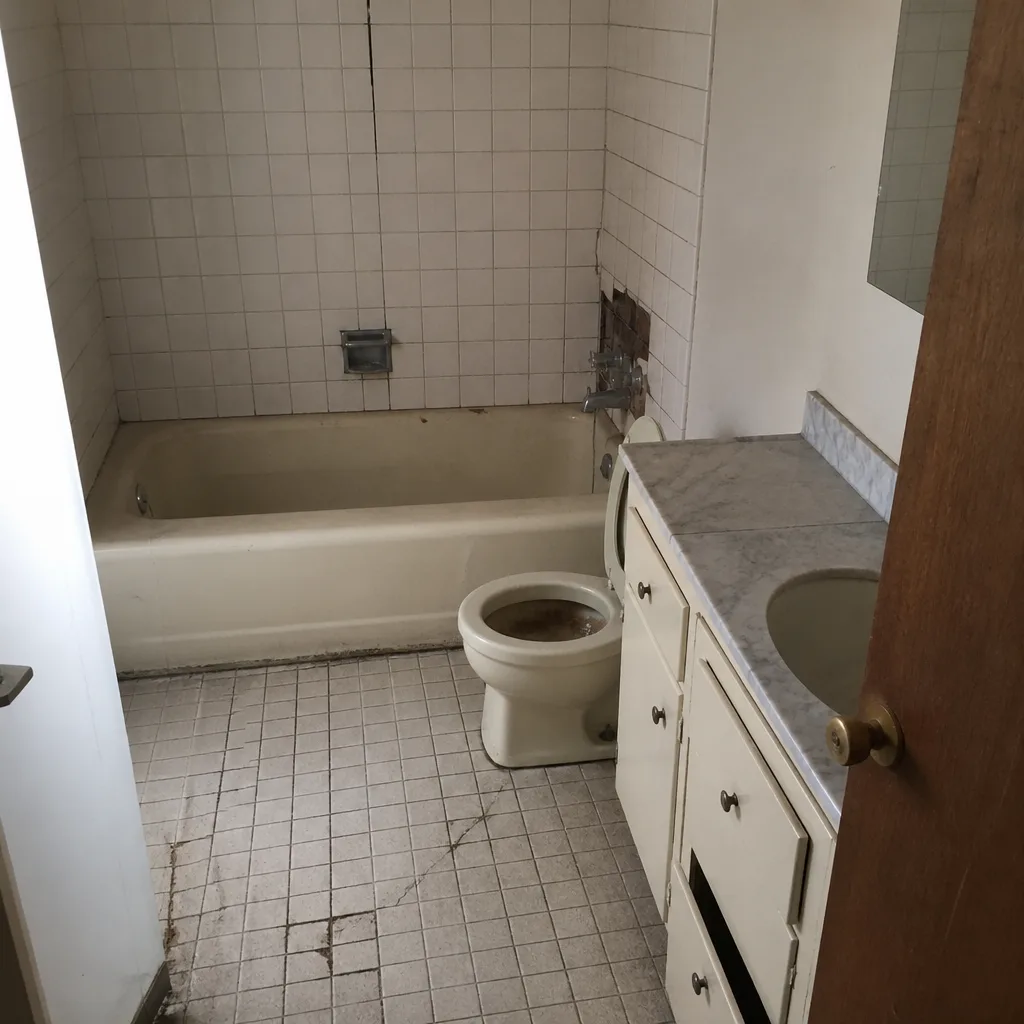 Before
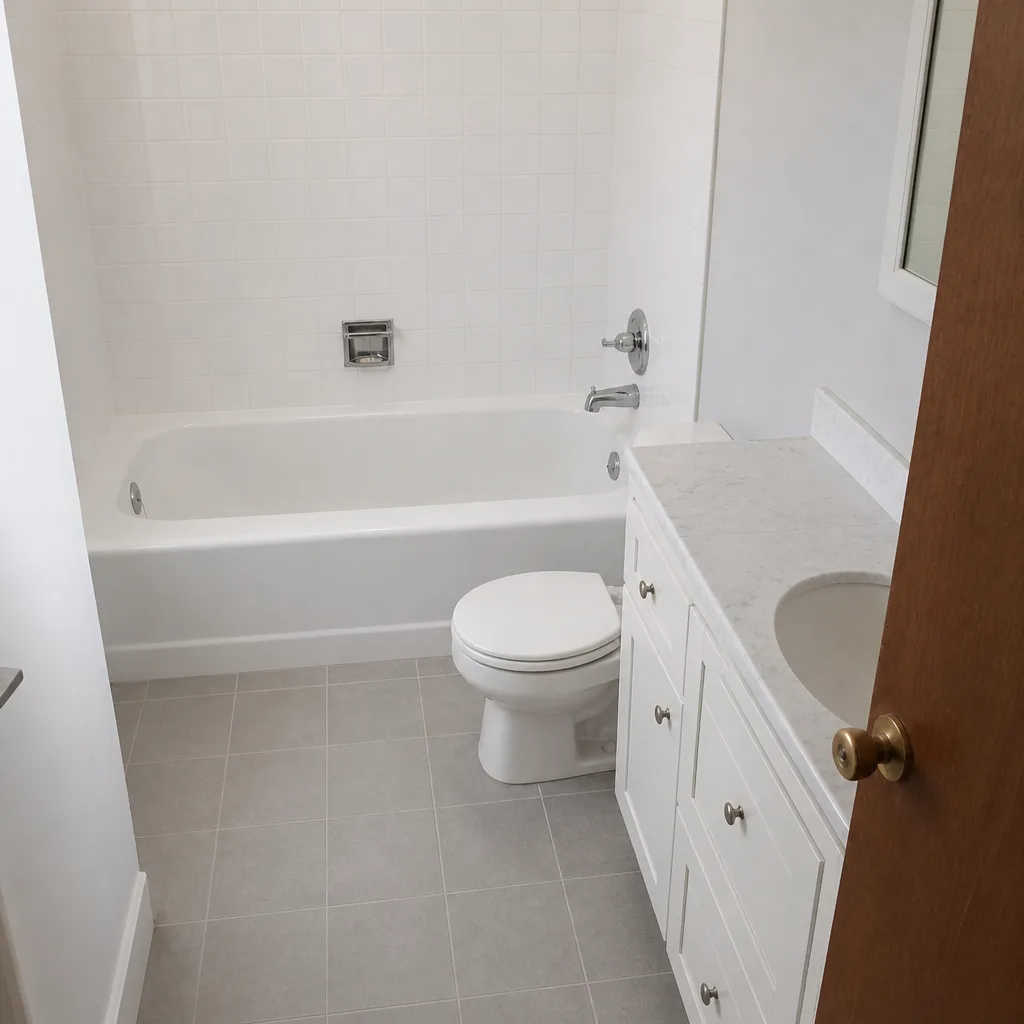 After
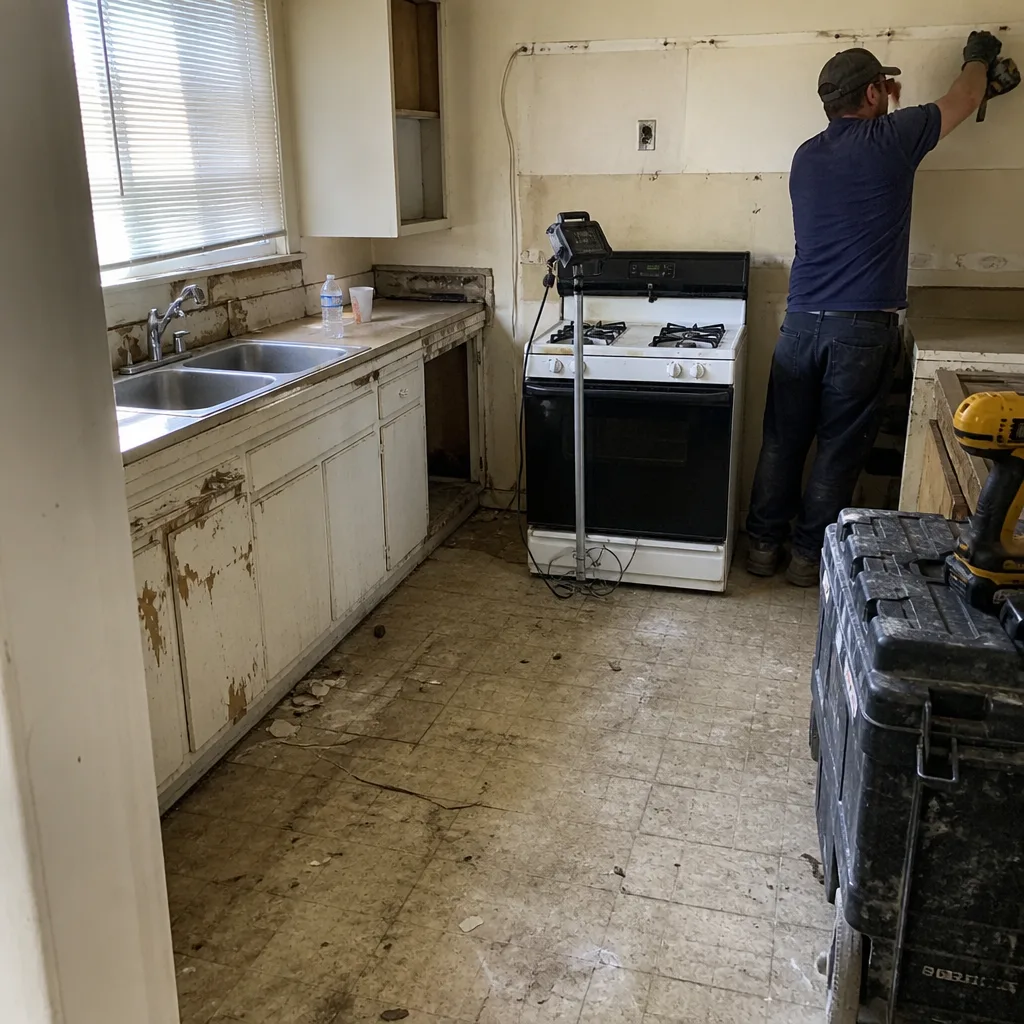 Before
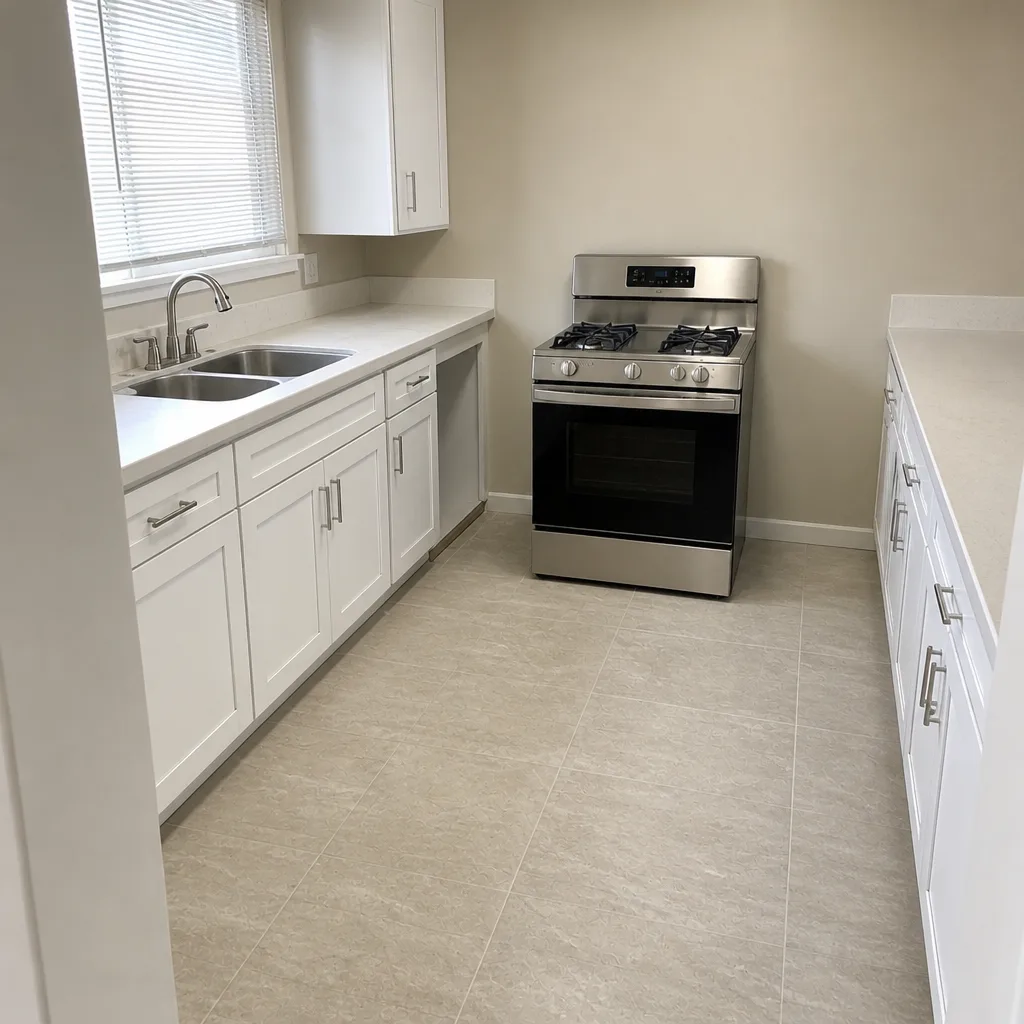 After
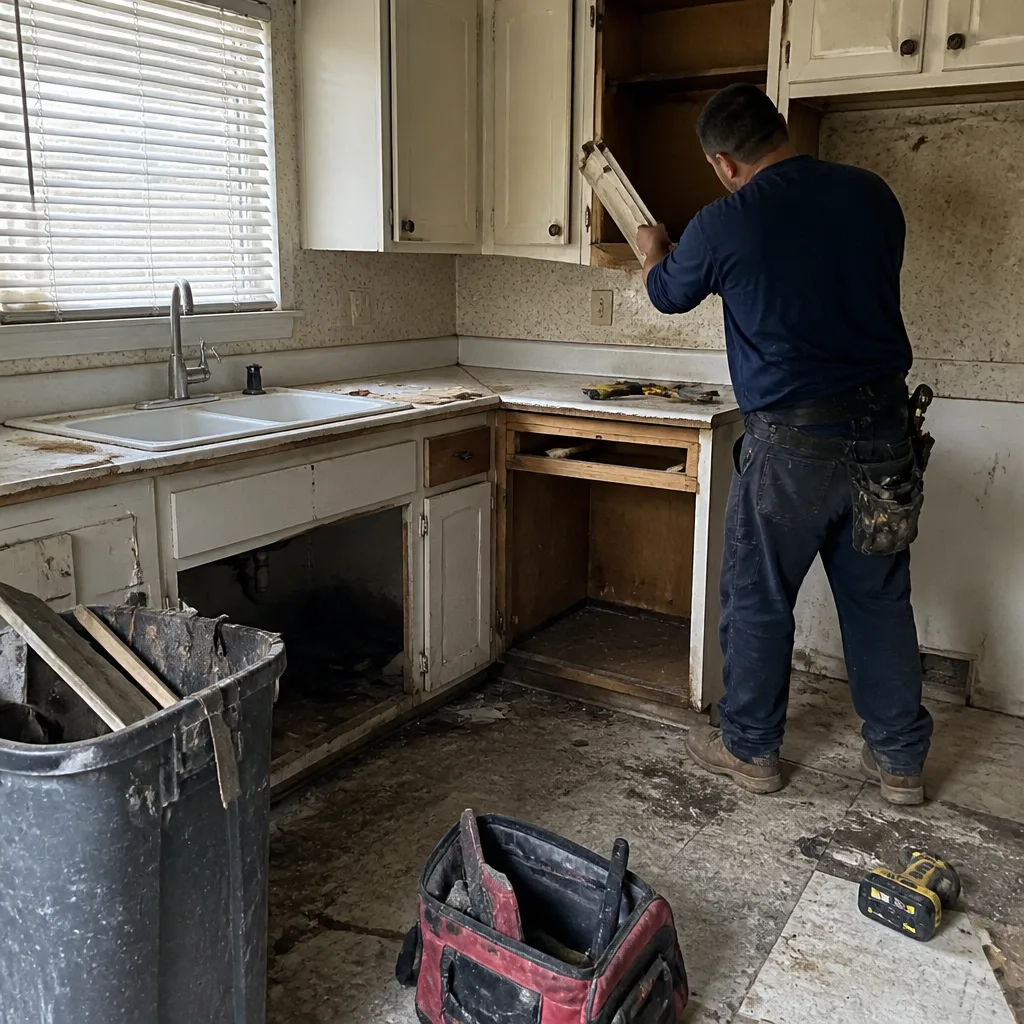 Before
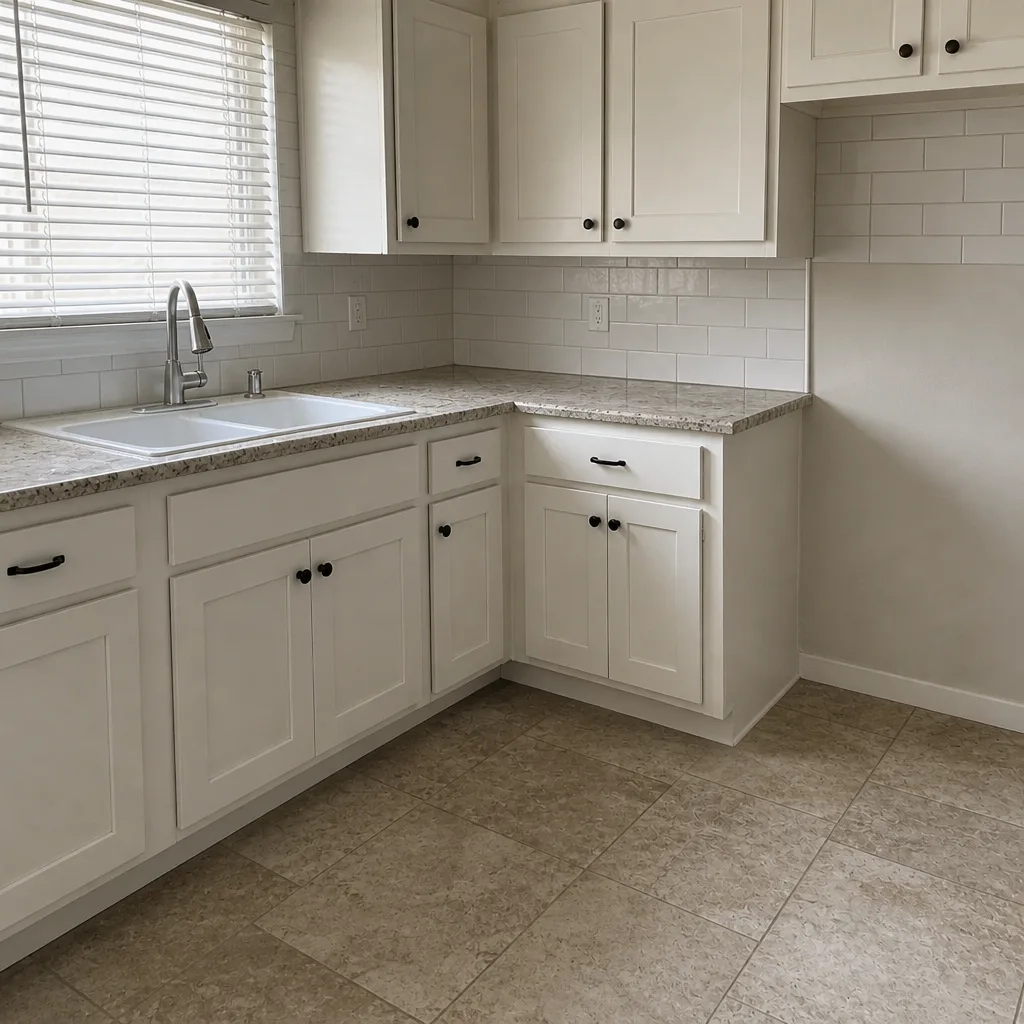 After
When to Call a Professional
Call a licensed professional – not just for the permit scope, but for the coordination – when any of the following is true. Your ADU touches an existing structure in a way that requires a structural engineer’s stamp. Your lot has a slope, an existing unpermitted structure, or setbacks within five feet of a property line. Your plans include a fire-rated wall assembly. You need the permit pulled quickly and can’t manage plan check yourself. Or you’ve already started DIY work and hit a wall you can’t get past. A licensed contractor carries the permit in the company’s name, coordinates the trades and inspection sequencing, and covers the work under a written workmanship guarantee – none of which an owner-builder permit gives you. In our experience, most Anaheim homeowners who try to go full owner-builder on an ADU restart the project with a licensed partner within six months. Groundwork Construction Co. of Anaheim offers free estimates in Anaheim – call (888) 300-3178 to schedule yours.
Frequently Asked Questions
Yes, with limits. California’s owner-builder permit allows you to pull the building permit in your own name and perform non-licensed tasks – demo, insulation, painting, cabinets, finish carpentry, and landscaping. You cannot legally perform electrical panel work, structural framing, plumbing, gas connections, or mechanical work yourself in California. Those require a licensed contractor.
It states that you intend to occupy the property as your primary residence for at least one year after completion, and the form is recorded against the property title. If you sell within that year, the buyer can rescind the sale or seek damages. Every future title search will see the recorded disclosure. If you plan to move in under a year, don’t use an owner-builder permit.
Expect $6,000 to $14,000 in realistic labor savings on a 600-square-foot ADU, and up to $25,000 if you do the maximal scope and have the skills and time to execute cleanly. Demo and landscaping deliver the biggest dollar savings relative to time. Finish carpentry and painting rarely deliver the savings homeowners expect once opportunity cost is counted.
Work we didn’t perform isn’t covered by our 730-Day Done Right Promise – and that’s true of every contractor’s workmanship warranty. If you perform framing yourself and it fails, that failure isn’t covered by anyone. The fix is to have every warrantied scope performed by the licensed contractor and owner scope performed only outside the permit scope or under a written scope split.
The inspector issues a correction notice, and the property can’t proceed to the next inspection until it’s fixed. Re-inspection scheduling in Anaheim can add two to three weeks per cycle. Expect $1,500 to $3,500 in delay-related costs per week of hold-up – trades rescheduling, materials exposed, and interest on construction financing. Three failed cycles can erase any savings from owner labor entirely.
No. Painting and cabinet installation do not require a licensed contractor in California. You can install KraftMaid cabinets and paint your ADU interior yourself and pass inspection. What you cannot do is install the plumbing or electrical that feeds the beverage fridge or under-cabinet lighting. Those are licensed-trade items inside the permit scope.
The Bottom Line
The owner-builder permit is a legitimate legal tool, not a loophole, and it comes with a recorded obligation (the one-year owner-occupancy clause) and a liability trail that follows the property title. In Anaheim, the DIY tasks that genuinely save money are demo, insulation, painting, cabinet installation, finish carpentry, and landscaping – the licensed scope is off-limits. Realistic savings on a full ADU are $6,000 to $14,000, not the $30,000 homeowners imagine, and every failed inspection risks wiping that out. The hybrid model – licensed contractor on the permit and licensed trades, owner labor on non-licensed tasks, and one written scope split – is how the smart money plays this. If a licensed partner makes more sense for your project in Anaheim, we’re happy to walk you through the numbers.
Contact Us
If you’re planning an ADU or home addition in Anaheim and want a straight answer on what’s safe to do yourself – and what isn’t – call Groundwork Construction Co. of Anaheim at (888) 300-3178 for a free estimate and design consult. Calls are answered by a live person, 24/7. Every project we run is covered by the 730-Day Done Right Promise, we pull the permits and pass the inspections, and the number you see on the estimate is the number you pay. From foundation to finish line, built to last, backed in writing.
Written by the team at Groundwork Construction Co. of Anaheim.