Last updated November 18, 2026





Free written scope consultation - allowances, timeline, and change-order rules on paper before a single trade is scheduled
Windows & Doors Troubleshooting: Common Problems and How to Fix Them
Here’s the counterintuitive part: most window and door problems aren’t window or door problems at all. The door that jams every July isn’t failing – the wood is swelling in the humidity. The door that suddenly sticks in January and stays stuck isn’t suffering from the same thing – its frame has racked, and that’s a different fix with a different price tag. Homeowners across Anaheim call us describing what sounds like the same complaint and end up with wildly different solutions. This guide teaches you to read the symptom, trace the cause, and know which problems you can handle with a screwdriver and a Saturday, and which ones are quietly telling you something bigger is happening. We’ll walk through the pencil-mark test, the three ways window seals fail, and where drafts actually sneak in. By the end you’ll know when to grab a tool and when to call.
Quick Answer
Most window and door problems trace back to four root causes: humidity-driven wood movement, hardware fatigue, seal failure, and frame movement. Sticking that follows the seasons is almost always moisture and swelling. Sticking that appears suddenly and never resolves points to foundation or framing settlement. Fogging between panes means the sealed glass unit has failed, drafts usually come from weatherstripping or the frame-to-wall gap, and each of these needs a different fix. Diagnosing the cause before you touch anything is what separates a $20 repair from a $2,000 one.
Styles & brands we work with
- Kitchen remodeling
- Bathroom remodeling
- Home additions & ADU
- Roofing
- Windows & doors
- Driveway & pavers
- Fence
Table of Contents
- The Pencil-Mark Test: Diagnosing a Sticking Door in Five Minutes
- Seasonal Sticking vs. Structural Sticking: The Distinction That Changes Everything
- The Three Failure Modes of Window Seals (And Why They Aren’t the Same Fix)
- Window Hardware Failure: When to Replace a Part and When to Replace a Frame
- Tracking a Draft to Its Actual Source
- What You Can Fix With $20 and 30 Minutes
- When a Temporary Fix Masks Structural Deterioration
- Anaheim-Specific Window and Door Problems
The Pencil-Mark Test: Diagnosing a Sticking Door in Five Minutes
Before you buy a single shim or plane a single edge, find out exactly where the door is binding. The pencil-mark test is the fastest, cheapest diagnostic in residential construction, and it works on any interior or exterior door in your home.
- Open the door to about 45 degrees. Stand on the side where the door swings toward you.
- Run a pencil along the full length of the door’s edge – top, strike side, and bottom – so the lead line contacts both the door edge and the jamb. You’re drawing a witness line on the frame where the door rides.
- Close the door normally, then open it. The pencil mark transfers to any spot where the door is actually contacting the jamb.
- Read the pattern. A mark near the top-strike corner means the door has dropped or the frame is out of square. A mark running the full length of the strike side means swelling. A mark only at the bottom means the floor or sill has heaved.
- Repeat in cooler evening air, then again at midday. If the marks change with temperature and time of day, you’re dealing with humidity movement. If they’re identical morning, noon, and night, the problem is structural.
We’ve run this test hundreds of times on doors across Anaheim – from 1950s ranch homes near downtown to newer builds in Platinum Triangle. The pattern tells you the story before anyone picks up a tool. A mark that appears in the late afternoon and disappears by evening? That’s moisture. A mark that never moves? That’s a frame issue worth a closer look at the foundation.
Seasonal Sticking vs. Structural Sticking: The Distinction That Changes Everything
Two doors can look identical – jammed, dragging, hard to latch – and require repairs that differ by thousands of dollars. The single most useful question is: when did it start, and has it gotten better on its own?
Seasonal sticking is humidity-driven. Wood absorbs moisture in humid months and expands; it dries in cool, dry months and contracts. A door that sticks only in late summer and frees up in October is doing exactly what wood does. Anaheim sits in a semi-arid climate, but our coastal marine layer pushes humidity spikes in June and July, and we see a wave of sticking-door calls every summer. The fix is usually a light plane of the strike edge, adjusting the hinge, or improving ventilation – not foundation work.
Structural sticking is different. It appears suddenly, doesn’t resolve with the seasons, and often arrives with other signals:
- New cracks in drywall above door or window corners, especially diagonal cracks radiating from the corners
- Doors that no longer latch cleanly, or latch only with a shove
- A visible gap between the door and the frame at the top on one side, none on the other
- Windows in the same wall that also stick, even though they worked fine last year
- Floors that feel slightly sloped or springy near that wall
When two or more of these show up together, the door is a symptom and the wall/frame/foundation is the cause. That’s the point where a handyman can’t help and you need someone who reads structural signals. In our experience across Anaheim, homes in the flatland neighborhoods with expansive clay soils are the most prone to this pattern. If you’re seeing it, get it looked at before you plane the door – you’ll be back doing it again next year.
The Three Failure Modes of Window Seals (And Why They Aren’t the Same Fix)
Homeowners use “my window is bad” for three completely different problems. Each has its own cause, its own fix, and its own price point.
1. Fogging between panes. Modern windows are sealed glass units (IGUs): two panes with an inert gas or dry air between them, sealed at the edges. When that seal fails, moisture gets in and shows up as fog or haze between the panes that you cannot clean off. The glass unit has to be replaced – you can’t re-seal it in place. On a window still under manufacturer warranty, this is usually covered. On an older unit, replacement is the fix.
2. Drafts. A draft doesn’t mean the glass is failing. It usually means weatherstripping has compressed, the frame has shifted, or the gap between the window frame and the rough opening has lost its insulation or sealant. We’ll cover this in more detail below – the fix depends entirely on where the air is coming from.
3. Condensation on the inside face of the glass. This is not a window failure at all. It’s indoor humidity meeting a cold surface. If the condensation is on the room-side face of the glass, your window is performing correctly and your indoor humidity is high – usually from a bathroom or kitchen exhaust that isn’t venting as it should. If condensation is between the panes, that goes back to failure mode one.
Andersen and Pella windows – both brands we work with regularly in Anaheim – publish their own warranty terms for glass seal failure, and they’re generally fair. But you have to know which failure you’re looking at to file the right claim.
Window Hardware Failure: When to Replace a Part and When to Replace a Frame
Latches, cranks, operators, and lock mechanisms wear out. Crank handles strip their splines. Casement operators lose their gearing. Sash locks drift out of alignment. All of these are common and, in most cases, cheap to fix – a replacement operator for a standard casement runs $15 to $45, and installation takes a half hour with a screwdriver.
But hardware failure is sometimes a messenger for something else. Watch for these signals:
- Hardware on one window keeps failing while others in the house are fine. That window is under abnormal stress, usually because the frame has twisted or the sash is binding in the track.
- You can’t get the sash to seat against the frame no matter how you adjust the operator. The frame is out of square.
- Repeated latch failures on the same window after replacement. The strike plate or the frame geometry is the actual problem.
Replacing the hardware on a window with a shifted frame is a band-aid. It’ll work for six months and fail again. The true fix is either re-setting the window in its rough opening or replacing the unit. If you’ve replaced the same crank twice, stop and get someone to check the frame.
Tracking a Draft to Its Actual Source
Every window draft has one of four sources, and you can usually narrow it down with your hand and a windy day. Work through the layers outward – the closer you get to the outside, the bigger the fix.
- The glass unit itself. Rare. Modern dual-pane glass doesn’t leak air unless the frame has failed at the perimeter. If the draft is happening at the sash and everywhere else is tight, this is likely it.
- The weatherstripping. The most common culprit. Weatherstripping between the sash and jamb compresses over time and loses its spring. Feel for a draft at the meeting rail (where the upper and lower sashes meet on a double-hung) and along the sides of the sash. Replacement weatherstripping is inexpensive and worth doing yourself.
- The frame-to-rough-opening gap. The gap between your window frame and the wall framing behind it. If it lost its insulation or its sealant (common in older homes where spray foam was never used, and in homes where the original install used only fiberglass batt), air comes in around the frame. You’ll feel it at the corners and the sill line. Fixing this means pulling interior trim or exterior flashing – usually a pro job.
- The interior trim. Less common, but gaps behind the trim can channel air from an unsealed rough opening.
Our rule of thumb: if you can feel the draft at the sash, fix the weatherstripping. If you feel it at the perimeter of the frame, look at the rough-opening gap. If it’s coming out from behind the trim, you’ve got a bigger re-seal job.
What You Can Fix With $20 and 30 Minutes
Here’s what genuinely doesn’t require a professional. We’d rather you spend $20 at the hardware store than $200 on a service call, and we’d rather you fix these yourself because it teaches you what “normal” feels like when you do need to call.
- Weatherstripping replacement on a sash or door – $8 to $15, 20 minutes, and it solves most drafts.
- Hinge tightening and shimming on a sticking door that’s dropped slightly – a few minutes with a screwdriver, and it can fix a door rubbing the top strike corner.
- Strike plate adjustment when a door latches only with a shove – file the strike plate a hair or move it 1/16 inch, and the door catches cleanly.
- Light planing of a swollen strike edge – a light plane of a seasonal-binding edge plus a fresh coat of paint solves a North Carolina-style summer swell for the year. Do a little at a time; you can’t put wood back.
- Replacing a window crank or operator – standard casement operators are $15 to $45 depending on brand, and installation is 4 screws.
- Door sweep or bottom weatherstripping on an exterior door – $10 to $20, and it fixes a draft at the sill that weatherstripping alone won’t catch.
- Running a dehumidifier during humid stretches in rooms with sticking doors – free if you already have one, and it addresses the seasonal-swelling problem at the source.
None of these require a permit, and if you’re comfortable with a screwdriver and a block plane, they’ll extend the life of your windows and doors for years. When you’re ready to look at bigger upgrades, our Groundwork Construction Co. of Anaheim home page lays out what we do across every service line. The same way we’d approach a Fence Installation in Anaheim – get the underlying conditions right before worrying about the surface – is how we approach windows and doors.
When a Temporary Fix Masks Structural Deterioration
This is the section we wish more homeowners read before attempting a repair. Some problems have cosmetic fixes that work for a season and hide something worse underneath. Planing, shimming, and re-sealing can all be exactly the right move – or the worst thing you can do, depending on what’s actually happening.
Stop and call if you see any of these:
- You’ve planed the same door twice. A door that binds twice in a year isn’t swelling; the frame is moving, and you’re shaving away a door that’s already out of the frame plane.
- You’ve replaced window hardware on the same unit three times. The frame is under stress. Stop replacing parts.
- You can slide a credit card into a crack in the wall above a door or window corner. That’s not settling – that’s active movement, and it needs eyes on it.
- The door or window won’t seat even after you’ve straightened everything you can reach. Frame racking is the cause, and it needs re-setting or replacement, not adjustment.
- You smell moisture or see soft wood at a sill or threshold. Water damage has been ongoing, usually for years. A door sweep won’t fix rot.
- Your second-story windows bind while first-floor windows don’t. That pattern almost always traces to a framing or foundation issue affecting the upper floor first.
In our window and door work across Anaheim – from the older single-story homes off Lincoln Avenue to newer construction near the Packing District – we’ve learned that the door complaints homeowners describe as “sudden” are frequently the result of a slow process that just crossed a threshold. The fix is less work than the wait.
If you’re planning a larger project, the same principle applies to any element of the home. A Home Additions & ADU in Anaheim build requires getting the structural geometry right before you ever pick a window brand, and the same discipline applies to a Driveway & Pavers in Anaheim install where the base has to support what goes on top. Groundwork Construction Co. of Anaheim approaches every project that way.
Anaheim-Specific Window and Door Problems
Anaheim has a few local quirks worth calling out because they change how you should think about window and door problems.
Marine layer humidity. Our June-through-September marine layer brings evening humidity that swells wood doors, especially west-facing exterior doors. If a door sticks in June, frees in October, and repeats every year, it’s the climate – not the door. A periodic adjustment or a paint refresh at the edges handles it.
Afternoon sun load. West- and southwest-facing windows in Anaheim take intense late-day sun. That accelerates seal failure on dual-pane units (the fogging problem) and warps vinyl frames more than the manufacturer’s spec would predict. If you’re replacing windows, consider a lower solar-heat-gain rating on those west faces – it’s a bigger deal here than in most of Southern California.
Older construction and rough-opening seals. Homes built before the 1980s, which covers a lot of Anaheim’s residential blocks, often lack modern air-sealing at the rough opening. That’s why drafts in these homes are more often a rough-opening problem than a sash problem. When we work on those homes, upgrading the seal is part of the job.
Title 24 and window replacement. California’s Title 24 energy code applies to whole-window replacement in Anaheim, which means replacement units need to meet U-factor and SHGC requirements. Pulling a permit for replacement is standard – it protects you at resale. If a contractor offers to skip the permit on a window replacement, walk away.
For fence, paver, and structural work we often pair with the same suppliers – Belgard pavers, Andersen and Pella windows, and Bufftech fencing come up on more projects than you’d expect because the materials are proven and the resale value holds up. Our 730-Day Done Right Promise covers all of it. If it’s not done right, we make it right.
Common Mistakes to Avoid
- Planing a door before you run the pencil-mark test. You can’t put wood back. Test first, plan second, and only plan what the test proved is binding.
- Assuming every draft is a broken window. Most drafts are weatherstripping or a rough-opening gap. Replacing a window that just needed $12 of weatherstripping is money you didn’t need to spend.
- Replacing window hardware without checking the frame. If the same window eats three cranks, the frame is the problem. Replacing a fourth crank is throwing money at a symptom.
- Ignoring a crack above a door corner. In an Anaheim home on expansive clay soils, that crack is a message. Look at it now, not next spring.
- Replacing glass units without checking the manufacturer warranty. Andersen and Pella both cover seal failure on their units; the warranty transfer may still apply if you bought the home with the windows in place.
- Skipping the permit on whole-window replacement. Title 24 in California requires it. Unpermitted replacement can bite you when you sell.
- Using the wrong weatherstripping. V-strip, foam, and bulb seals each work on different windows. Using a foam seal on a sliding window can make it stick worse than before. Match the product to the unit.
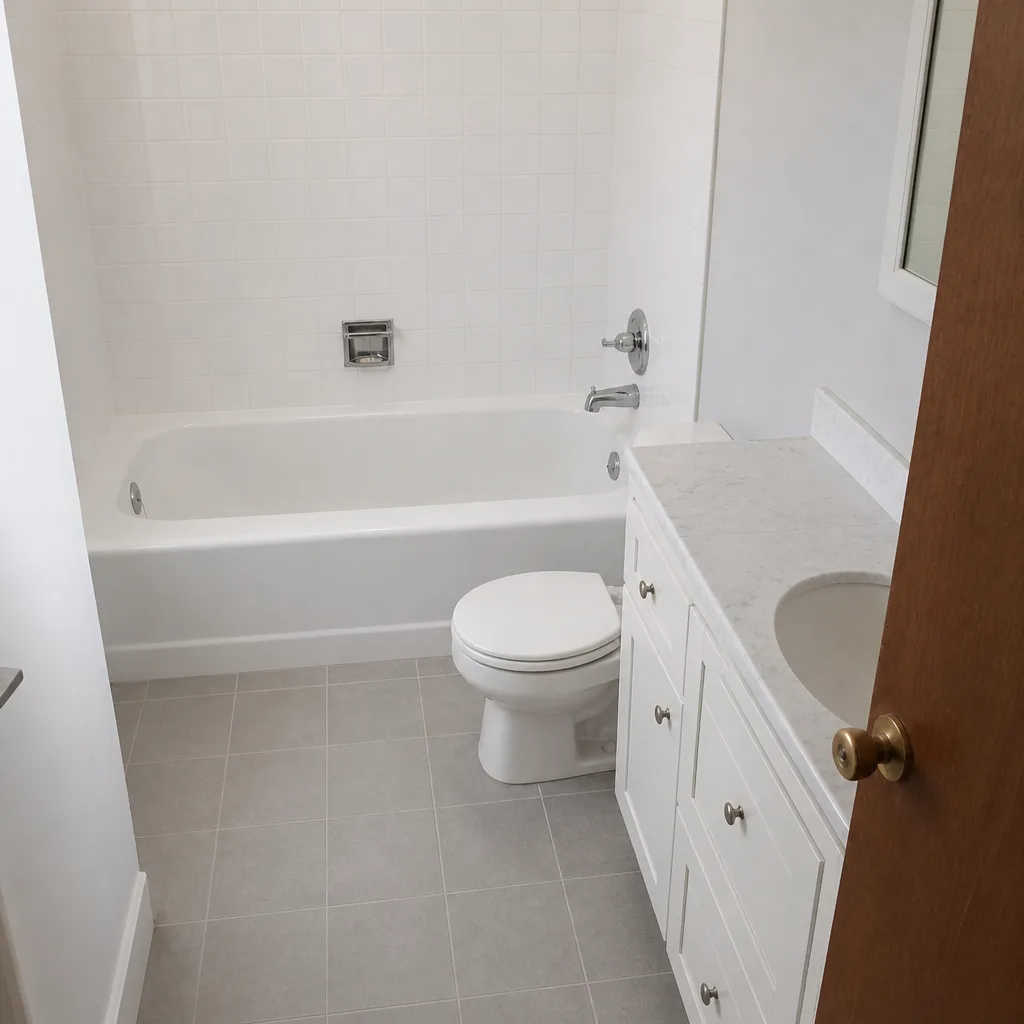
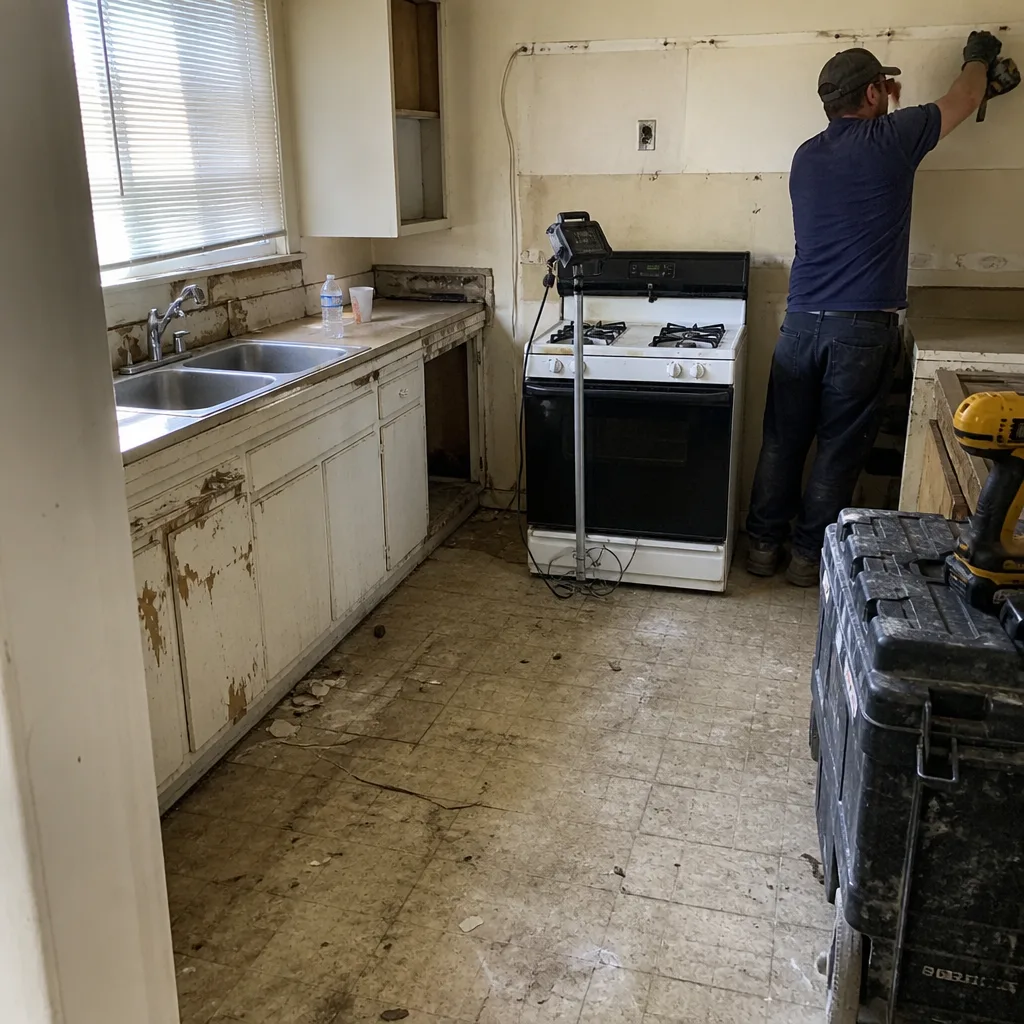
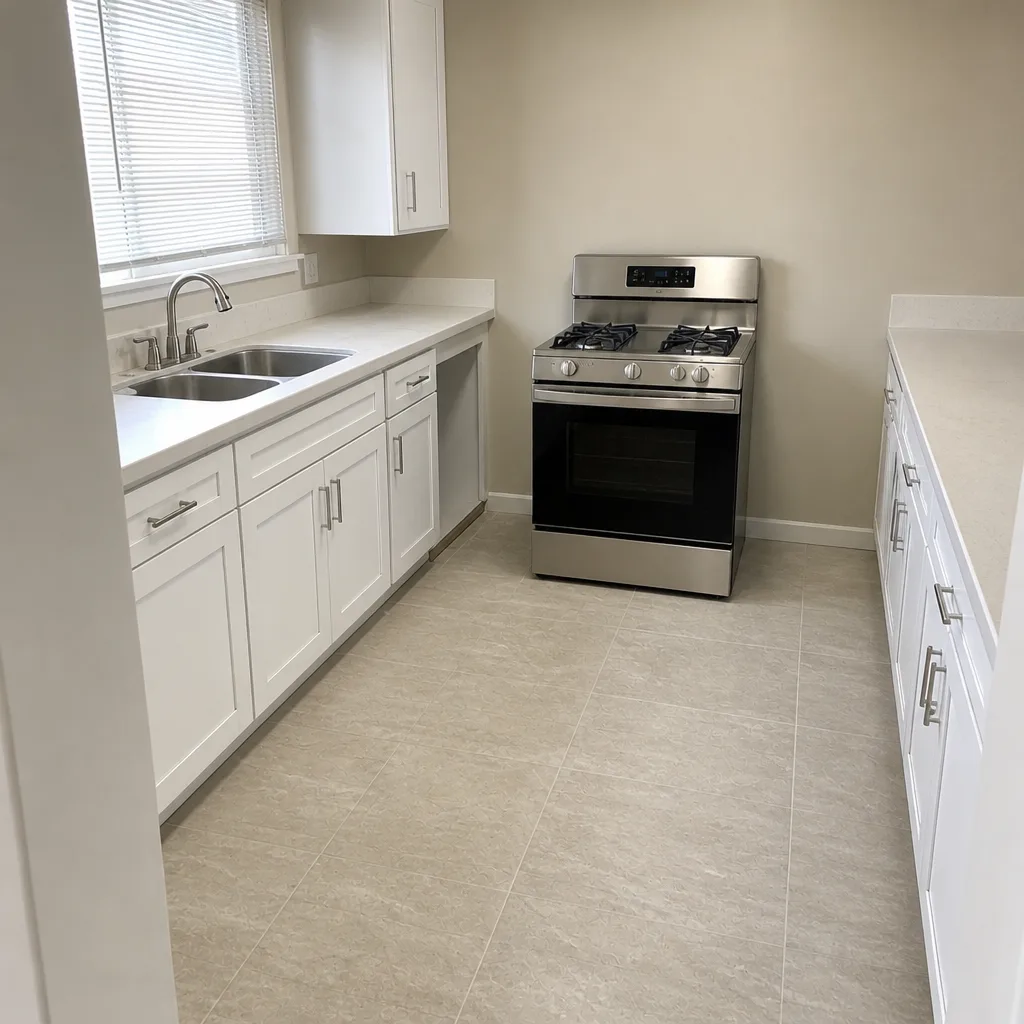
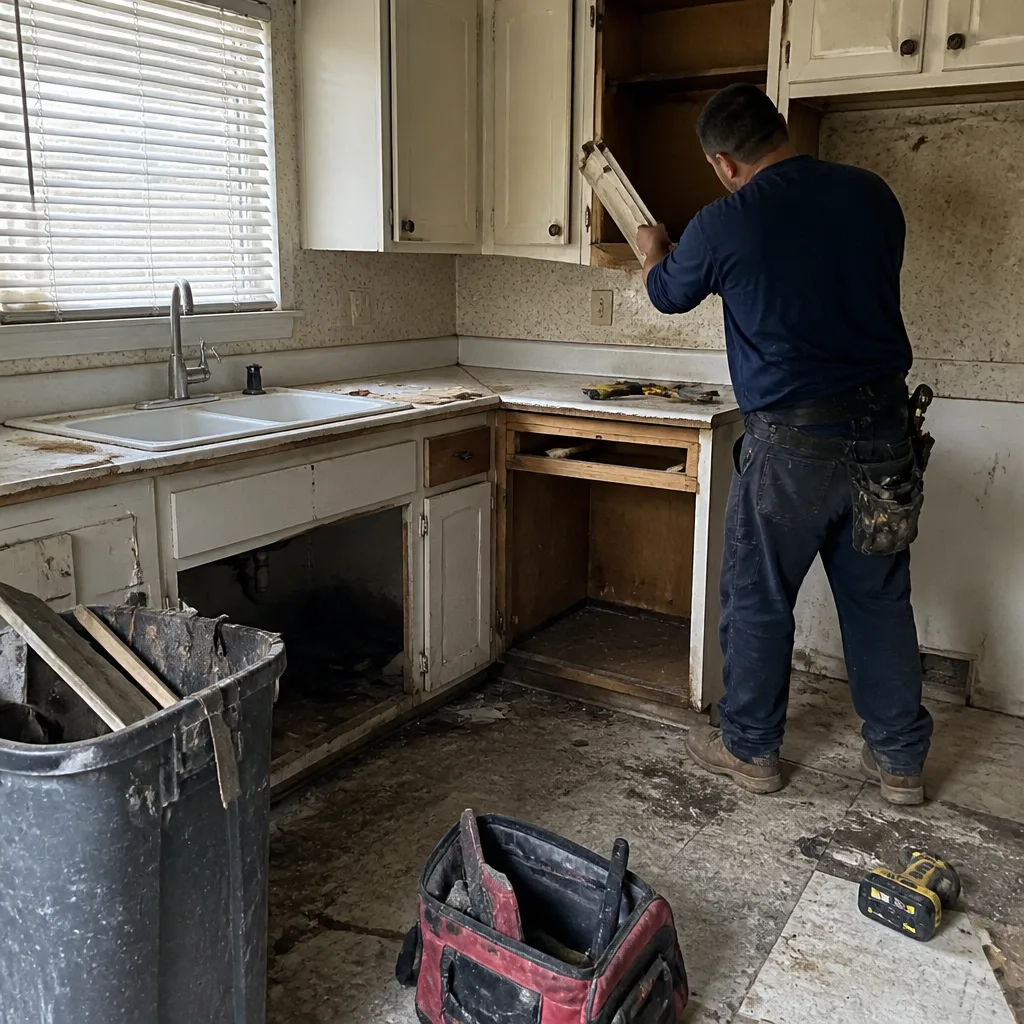
See the difference
 Before
 After
 Before
 After
 Before
 After
When to Call a Professional
Call someone when you’ve narrowed the cause to the frame, the foundation, or the rough opening – the layers you’d have to peel back walls and trim to fix. Call when the pencil-mark test shows binding that doesn’t follow the seasons. Call when the same window has eaten three cranks. Call when you see cracks radiating from window corners that weren’t there last year. Call when glass seal failure is outside warranty and you’re weighing replacement versus living with it. And call before you plane a door that’s already been planed once.
Groundwork Construction Co. of Anaheim offers free estimates in Anaheim – call (888) 300-3178 to schedule yours. A live person answers every call, day or night. Upfront pricing, no surprises, and if we do the work, it’s backed by the 730-Day Done Right Promise.
Frequently Asked Questions
That’s humidity-driven wood swelling, almost certainly not a structural problem. Wood doors absorb moisture from humid air and expand; in Anaheim’s marine-layer summers, west-facing exterior doors swell the most. A light plane of the strike edge, improved ventilation, or a dehumidifier in the room can resolve it for the year. If the sticking lasts year-round, the cause is different and worth investigating. Call (888) 300-3178 for an exact quote on repairs – estimates are free.
Yes, by replacing the sealed glass unit (IGU), not by re-sealing it in place. The seal at the unit’s perimeter has failed, allowing moisture between the panes, and the fix is a new glass unit. If the window is still under a manufacturer’s warranty – and both Andersen and Pella cover this – the replacement may be covered. Our team can tell you what you’re looking at on a free estimate.
Usually not. Most drafts come from compressed weatherstripping or an unsealed gap between the frame and the rough opening – both repairable without replacing the window. Feel where the draft is strongest: at the sash, it’s weatherstripping; at the frame perimeter, it’s the rough opening. Only when the glass unit itself has failed does a replacement become the right answer. Call for a free assessment if you’re unsure.
Most routine repairs land between $150 and $500 for a service call plus parts. Common ranges we see in Anaheim: weatherstripping replacement $150-$300, door hinge and strike adjustment $150-$250, casement operator replacement $175-$325, and sealed glass unit (IGU) replacement $250-$550 per window depending on size and brand. Whole-window replacement runs significantly more and requires a permit. Call (888) 300-3178 for an exact line-item quote – estimates are free.
Yes, whole-window replacement in California requires a permit under Title 24, and it applies to the Anaheim area. Repair work like weatherstripping, hinge adjustment, or operator replacement doesn’t require a permit. If you’re being offered full-window replacement without a permit, that’s a red flag worth walking away from. Our team pulls permits and passes inspections as part of every replacement project.
Every project we complete is covered – if it’s not done right, we make it right, for 730 days from completion. That includes window and door installation work, so a fitting or performance issue that shows up well after install is covered. It’s one of the longest workmanship guarantees in the residential construction space. Call (888) 300-3178 to talk through any existing or planned window/door project.
The Bottom Line
Window and door problems are rarely what they appear to be. Seasonal sticking is humidity, sudden sticking is framing or foundation, fog between panes is a failed glass seal, drafts are almost always weatherstripping or the rough opening, and repeated hardware failures point at the frame, not the part. Run the pencil-mark test before you plane anything. Match the fix to the actual cause. And when the symptom has been there longer than a season, or when you’ve already tried the easy repair once, get someone to look at it – the cost of waiting is almost always higher than the cost of a professional estimate. Anaheim’s climate has its own patterns, and getting them right the first time is what our team does. Call Groundwork Construction Co. of Anaheim at (888) 300-3178 for a free estimate, and get a straight answer on the actual problem before you spend a dollar on the fix.
Written by the team at Groundwork Construction Co. of Anaheim.