
Last updated November 18, 2026








Free written scope consultation - allowances, timeline, and change-order rules on paper before a single trade is scheduled
Bathroom Remodeling Maintenance Schedule: What to Do and When
The average bathroom remodel lasts about 10 years before it starts showing serious wear. Homeowners who follow a structured maintenance schedule routinely get 20 or more years out of the same work – same tile, same fixtures, same finishes. The gap isn’t luck or budget. It’s a calendar. Most people never receive a single sheet of paper telling them what to do after the crew leaves, so sealant dries out, exhaust fans clog, and a slow supply-line drip runs behind a wall for months. This guide hands you that missing calendar. You’ll get year-by-year intervals tied to the specific materials and systems installed in a modern remodel, plus a printable seasonal checklist. We build in Anaheim, and we’ve watched which habits separate a bathroom that ages gracefully from one that fails early.
Quick Answer
A bathroom remodel needs a maintenance routine that runs on two tracks: a seasonal task list (exhaust fan cleaning, caulk and grout inspection, drain flushing, water-leak checks) and a longer horizon (resealing stone every 12-18 months, re-grouting and re-caulking every 3-5 years, fixture and valve replacement at 10-15 years). The single most important habit is inspecting caulk and grout every six months and clearing the exhaust fan every three. Skip those two and you’re looking at water damage repairs that cost more than the original finish work.
Styles & brands we work with
- Kitchen remodeling
- Bathroom remodeling
- Home additions & ADU
- Roofing
- Windows & doors
- Driveway & pavers
- Fence
Table of Contents
- The First 30 Days After Your Remodel
- Your Seasonal Maintenance Calendar
- Grout and Caulk: Intervals That Depend on More Than the Calendar
- Exhaust Fan Maintenance: The Most Skipped Task in the House
- Shut-Off Valves, Supply Lines, and P-Traps: The Six-Month Check
- Protecting Your Finish: Matte, Polished, Brushed, and Manufacturer Warranties
- Your One-Page Seasonal Checklist
- Anaheim-Specific Maintenance Notes
The First 30 Days After Your Remodel
The month after your crew leaves is when a new bathroom either settles in cleanly or starts telegraphing problems early. New caulk needs time to fully cure before it gets soaked. New tile and grout need a light cure window too. And every plumbing connection that was just made deserves a deliberate look before you stop paying attention to it.
Here’s what to do in that first month:
- Wait the full cure time before heavy cleaning. Most silicone caulks need 24-48 hours before water contact and a full week before scrubbing. Epoxy grout cures faster than cementitious grout, but both stay softer than fully cured material for the first several days.
- Run every fixture through a full cycle. Fill the tub, run the shower, flush the toilet repeatedly, run both hot and cold at the sink. Look for weeping at supply connections and slow drainage at the P-trap.
- Check the ceiling below, if you have one. If the bathroom sits over a garage, a lower floor, or a crawlspace, look at those surfaces weekly for the first month. A fresh leak shows up there before it shows up in the bathroom.
- Confirm the exhaust fan moves air. Hold a tissue to the grille. If it doesn’t pull the tissue flat, something’s wrong – a loose duct connection, a stuck damper, or a fan undersized for the room.
- Note the brand and model of every fixture and finish. Write them on a card and tape it inside the vanity. When you need a replacement cartridge or a matching tile, you’ll have the spec instead of a photo and a guess.
In Anaheim, that first-month check matters a little more than in drier climates. Our inland humidity swings and warm days push caulk and grout cure times around, and a shower run hard during a cool, damp morning won’t dry the way the same shower would in July. Our technicians have up to 12 years of experience and we flag the cure schedule in writing at final walkthrough for exactly this reason. If you’re planning a new bathroom rather than maintaining one, our Groundwork Construction Co. of Anaheim home page is the place to start.
Your Seasonal Maintenance Calendar
Break bathroom upkeep into four seasonal passes and nothing gets forgotten. Each pass takes 20-40 minutes. This is the rhythm we recommend to every Anaheim homeowner we hand a finished bathroom back to.
Spring (March-May)
- Clean the exhaust fan grille and housing; vacuum the blades.
- Inspect caulk lines in the shower and tub surround. Re-caulk any that have pulled away.
- Check the toilet base and supply line for slow seepage. Look for a faint water ring on the floor.
- Test both shut-off valves at the sink. Turn and re-turn so they don’t seize.
Summer (June-August)
- Deep-clean grout lines with a pH-neutral cleaner. Avoid bleach on colored grout.
- Inspect the fan duct termination at the roof or sidewall; a bird or insect screen that’s clogged halves airflow.
- Reseal natural stone counters or floors if due (12-18 month cycle).
- Check the shower door gasket and sweep for wear.
Fall (September-November)
- Re-inspect caulk and grout after a summer of heavy shower use.
- Flush the drain with a mild enzyme cleaner to clear soap scum and hair.
- Test the GFCI outlet near the sink with the test button.
- Look inside the vanity for moisture or warping at the cabinet base.
Winter (December-February)
- Clear the exhaust fan again. Winter use runs high and lint builds up.
- Check for condensation on the ceiling after showers. Persistent condensation points to an undersized or dirty fan.
- Inspect the shower niche and any good sills for standing water.
- Run the tub for five minutes and check the overflow gasket and drain.
That covers the water path, the ventilation path, and the surface finishes. Four passes a year keeps the whole bathroom in front of you. It’s the same discipline we bring to every trade we touch, from Driveway & Pavers in Anaheim to interior tile work.
Grout and Caulk: Intervals That Depend on More Than the Calendar
Every maintenance article tells you to “check your grout and caulk.” Almost none tell you that the interval depends on the material, the tile size, the substrate, and how many people use the shower. Those variables matter. A large-format porcelain shower with epoxy grout and one daily user behaves very differently from a small mosaic tile shower with cementitious grout and four people taking turns.
Here’s how to set your own interval instead of guessing:
- Small mosaic tile (under 2 inches): More grout lines per square foot means more places for movement and failure. Inspect every 4-6 months and expect a light re-caulk around the 3-4 year mark.
- Large-format tile (12 inches and up): Fewer joints, but epoxy or polymer grout matters more here. Inspect every 6-8 months, re-caulk around 4-5 years.
- Substrate: A proper cement backer board or a waterproofing membrane behind the tile reduces movement. A well-prepped substrate lets you stretch intervals. A poorly prepped one on drywall means you check every 3-4 months.
- Shower frequency: A single-use daily shower is gentle. A family of five in Anaheim with two showers a day each is a heavy traffic bathroom. Cut every interval roughly in half for that use.
When you inspect, look for three things: caulk that pulls away at the wall-tile or floor-tile joint, grout lines that have cracked or turned powdery, and any soft spot under a joint that gives when pushed. Caulk failure is the leading cause of water reaching drywall and subfloor. The cost of a tube of caulk and an hour is trivial compared to a repair bill that runs well into the thousands.
One Anaheim-specific note: our naturally hard water leaves mineral deposits that wear on grout over time. A squeegee after every shower and a pH-neutral cleaner weekly are the two habits that keep hard-water grout staining from becoming permanent.
Exhaust Fan Maintenance: The Most Skipped Task in the House
If there’s one task that separates a bathroom that lasts 20 years from one that fails in 8, it’s the exhaust fan. A fan that runs at half its rated airflow still feels like it’s working – you can hear the motor – but it’s not clearing the moisture fast enough. Moisture settles on the ceiling, the paint, and the drywall above the shower, then into the attic. That’s the leading cause of premature ceiling damage we see during follow-up work in Anaheim.
Maintain the fan on a short, simple cycle:
- Clean the grille every 3 months. Pull it down, wash it, dry it fully, put it back. Lint and dust choke the airflow.
- Vacuum the blades and housing every 6 months. A soft brush attachment works fine. Get the dust off the fan blades so they move air rather than fight drag.
- Check the exterior termination annually. At the roof or sidewall, the flapper and insect screen clog over time. Clear them. Make sure the flapper opens freely. If your duct runs more than a dozen feet or has several bends, airflow drops and everything else gets harder.
- Replace the fan when it stops clearing the mirror in 10 minutes of shower use. That’s the practical test. If the mirror is still fogged after ten minutes with the fan on, the fan is failing or undersized.
A wet ceiling in Anaheim isn’t just cosmetic. In a humid summer, ceiling drywall traps moisture, then the paint blisters and the insulation above absorbs it. By the time you see a stain, you’ve usually got a repair that’s bigger than the fan replacement that would have prevented it. If you’re already looking at ceiling damage, our Home Additions & ADU in Anaheim team can fold a ceiling repair into a larger project if you’re also planning to add on.
Shut-Off Valves, Supply Lines, and P-Traps: The Six-Month Check
Most emergency calls we’re asked to help with after a bathroom fails start with a plumbing connection nobody looked at in years. The shut-off valves behind a sink, the supply lines under a toilet, and the P-trap under the drain are the three spots worth a deliberate look twice a year. This isn’t a “call us for a leak” section – it’s the check that means you never have to.
A six-month safety walk-through takes ten minutes:
- Sink shut-off valves: Look under the vanity. Turn the stop valve one direction and back so it doesn’t seize in the open position. Check for any green or white crust (mineral deposit from a slow weep). Replace any braided supply line older than about 10 years, or any that has started to bulge.
- Toilet supply line: Same check. Also feel the base of the toilet. Rock it gently. If it moves, the wax ring is compromised and it’s time to reseat the toilet – not a job to leave in place.
- P-traps: Look at the trap under each sink and tub for a drip at either the slip nut or the union. A slow dribble lands in the cabinet and starts warping the wood long before you see a puddle.
- Drain flush: A mild enzyme cleaner monthly keeps soap and hair from becoming a clog. Skip the caustic drain chemicals – they’re hard on older pipes and they mask rather than clear a slow drain.
Schedule the six-month check for the same weekend as a seasonal pass and it never gets skipped. In Anaheim, hard water accelerates mineral buildup at valve seats – a quiet valve that turns easily is a valve that still works when you need it.
Protecting Your Finish: Matte, Polished, Brushed, and Manufacturer Warranties
Your Kohler faucet, your Cambria vanity top, and your ceramic tile all came with care instructions in their manufacturer packaging. Read those before you clean anything. Every major finish brand we install – Kohler, Cambria, and the rest of our vendor partners – spells out what cleaner is and isn’t allowed. Using the wrong product voids your warranty before the finish is even worn.
The rules that matter:
- Matte finishes (matte black, matte brass, matte nickel): The most fragile. Skip abrasive cleaners and anything with ammonia. A soft cloth with mild dish soap and warm water, then dry. A matte finish that’s scrubbed with a sponge loses its finish permanently – it can’t be polished back.
- Polished chrome: Tolerates more, but water spots etch if left. Wipe dry after every use. Diluted white vinegar clears water spots, but don’t leave it on the surface.
- Brushed nickel: Most forgiving of the common finishes. A soft microfiber cloth and mild soap. Don’t polish it – the brush pattern shows fine scratches from polish.
- Natural stone (Cambria quartz is not stone in the reacting sense – but true marble or travertine is): pH-neutral cleaners only. No vinegar, no lemon, no bleach. Reseal every 12-18 months.
Keep the original care cards in the vanity drawer. When it’s time to replace a cartridge or a shower head, the model number on the card saves you a week of searching. On a larger project, this same discipline – matching materials to their care requirements from day one – is what we build into every job, from Fence Installation in Anaheim to a finished bathroom.
Your One-Page Seasonal Checklist
Print this, tape it inside the vanity door, and check off each box once every season. The right-hand column tells you when to escalate.
- ☐ Clean exhaust fan grille – every 3 months
- ☐ Vacuum fan blades and housing – every 6 months
- ☐ Check exterior fan duct and flapper – annually
- ☐ Inspect shower and tub caulk – every 6 months. Re-caulk if any pull-away.
- ☐ Inspect grout lines for cracks or powdering – every 6 months. Regrout if soft.
- ☐ Check sink and toilet supply lines for bulges or mineral crust – every 6 months. Replace if found.
- ☐ Turn shut-off valves open and closed – every 6 months. Replace if stiff.
- ☐ Check P-trap for drips – every 6 months.
- ☐ Enzyme drain flush – monthly. Call if a drain stays slow.
- ☐ Reseal natural stone counters and floors – every 12-18 months
- ☐ GFCI test button on the bathroom outlet – quarterly
- ☐ Mirror fog test with fan running – quarterly. Call if still fogged after 10 minutes.
- ☐ Roof or sidewall fan termination inspection – annually
- ☐ Full re-grout and re-caulk cycle – every 3-5 years, sooner on heavy-use showers
If anything on that list doesn’t pass, call us at (888) 300-3178 for a free estimate on the repair. We keep a live person on the phone around the clock – not a voicemail – so you can ask a question mid-weekend without waiting until Monday morning.
Anaheim-Specific Maintenance Notes
A bathroom in Anaheim faces a maintenance environment that’s different from the same bathroom in a coastal or mountain market. The city sits in a warm inland basin, and the swings matter.
- Seasonal humidity swings: Anaheim’s marine-influenced mornings and inland-warm afternoons push relative humidity up and down within a single day. Caulk and silicone move with those swings. That’s why Anaheim caulk failures often show up at the wall-tile joint first – caulk flexes where the walls and floor meet, and that’s the first place to inspect.
- Hard water: Anaheim’s municipal water is on the hard side. Mineral scale builds on grout, faucet aerators, and shower glass faster than in softer-water cities. Clean the aerator screen every 3 months and squeegee the shower glass daily.
- Warm-season exhaust fan duty: Shower moisture doesn’t dissipate the way it does in a dry climate, so the fan is doing more work than you might think. Anaheim homeowners who clean their fan quarterly get years more life from the ceiling and paint above the shower.
- Tile substrate and code: A remodel built to Anaheim’s building code – including the waterproofing requirements behind wet-area tile – will far outlast one that skipped the membrane. When we quote a remodel, we list the waterproofing in the line items, not the fine print. If you’re weighing new work against repairs, our Groundwork Construction Co. of Anaheim home page walks through how we scope a project.
The common thread: Anaheim bathrooms want attention on the same intervals as anywhere else, but the consequences of skipping them arrive sooner because of heat and hard water.
Common Mistakes to Avoid
- Waiting until water shows. Caulk and grout fail silently. A shower caulk joint that passes one season and pulls free the next doesn’t announce it – the damage to the drywall behind it does, months later. The fix is a tube of silicone; the consequence is a repair bill.
- Bleach on everything. Bleach clouds colored grout, dulls matte finishes, and strips sealer. On any colored grout or a Kohler matte finish, use a pH-neutral cleaner. On natural stone, never bleach.
- Skipping the exhaust fan until it stops working. The fan doesn’t “stop working” – it slows quietly while it’s still moving air, and the ceiling damage happens long before the motor dies. Clean the fan on a 3-month cycle regardless of how it sounds.
- Ignoring the shut-off valves. A stop valve that hasn’t been turned in five years often can’t be turned at all – which means the first time you need it in an emergency, you can’t shut off the water at the fixture. Turn them twice a year. Replace any that fight back.
- Cleaning finishes in the wrong direction. Polishing brushed nickel adds scratches. Abrasive sponges on matte black take the finish off. Polishing with an acidic product on stone etches it. Follow the manufacturer’s care card and don’t improvise.
- Not keeping records. Write down every fixture brand, model, finish, and color. In a large Anaheim home with several bathrooms, the record is what makes a replacement cartridge a quick search instead of a return trip to the showroom.
- Assuming the finish warranty covers wear. It doesn’t. Manufacturer warranties cover defects in the finish, not the abuse from the wrong cleaner. Read the care card before you use anything new on a fixture or a surface.
None of these are exotic. They’re the mistakes we see repeatedly across Anaheim remodels, and every one of them is preventable with a calendar and the right cleaner.
See the difference
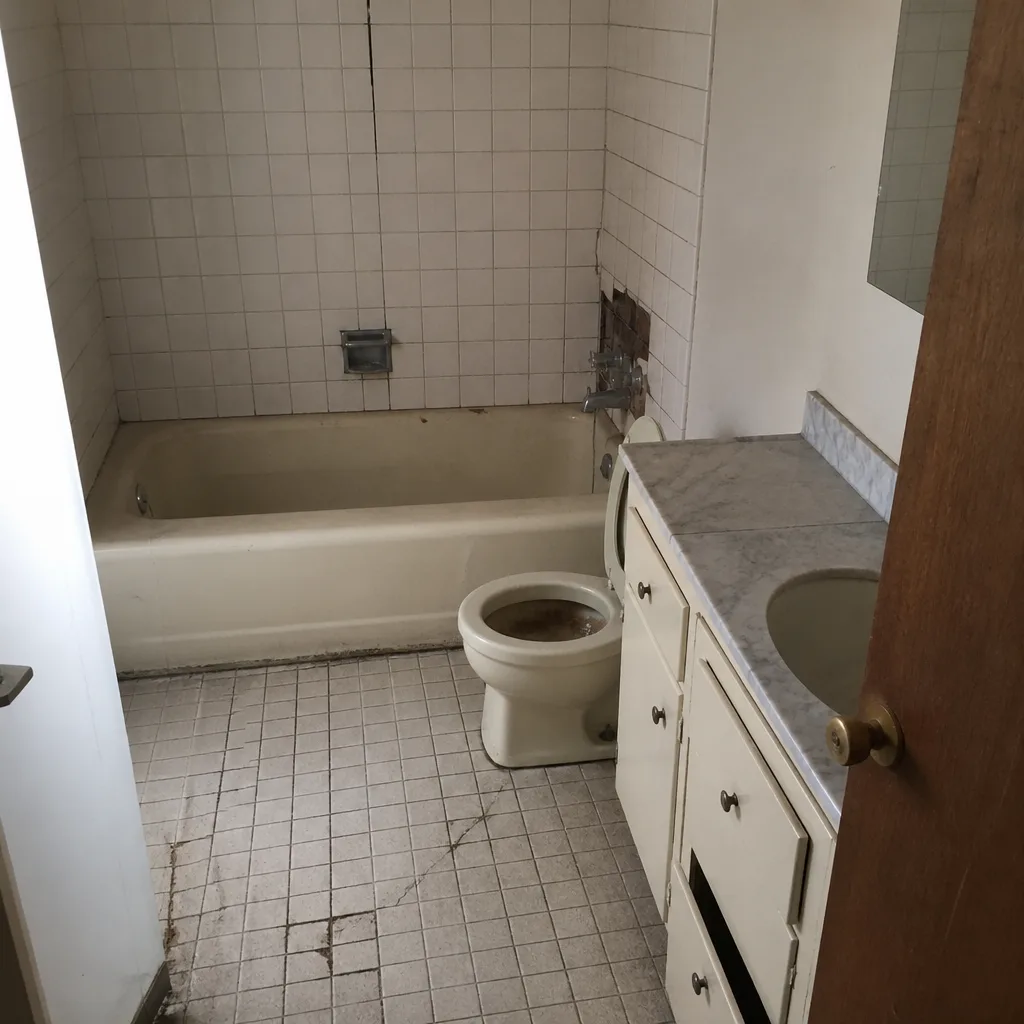 Before
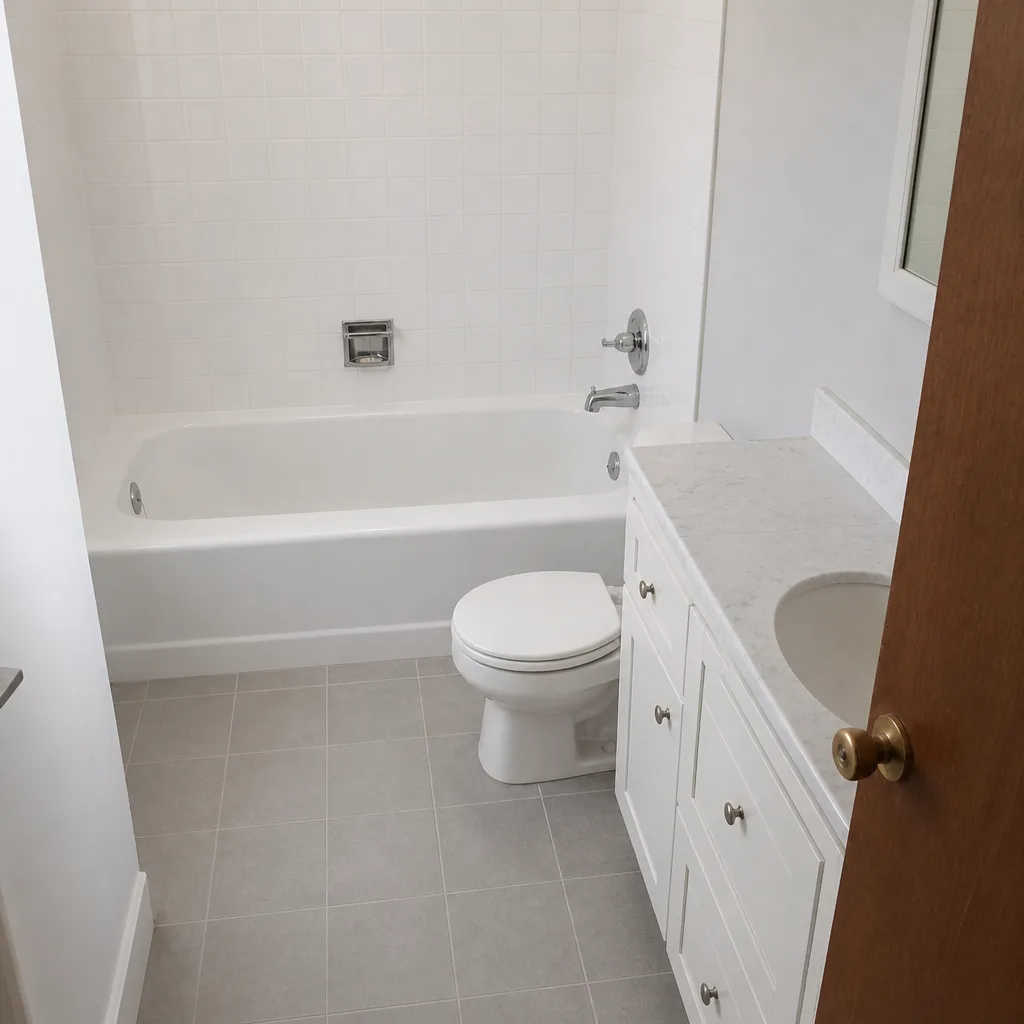 After
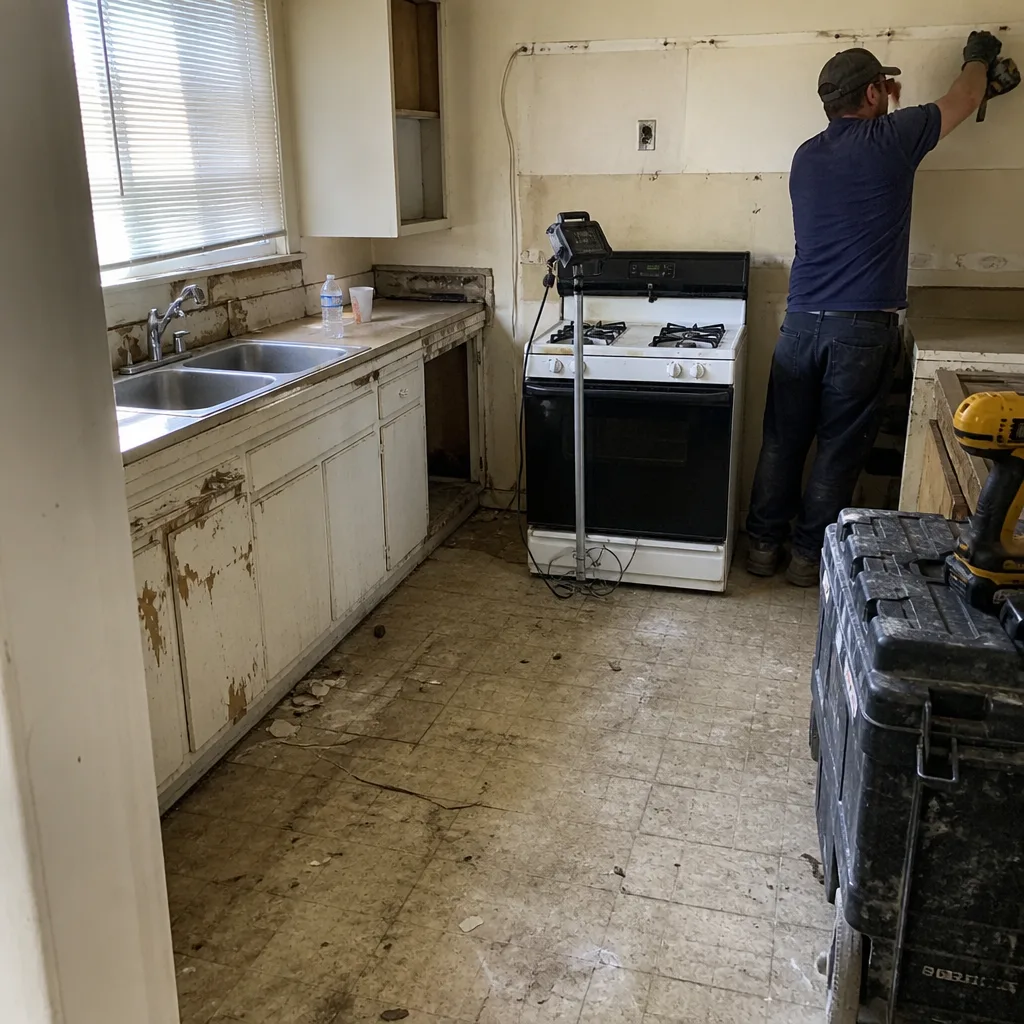 Before
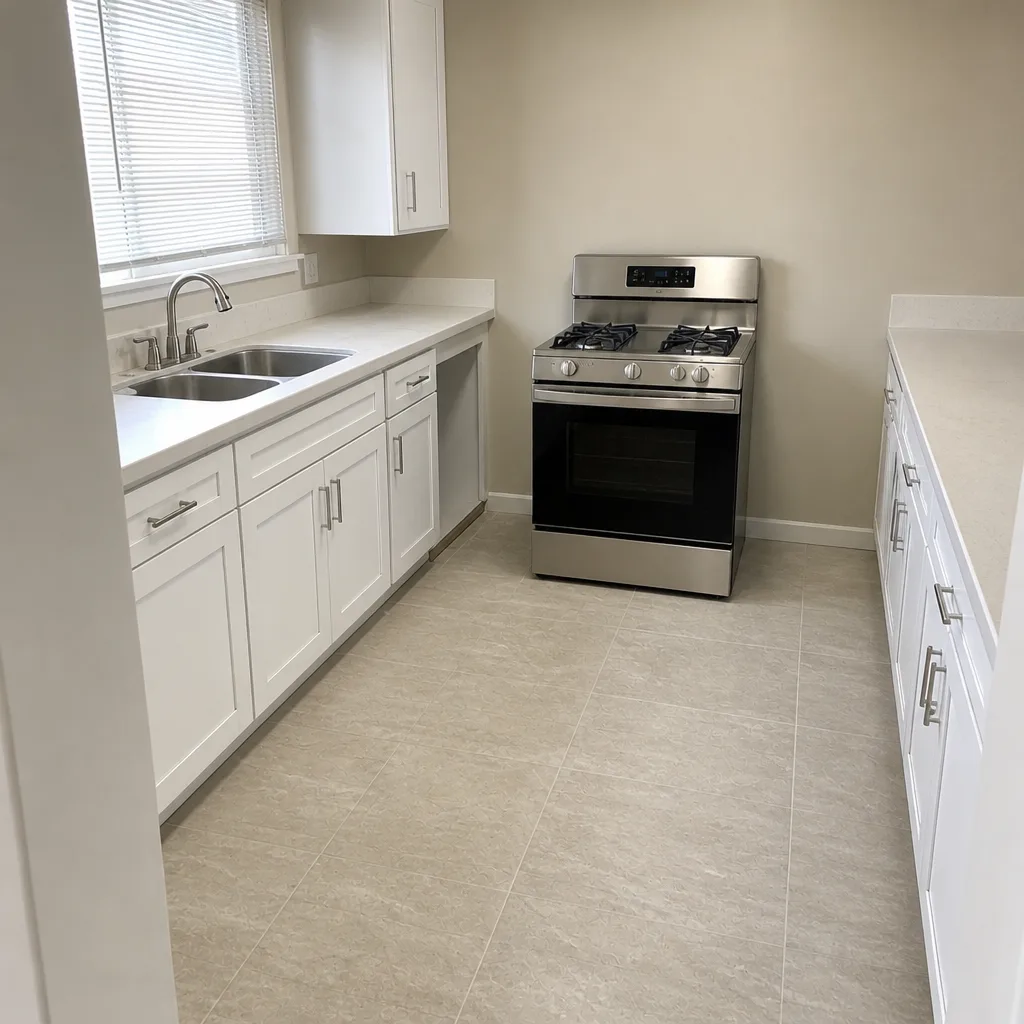 After
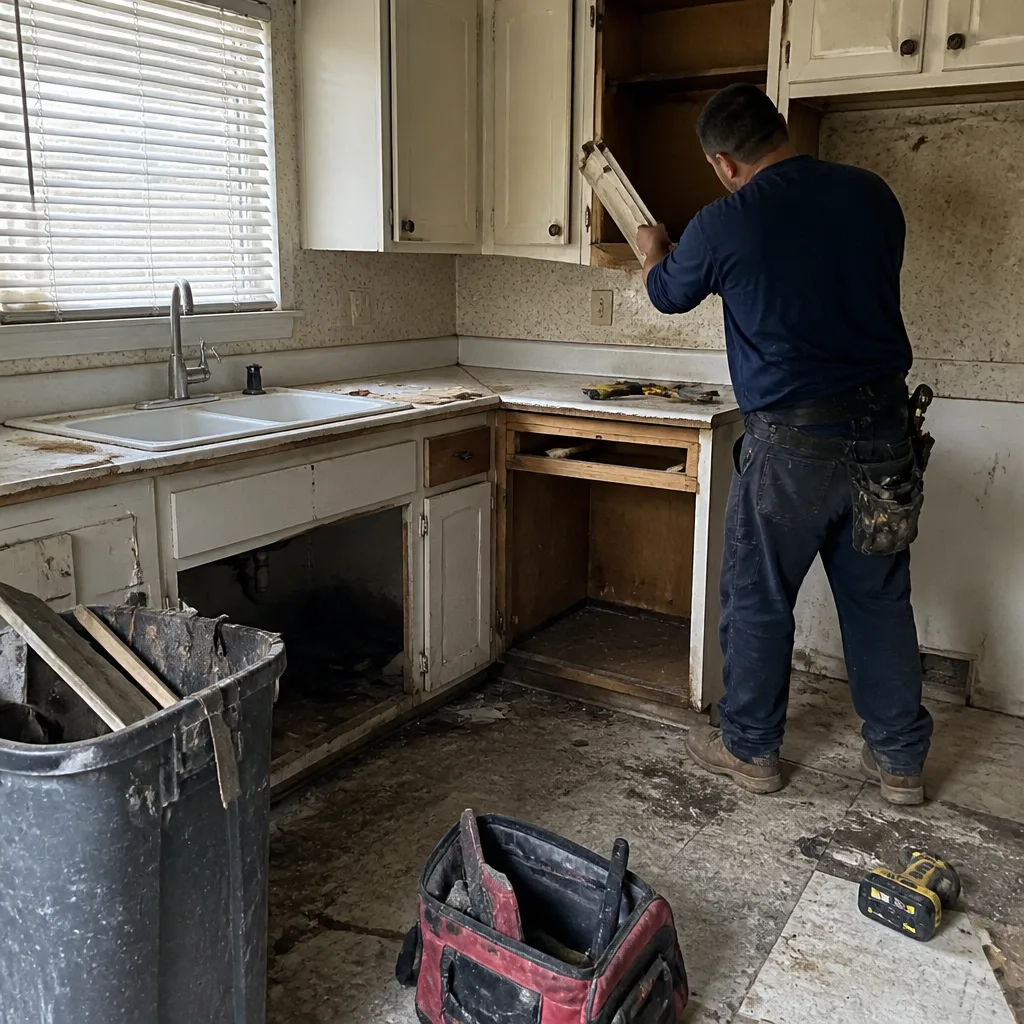 Before
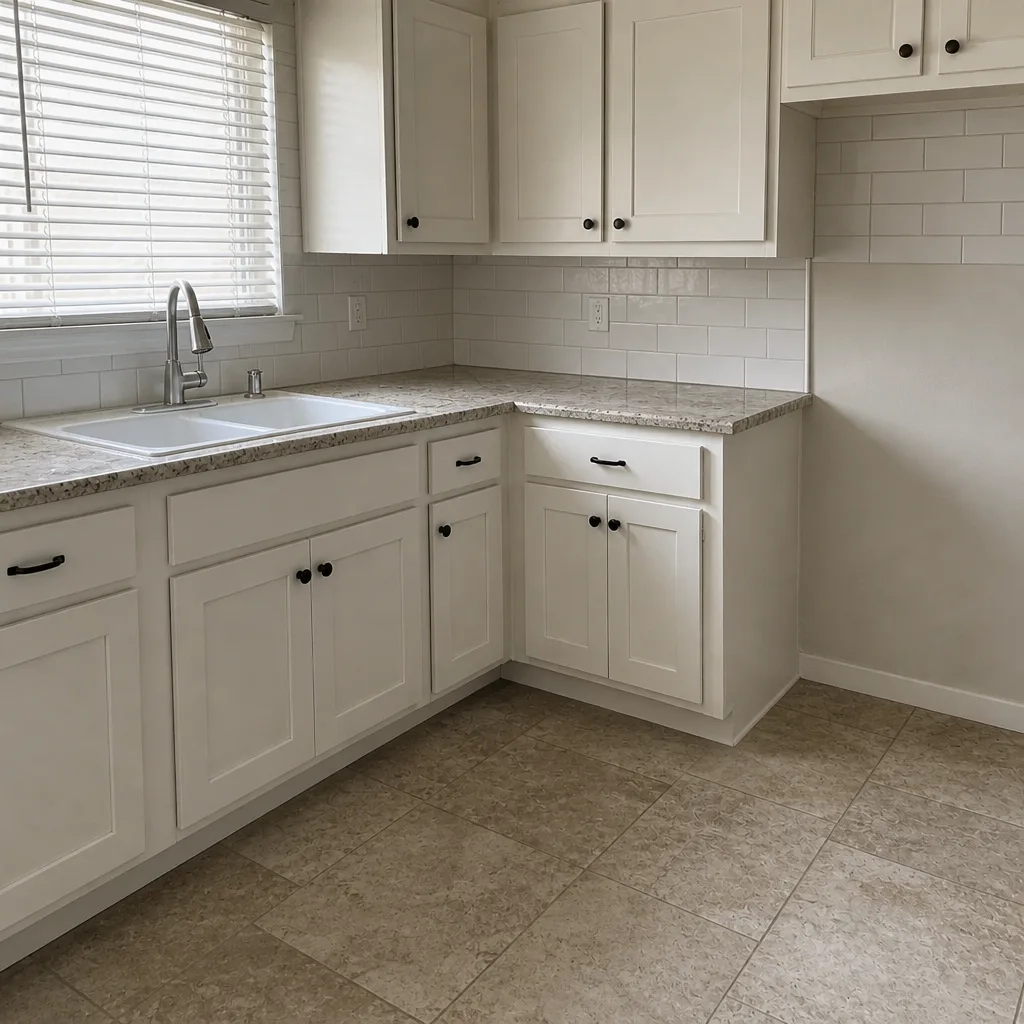 After
When to Call a Professional
Most of the schedule above is do-it-yourself work: cleaning, inspecting, tightening, wiping. The line is where a maintenance item turns into a repair that touches structure, plumbing, or waterproofing. Call a professional when you see any of the following:
- Water staining on the ceiling below the bathroom, or paint that’s bubbled or blistered above the shower.
- Soft or spongy drywall or subfloor at the shower threshold or under the tub.
- A shower that hasn’t stopped leaking after caulk replacement – something behind the tile is failing.
- Grout that has cracked across multiple joints, suggesting movement in the substrate.
- A shut-off valve that won’t turn, a supply line that’s bulged or crusted, or a toilet that rocks on its base.
- Any exhaust fan that no longer clears the mirror in 10 minutes of shower use.
Groundwork Construction Co. of Anaheim offers free estimates in Anaheim. Every project we take on is covered by our 730-Day Done Right Promise – if it’s not done right, we make it right – one of the longest workmanship guarantees in the residential construction space. Call (888) 300-3178. A live person answers around the clock, and our technicians are background-checked and arrive in uniform.
Frequently Asked Questions

Every 3-5 years on a standard shower, and every 2-3 years if the shower gets daily use by more than two people. Anaheim’s daily humidity swings flex the caulk joint where the wall meets the floor, so check that joint every six months and re-caulk at the first sign of pull-away. A heavy-use Anaheim shower can fail caulk in as little as 18 months – a re-caulk costs a fraction of the water-damage repair it prevents.
Cleaning the exhaust fan on a 3-month cycle. It’s the most skipped task and the leading cause of premature ceiling and drywall damage. The fan doesn’t announce that it’s clogged – it just slowly stops moving enough air to clear the shower moisture. Clean the grille, vacuum the blades, and clear the exterior termination annually. That single habit saves more in repair costs than any other item on the list.
Use a soft microfiber cloth with mild dish soap and warm water, then dry. Never use an abrasive sponge, ammonia, or a polishing compound. Matte finishes lose their surface permanently if scrubbed, and brushed nickel shows fine scratches from polish. Follow the manufacturer’s care card for your specific Kohler or other brand fixture – the warranty covers defects, not damage from the wrong cleaner.
Almost always an exhaust fan that isn’t moving enough air, not a roof leak. The moisture condenses on the ceiling because the fan is clogged, undersized, or ducted poorly, and drywall absorbs it. Clear the fan and grille first, then check the roof and attic termination of the fan duct. If the ceiling is already soft or blistered, call for an estimate – the drywall repair is quick, but a wet ceiling left alone spreads into insulation.
Replace a braided supply line after about 10 years, or immediately if it shows a bulge, a mineral crust, or a slow weep. Replace a shut-off valve when it won’t turn smoothly at the six-month check. Anaheim’s hard water accelerates mineral buildup at valve seats, so most valves need replacing sooner than a soft-water city – often around 8-10 years. Call for a free estimate if you’re ready to have them replaced in one visit.
Yes – by a wide margin. A well-maintained Anaheim bathroom routinely reaches 20+ years of service before needing a full remodel, versus about 10 years for the same construction with no routine care. The schedule is not complicated: four seasonal passes a year, a six-month plumbing check, and a 3-month exhaust fan clean. If you’re weighing repair against replacement, call for a free estimate – we’ll give you a straight answer.
The Bottom Line
A bathroom lasts as long as its maintenance schedule allows. The work that goes into a modern Anaheim remodel – waterproofed tile, brand-name fixtures, sealed finishes – will carry a home 20+ years if it gets four seasonal passes a year, a thorough six-month plumbing check, and a 3-month exhaust fan clean. Skip those and the same bathroom shows serious wear in 10. Print the checklist, tape it inside the vanity door, and treat the intervals as firm, not optional. Protect the finish, keep the records, and call a professional at the first sign of water where water doesn’t belong.
Groundwork Construction Co. of Anaheim offers free estimates, upfront pricing with no surprises, 0% financing for 18 months, and $1,000 off projects over $10,000. Every project is backed by our 730-Day Done Right Promise. For new bathroom work, remodeling, repairs, or a maintenance assessment, call (888) 300-3178. We answer live around the clock, our technicians are background-checked and arrive in uniform, and our brand partners – Kohler, Cambria, and dozens more – stand behind every material we install. From foundation to finish line, the number you see is the number you pay.
Written by the team at Groundwork Construction Co. of Anaheim.