Last updated November 18, 2026

Free written scope consultation - allowances, timeline, and change-order rules on paper before a single trade is scheduled
Construction Cost Breakdown: The Anaheim Homeowner’s Reference for 2026
In Anaheim’s 2026 market, labor accounts for roughly 40 – 50% of most residential construction budgets. That single fact explains almost everything about why bids for the same kitchen or roof can land $30,000 apart. A bid that comes in 20% under competitors isn’t saving you money on tile and lumber – it’s paying for workers you wouldn’t want on your property, or quietly cutting scope you can’t see yet. This reference gives you the literacy to read a bid like a builder: how Anaheim labor rates actually break down, where permits and utility connections hide in your budget, which material choices pay you back over 15 years and which don’t, and the exact line items to demand before you sign anything.
Quick Answer
A realistic construction budget in Anaheim in 2026 is built from five cost buckets: labor (40 – 50%), materials (25 – 35%), permits and inspections (3 – 8%), contingency (10 – 20%), and contractor overhead and profit (15 – 25%). The contractors whose bids look wildly different from each other aren’t pricing randomly – they’re scoping different projects. A budget you can trust lists every one of those buckets as a line item, ties material brands to model numbers, and states a contingency number in writing before work starts.
Styles & brands we work with
- Kitchen remodeling
- Bathroom remodeling
- Home additions & ADU
- Roofing
- Windows & doors
- Driveway & pavers
- Fence
Table of Contents
- What Are 2026 Labor Rates for Anaheim Construction Trades?
- Why Do Bids for the Same Anaheim Project Differ So Much?
- What Do Anaheim Permits, Inspections, and Utility Connections Really Cost?
- Which Material Choices Pay You Back and Which Don’t?
- How Big Should Your Contingency Budget Be in Anaheim?
- What Should ‘Transparent Pricing’ Actually Look Like in a Contract?
- How Do You Read a Construction Bid Like a Builder?
- Common Mistakes to Avoid
What Are 2026 Labor Rates for Anaheim Construction Trades?
Anaheim sits in one of the tighter construction labor markets in Southern California. Orange County’s proximity to Los Angeles and San Diego pulls crews in every direction, and the rebuild volume across the region keeps good tradespeople booked weeks out. That competition for skilled hands shows up in every line of your bid. Here are the ranges we see on Anaheim-area residential projects in 2026:
- General carpenter / framing crew: $65 – $110 per hour, with finish carpentry at the top of that range.
- Tile setter: $70 – $120 per hour. Schluter-system installs and large-format tile sit higher because the work is slower and less forgiving.
- Plumber: $90 – $160 per hour, higher for repipes and gas line work that needs inspection sign-off.
- Electrician: $85 – $150 per hour. Panel upgrades and dedicated circuits for kitchen appliances push you toward the upper end.
- HVAC technician: $80 – $140 per hour, plus equipment.
- Roofer: $55 – $95 per hour, or $450 – $750 per square for full tear-off and replacement depending on pitch and access.
- Painter: $45 – $85 per hour, or $3.50 – $6.50 per square foot of wall area.
The spread within each range isn’t random. Four things drive where a crew lands: licensing and insurance carry, whether the crew is direct-hire or brokered through a sub, how far they’re traveling to the Anaheim job, and the complexity of access – a second-story bathroom in the Anaheim Hills foothills costs more to work on than a ground-floor remodel near downtown. When a bid prices framing at $40 an hour, ask what that number buys. In our experience, it buys an uninsured crew or a scope that quietly excludes half the framing.
Why Do Bids for the Same Anaheim Project Differ So Much?
Homeowners often assume contractors are just marking up differently. Sometimes that’s true. More often, three bids for “the same” bathroom in Anaheim are three different projects wearing the same description. One bid excludes the permit. Another excludes drywall repair. A third prices a stock vanity from a big-box store while the first priced a semi-custom cabinet line. Comparing those numbers is comparing apples to concrete.
Here’s what typically separates a high bid from a low one on identical scope:
- Permit responsibility. A bid that says “permits by owner” shifts $800 – $2,500 of fees and a stack of inspection scheduling onto you, plus the risk of a stop-work order.
- Material specification level. Builder-grade versus mid-grade faucets and fixtures can swing a full bathroom by $2,000 – $4,000. Delta versus generic imports is a common silent substitution.
- Subcontractor quality tier. A licensed, insured trade crew costs more per hour than a handyman operation. That difference is the point.
- Contingency disclosure. Bids that hide contingency inside vague “allowances” will surprise you later. Bids that state it openly won’t.
- Warranty and callbacks. A contractor who stands behind work for two years prices that obligation in. A contractor who disappears after the final check doesn’t.
When we write a bid for an Anaheim project, the goal is that you can compare it line-by-line against any competitor’s. That’s what upfront pricing means – the number you see is the number you pay, and nothing important lives in the fine print. You shouldn’t need a contractor’s decoder ring to shop a contractor.
What Do Anaheim Permits, Inspections, and Utility Connections Really Cost?
Permit costs are the most underbid line item in Anaheim residential construction. They’re also one of the least negotiable. The City of Anaheim’s Building Division charges fees based on project valuation, and those fees stack with plan-check costs, inspection scheduling, and utility connection charges (water, sewer, gas, electrical) that separately hit your budget.
Realistic ranges for 2026 Anaheim projects:
- Kitchen remodel (structural or MEP changes): $600 – $2,200 in permit and plan-check fees.
- Bathroom remodel: $400 – $1,400, higher when you relocate plumbing.
- Roof replacement: $350 – $900, plus re-inspection fees if the first pass fails.
- ADU or home addition: $4,000 – $14,000+ depending on square footage, plus school district and utility fees that can add several thousand more.
- Fence installation over 6 feet and driveway replacements within the public right-of-way: varies, sometimes $0, sometimes several hundred depending on approach.
Two Anaheim-specific facts drivers should know. First, several Anaheim neighborhoods – particularly the older pockets near downtown and along the Colony historic district – sit in zones where plan reviewers are stricter about exterior changes and setbacks. Second, pouring a new driveway often triggers a right-of-way inspection and a possible damage deposit; if a bid doesn’t mention it, that cost is coming later. Permits pulled and inspections passed should be a default line item on every bid in Anaheim, never an add-on.
In our experience, the honest answer to “do you pull the permits?” is always yes – and a bid that doesn’t volunteer the permit cost is a bid written to look cheap on the front page and expensive on the back page.
Which Material Choices Pay You Back and Which Don’t?
Material selection is where Anaheim homeowners have the most control – and where it’s easiest to overpay. Not every upgrade earns its money back. Here’s where the trade-offs live.
Where brand actually matters:
- Roofing. GAF and Owens Corning architectural shingles cost 15 – 25% more than generic imports but come with manufacturer warranties that hold up when a claim is needed. On a $18,000 – $32,000 Anaheim roof replacement, the difference is $2,000 – $5,000 and typically adds decades of service life.
- Windows. Andersen and Pella units cost more up front than builder-grade vinyl, but on Anaheim’s south- and west-facing walls, the heat gain difference over 10 summers shows up in your electric bill and in how long the units last before seals fail.
- Plumbing fixtures. A Toto or American Standard toilet at $400 – $900 lasts decades. A $120 import often needs replacing inside five years. On a full bathroom, choosing quality fixtures adds $800 – $1,500 to the project and avoids a $500 – $900 callback down the road.
- Kitchen cabinetry. KraftMaid-tier semi-custom cabinets cost $12,000 – $28,000 for a mid-size Anaheim kitchen, versus $5,000 – $10,000 for stock. The upgrade buys drawer boxes, hardware, and door finishes that survive a family of four.
Where generic performs fine:
- Drywall, framing lumber, and insulation. Commodity products. Paying a premium for a brand name here buys nothing.
- Interior paint. Mid-tier paint covers as well as premium on Anaheim walls; the finish and prep work matter far more than the label.
- Basic tile behind walls. Standard porcelain in a shower with a proper Schluter waterproofing system outperforms high-end stone with poor prep work.
Roofing and windows tied to manufacturer warranties are the strongest long-term cost plays in Anaheim, because our climate – hot, dry summers and the occasional wind event – stresses both categories hardest. Kitchen and bathroom brand partners like Delta and Kohler matter more for fixture longevity than for resale theater. Cabinets and countertops are where brand names justify their cost least on a per-dollar basis, but the ones you touch every day.
How Big Should Your Contingency Budget Be in Anaheim?
Contingency is the line item homeowners cut first and regret most. It’s not padding – it’s the money set aside for what’s behind the wall, under the slab, or discovered during a first-day walkthrough. On Anaheim projects, the size should track with the project type and the age of the home.
- Cosmetic-only remodel (paint, flooring, fixtures): 5 – 10% of project cost. Low risk because nothing’s getting opened up.
- Kitchen or bathroom with plumbing relocation: 15 – 20%. Older Anaheim homes often hide galvanized or polybutylene lines and undersized drains; opening a wall can double a plumbing scope.
- Roof replacement on a 1960s – 1980s Anaheim home: 15%. Decking rot and outdated ventilation are the two most common disclosures. A bid that commits to a fixed price without a decking contingency is committing to something it can’t know until tear-off.
- ADU or addition: 20 – 25%. Site conditions drive this – anything built in the Anaheim Hills foothills needs grading, drainage, and sometimes retaining wall work that flat-lot projects skip entirely.
- Full-home renovation: 20%+. Older homes in Anaheim neighborhoods near the Packing District and downtown regularly surprise with aluminum wiring, clay sewer laterals, or undersized electrical service.
Two things about contingency worth stating plainly. First, unspent contingency should be returned to you. A contractor who pockets it has turned a cost-protection tool into a profit center. Second, if a bid doesn’t include a contingency number at all, that contractor is either hiding it in allowance lines or planning to hit you with change orders once work starts.
What Should ‘Transparent Pricing’ Actually Look Like in a Contract?
Transparent pricing is a phrase every contractor in Anaheim uses and very few actually deliver. Here’s a concrete checklist of what a transparent bid contains, and what to demand before you sign anything.
Line items that must appear:
- Labor by trade, with hours estimated. Not a lump sum labeled “install.”
- Material specification by brand and model number for every major product (cabinets, countertops, roofing shingles, windows, fixtures). “Builder grade” is not a spec.
- Permit fees and plan-check costs as separate line items, with a statement that the contractor pulls them.
- Utility connection charges for water, sewer, gas, and electrical where relevant.
- Contingency, stated as a percentage and tied to what it covers.
- Contractor overhead and profit, broken out separately from labor and materials.
- Payment schedule tied to milestones, never front-loaded. No more than 10 – 15% up front is a fair benchmark.
- Warranty terms in writing, including duration and what it covers.
- Change order procedure, with a written sign-off requirement before any dollar amount moves.
When we write a bid, we put every one of those line items in writing and pair it with the 730-Day Done Right Promise, which covers workmanship for two full years – one of the longest residential guarantees in the space. Overhead and profit shouldn’t be a mystery, our technicians have up to 12 years of experience, and the number you see is the number you pay. Anything short of that is a bid written to be signed fast, not read closely.
How Do You Read a Construction Bid Like a Builder?
Here’s the sequence we recommend to Anaheim homeowners comparing bids. It takes about an hour per bid and saves far more than that in change orders, excuses, and re-work.
- Start with the scope, not the price. Read the description of work line-by-line before you look at the totals. If two bids describe different scopes, their prices aren’t comparable.
- Check what’s excluded. Every bid should have an exclusions section. Missing exclusions is a red flag – not the absence of exclusions, but the absence of a section that states them.
- Verify material brands and models. A real bid names the cabinet line, the shingle model, the fixture SKU. Vague descriptions translate to “whatever was on sale.”
- Confirm permits and inspections are included. “Contractor to pull all permits and schedule inspections” should be a written line. Nothing about plan review should be your job.
- Look for the contingency line. If it’s not there, ask.
- Compare labor hours, not just labor cost. A bid pricing the same bathroom for 60 hours versus 110 hours at the same rate is a bid you should question in both directions.
- Read the warranty. Not the marketing brochure – the warranty page in the contract. How long? What’s covered? What’s excluded? How do you file a claim?
- Check the change order process. In writing, signed by you, before work continues. Anything verbal is not enforceable.
- Verify licensing and insurance. Ask for the license number and a certificate of insurance with your address listed. Reputable contractors in Anaheim expect this request.
- Ask for two recent Anaheim references with the same project type. Not five-star reviews – actual phone calls to recent customers.
If a bid fails three or more of those checks, it’s not a cheaper option – it’s a different project waiting to happen. The comparison should be apples-to-apples before you hand over a deposit.
Common Mistakes to Avoid
- Comparing lump sums instead of line items. If two bids look $20,000 apart, the second one is almost always scoping less work. Price-per-line-item comparison is the only honest comparison.
- Cutting contingency to fit a budget. Trimmed contingency in Anaheim always gets paid back with change orders once framing comes down. Size it correctly and leave it alone.
- Accepting “permits by owner” on a serious remodel. In Anaheim, plan-check delays and inspection scheduling are not a homeowner’s side project. The “savings” disappear inside the first month.
- Choosing the low bid for a project with structural changes. An $8,000 lower bathroom bid from an uninsured crew in Anaheim could cost you $30,000 in re-work if something fails an inspection. The math only works one way.
- Allowing materials to be swapped without written approval. “The tile you chose was back-ordered, so we used this” is a change order, not a courtesy. Require written sign-off before substitutions.
- Skipping the decking inspection on a roof replacement. A “fixed price” tear-off with no decking contingency is priced to look complete but will grow once plywood is exposed.
- Front-loading deposits. A 40% deposit up front is a sign the contractor needs your money to fund the project. Stay at or below 15% and tie the rest to milestones.
- Reading reviews but not the warranty. What happens if the job fails at month 18? The answer should be in writing, with a duration and a process.
Every one of the mistakes above is fixable – before you sign. Once the deposit is paid, your leverage shrinks fast.
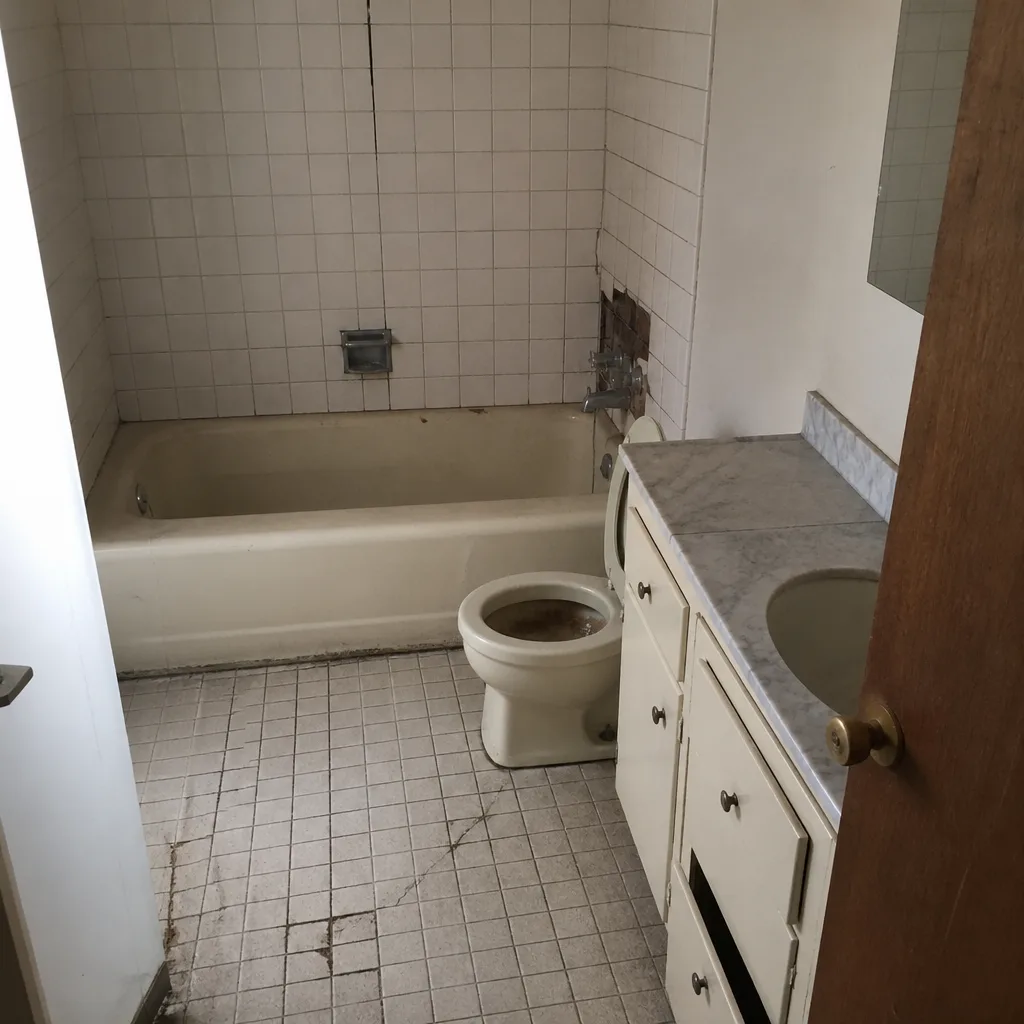
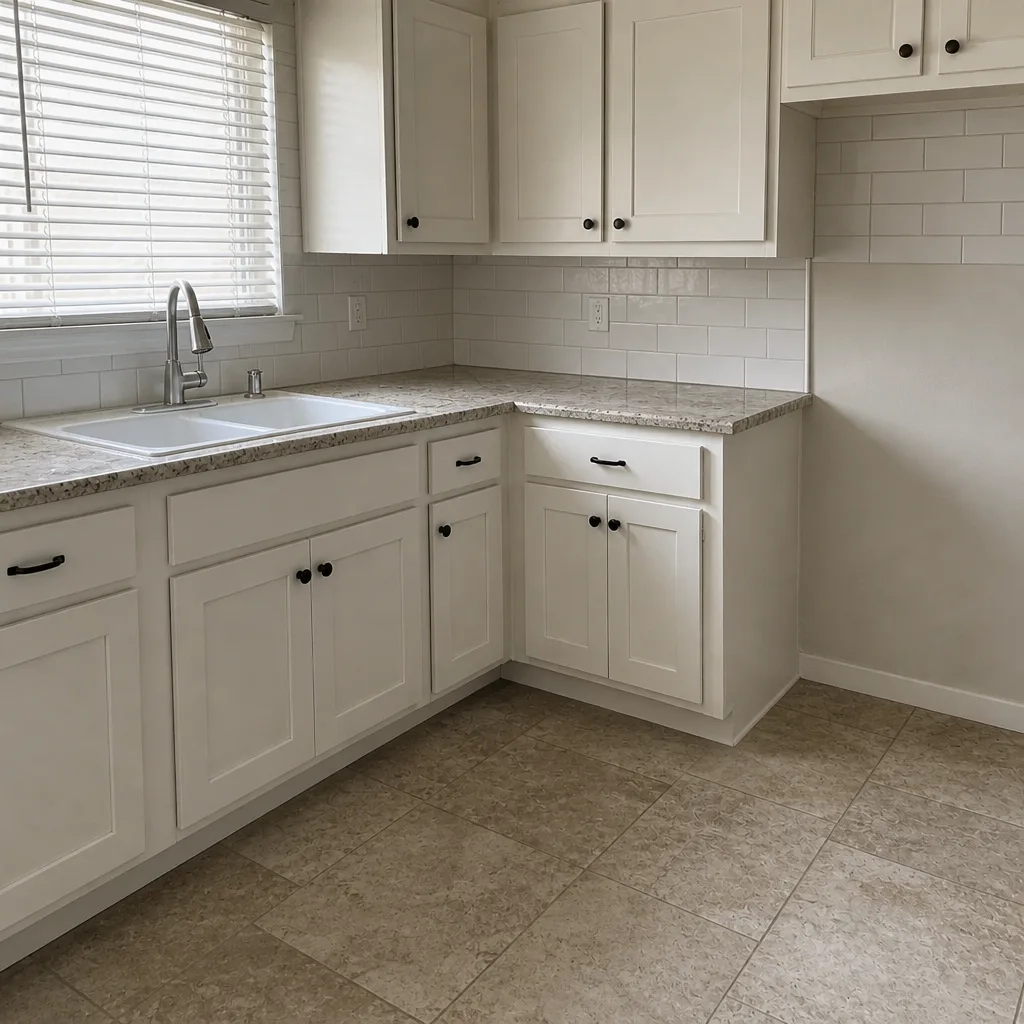
See the difference
 Before
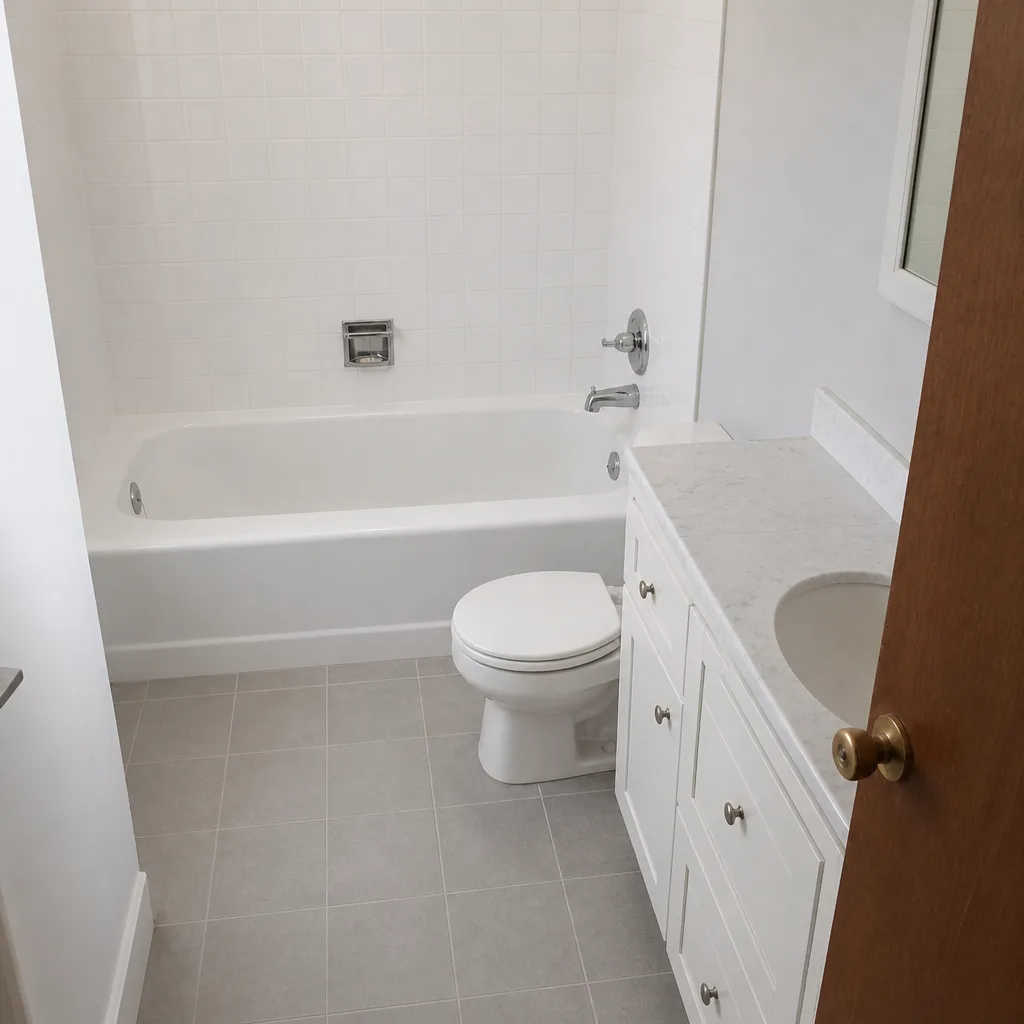 After
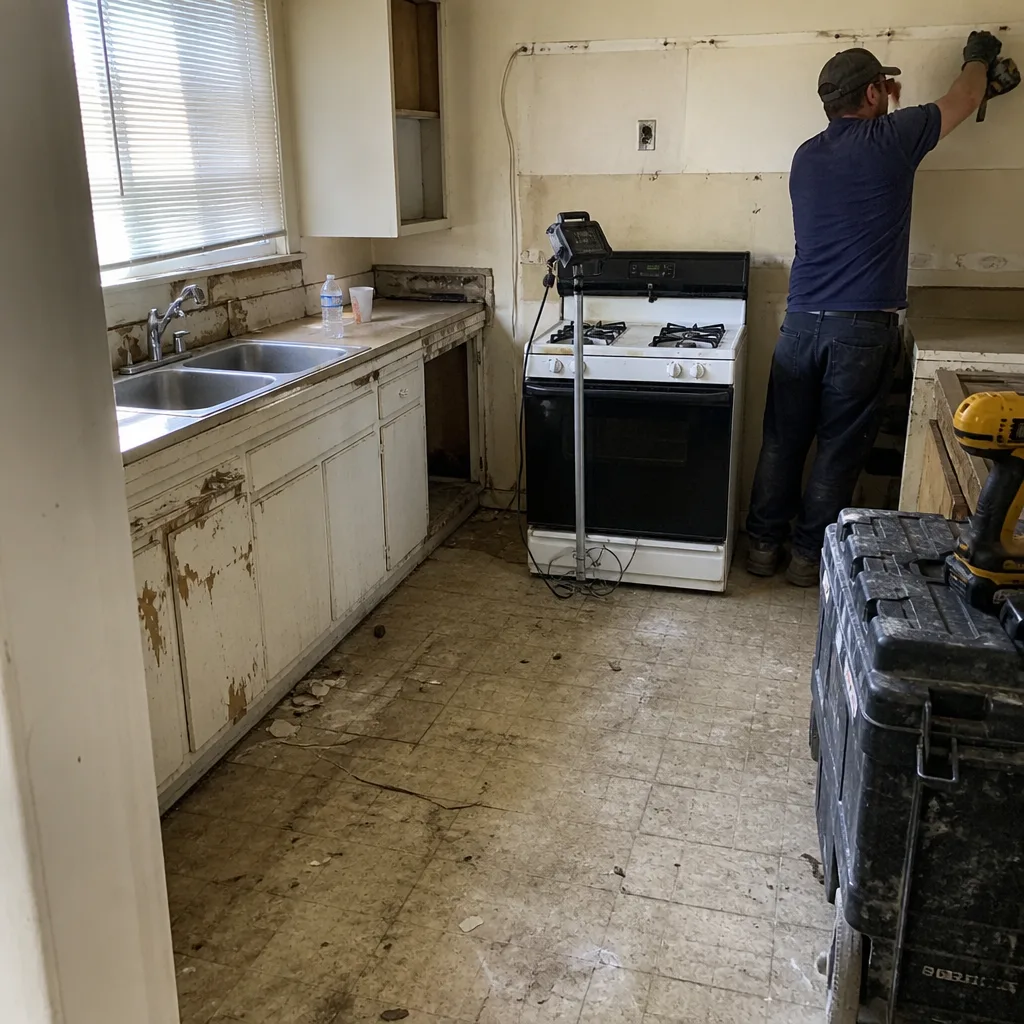 Before
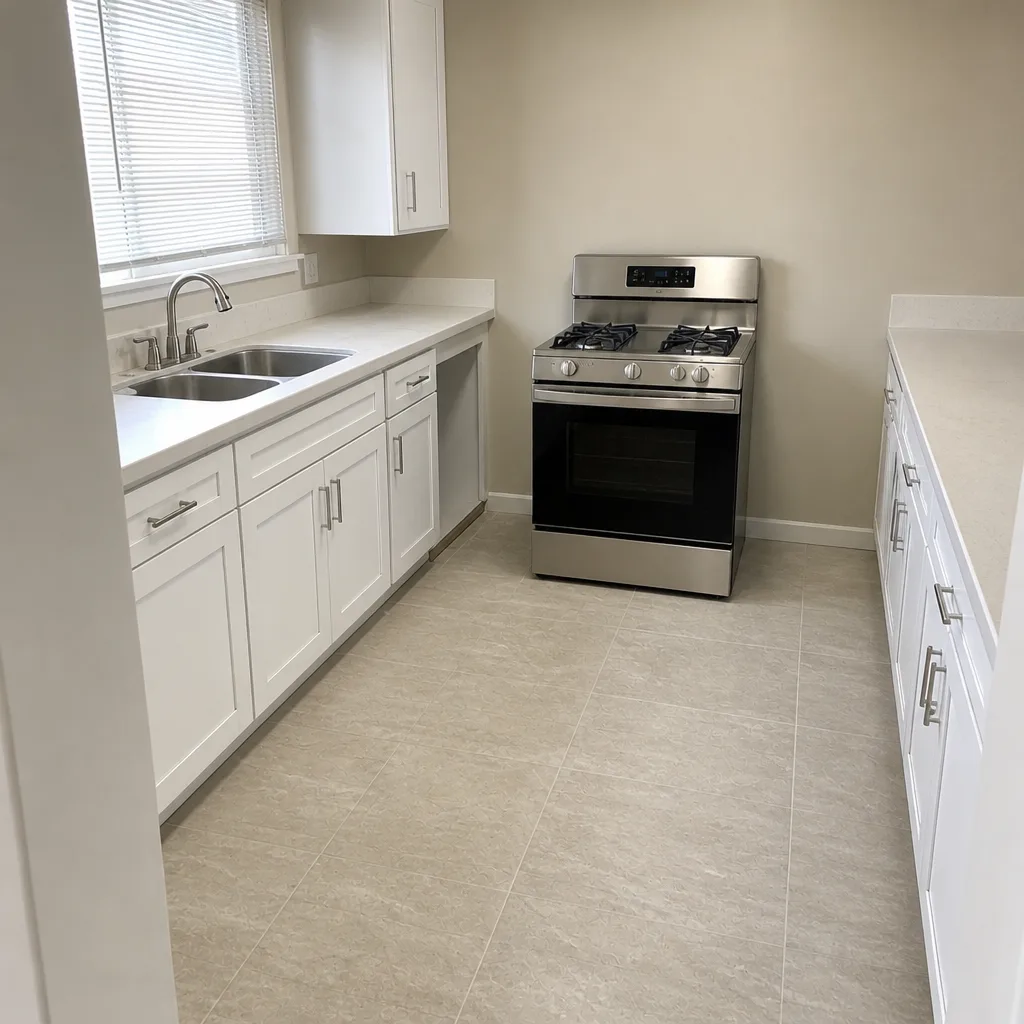 After
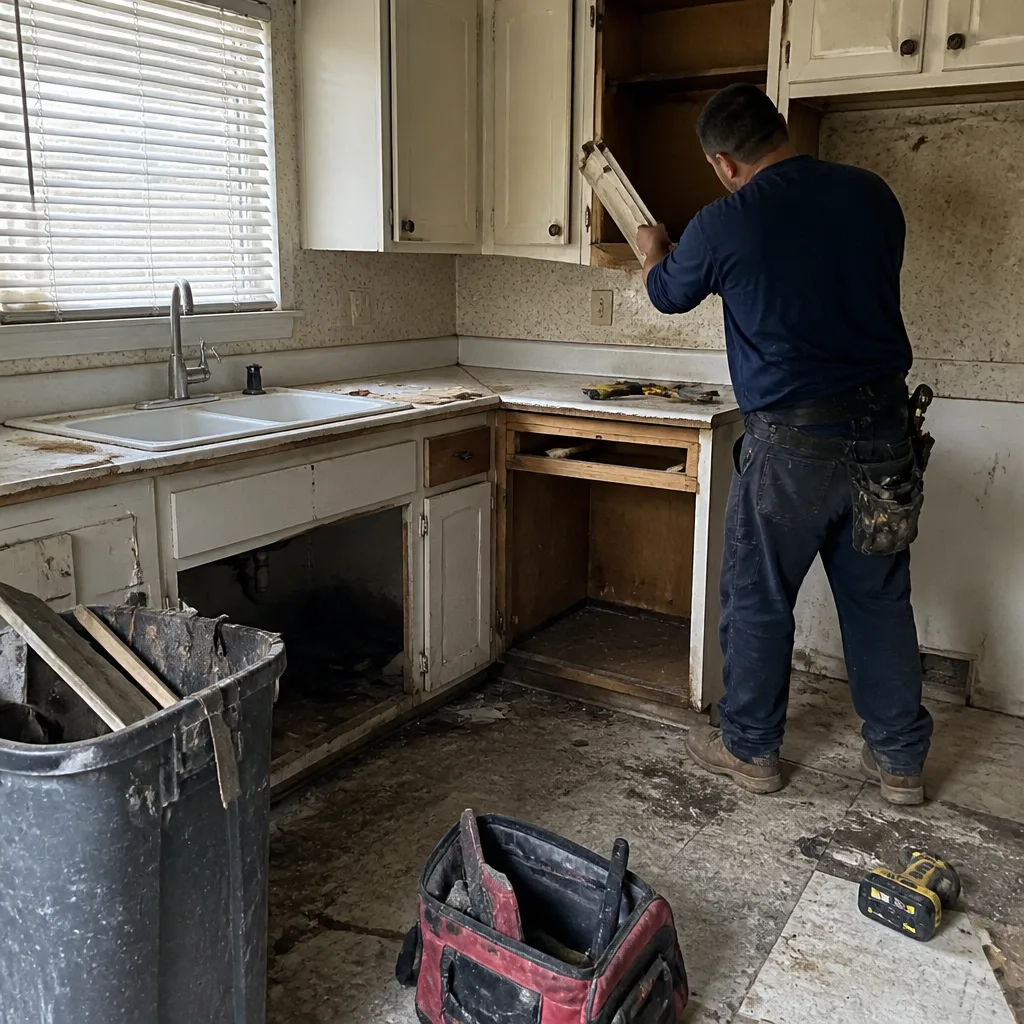 Before
 After
When to Call a Professional
Not every Anaheim project requires a licensed contractor, and knowing the line matters. Painting a room, changing a faucet, replacing a light fixture on an existing circuit – those are homeowner-level jobs. But the moment a project touches structural changes, gas lines, electrical panel work, plumbing behind walls, roof decking, or anything requiring a permit with Anaheim’s Building Division, the calculation flips. Those scopes carry real safety stakes and real inspection requirements. A single failed inspection on an electrical panel or gas line can cost more than the entire bid for doing it right the first time.
The same logic applies to scope you’re not sure how to price. A homeowner who isn’t sure whether their kitchen is a $30,000 job or a $70,000 job needs a written, itemized estimate – not a guess – before committing to a contractor or a design. That’s where a free estimate from a partner who shows you the numbers in writing is worth the phone call. The right starting point is almost never “pick the lowest bid from three unread quotes.” It’s “understand what the scope actually is, line by line, before you compare anything.”
Groundwork Construction Co. of Anaheim offers free estimates in Anaheim – call (888) 300-3178. Every estimate comes with a line-item scope, a written warranty, and upfront pricing you can compare against any competitor’s.
Frequently Asked Questions
A mid-grade Anaheim kitchen remodel runs $45,000 – $85,000, while a high-end kitchen with semi-custom cabinetry and stone countertops can land $85,000 – $150,000+. Labor accounts for 40 – 50% of that range, permits and plan-check fees add $600 – $2,200, and the material tier of cabinets, countertops, and fixtures is the biggest lever you control. Call (888) 300-3178 for a line-item estimate based on your exact scope.
Because the scope is rarely the same. Lower bids typically exclude permit fees, use builder-grade materials instead of specified brands, subcontract to uninsured crews, or leave contingency out entirely. Reading bids line-by-line is the only way to know. A $30,000 gap between two bids for “the same” bathroom in Anaheim usually means the two projects differ by thousands in materials and permitting alone.
Yes, for any project involving structural changes, electrical, plumbing, gas, or HVAC work. The City of Anaheim’s Building Division requires permits and inspections for those scopes, and a contractor who offers to skip them is exposing you to stop-work orders, fines, and insurance problems. Permits pulled and inspections passed should be a written line item on any legitimate bid.
Not on a properly written contract. The price should hold unless you approve a written change order, or unless something concealed is discovered during work – like rotted roof decking or old polybutylene plumbing – that gets disclosed and priced before any change is executed. Upfront pricing means the number you see is the number you pay, with a contingency line stated in the bid to cover what’s found behind the walls.
Plan on 20 – 25% of total project cost for an ADU or home addition in Anaheim. Site conditions drive the range: properties in the Anaheim Hills foothills need grading and drainage work that flat-lot projects skip entirely, and older homes near downtown often hide undersized electrical service or outdated plumbing. Contingency is not padding – it’s the money that prevents a change order ambush at framing.
Licensing alone doesn’t tell you if the bid is complete. Read the scope, check what’s excluded, verify material brands and model numbers, confirm permits and inspections are included, and look for a stated contingency. If two bids are $25,000 apart and both are licensed, one of them is scoping a much smaller project. Comparison only works if the line items match.
The Bottom Line
Construction cost literacy in Anaheim comes down to four habits: read bids line by line before comparing totals, size contingency to the project type, treat permits and inspections as non-negotiable, and demand written material specifications before you sign. A bid that survives that scrutiny is traceable – you know what every dollar buys, what every line covers, and what happens if something fails at month 20. A bid that fails it is a lowball trap waiting to open. In 2026 Anaheim, the honest read on construction cost isn’t the total – it’s the clarity inside it.
If you want to see what an itemized, line-by-line bid looks like on your exact project – from a full kitchen down to a single roof replacement – start with a Groundwork Construction Co. of Anaheim home visit, or reach out to the teams who handle Driveway & Pavers in Anaheim, Fence Installation in Anaheim, and Home Additions & ADU in Anaheim. Every project is backed by the 730-Day Done Right Promise, with calls answered by a live person 24/7 and technicians who arrive background-checked and in uniform.
Contact
Call Groundwork Construction Co. of Anaheim at (888) 300-3178 for a free estimate. Every estimate includes a line-item scope, written material specs, permit fees disclosed as separate line items, and a stated contingency – so you can compare them side-by-side with any other Anaheim bid. The number you see is the number you pay, and the 730-Day Done Right Promise covers workmanship for two full years in writing. Current offers include $1,000 off projects over $10,000, a free project estimate and design consult, and 0% financing for 18 months. Whether you’re pricing a bathroom, a kitchen, a roof, or an ADU, start with an estimate you can actually read.
Written by the team at Groundwork Construction Co. of Anaheim.